


Description
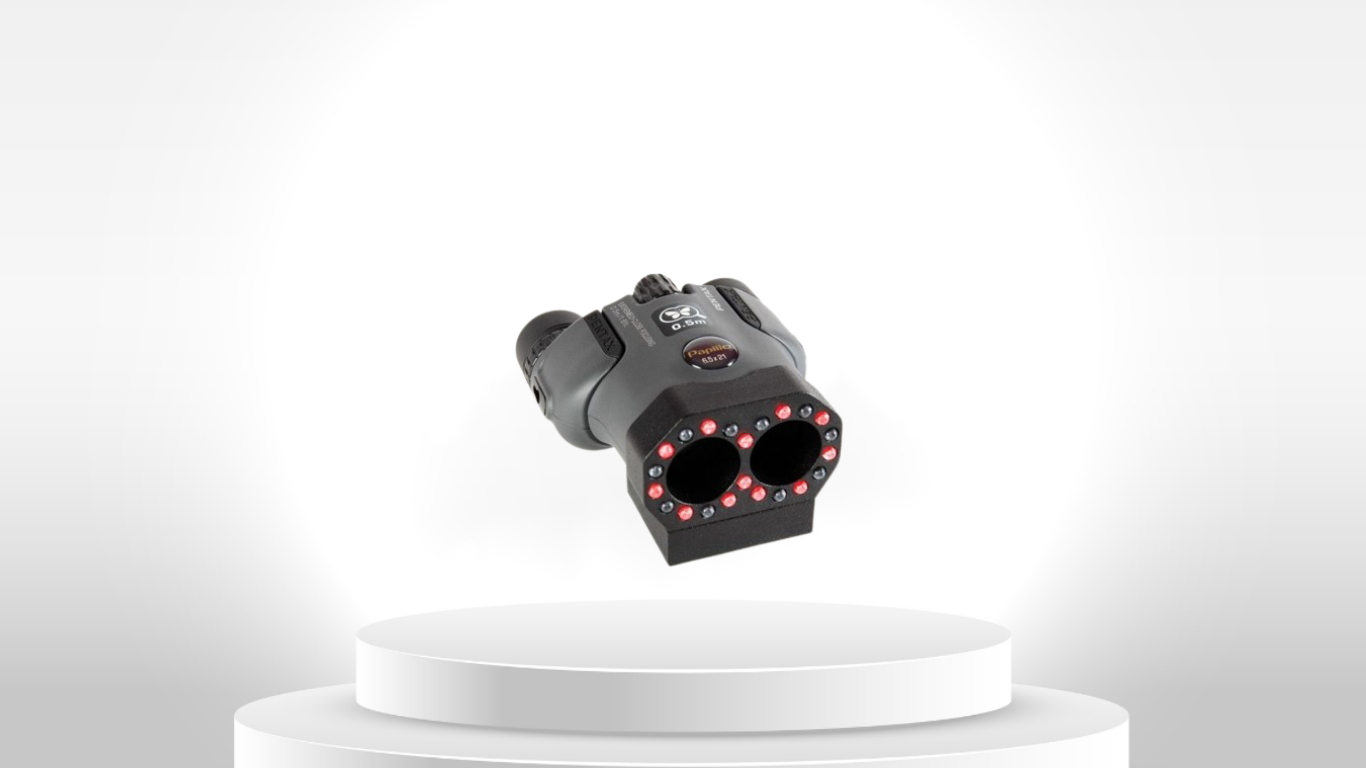
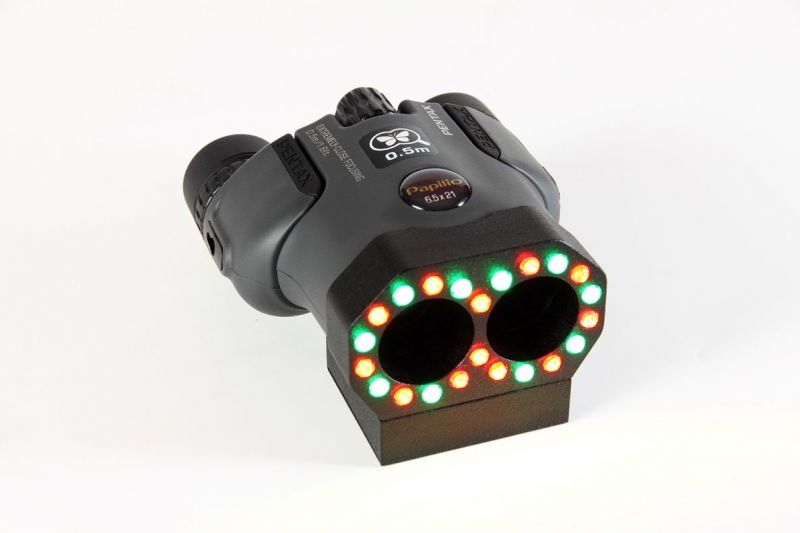
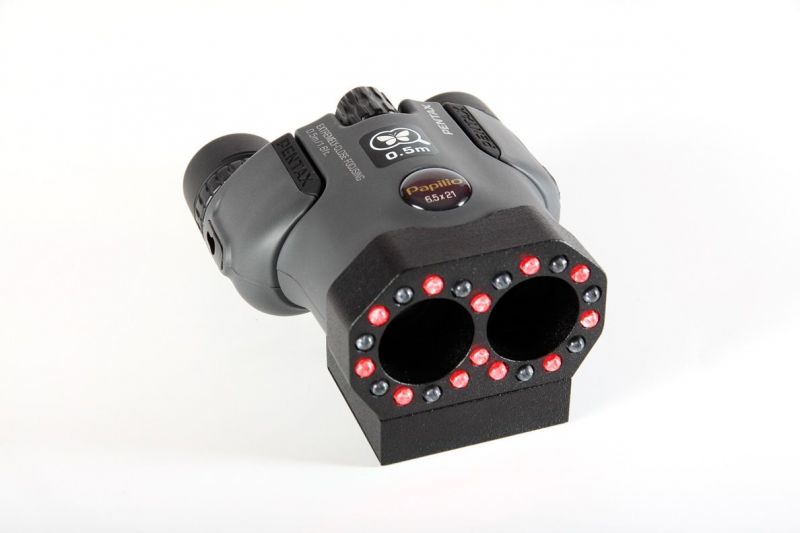
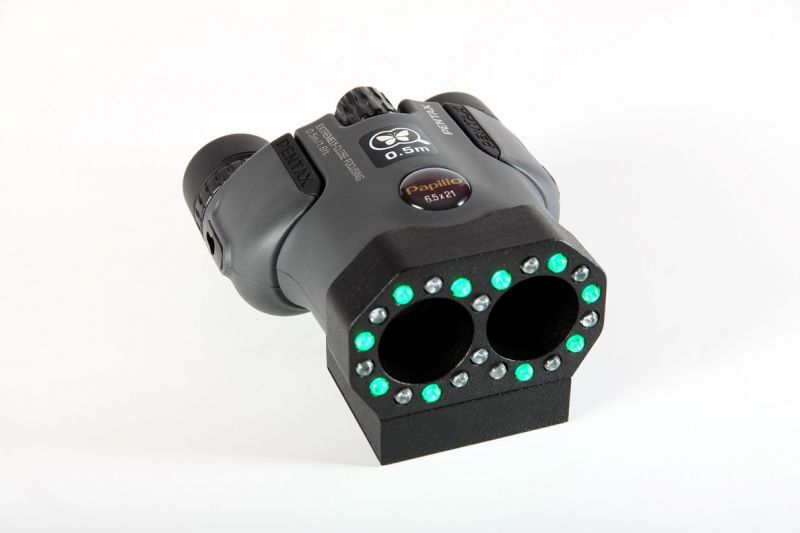
Optic-2 Professional Hidden Camera Lens Detector
Optical Detection for Hidden and Pinhole Camera Lenses
Find the lens—not the transmission.
The Optic-2 Professional Hidden Camera Lens Detector is an optical inspection instrument designed to detect and locate concealed video camera lenses, including pinhole-type cameras, by using reverse reflection, also known as the reverse blink principle.
Unlike RF-based camera detection, the Optic-2 does not depend on the camera transmitting a wireless signal.
Its optical detection method works by illuminating the inspection area and observing the reflection produced by a camera lens. When a suitable lens is present, the operator can see a distinctive green or red reflected point through the binocular viewing system.
This makes the Optic-2 particularly relevant when investigating hidden cameras that may be:
- Powered on
- Powered off
- Transmitting
- Not transmitting
- Using different video-signal technologies
The core question is simple:
Can I visually identify a camera lens that may otherwise be difficult to see?
What Is the Optic-2?
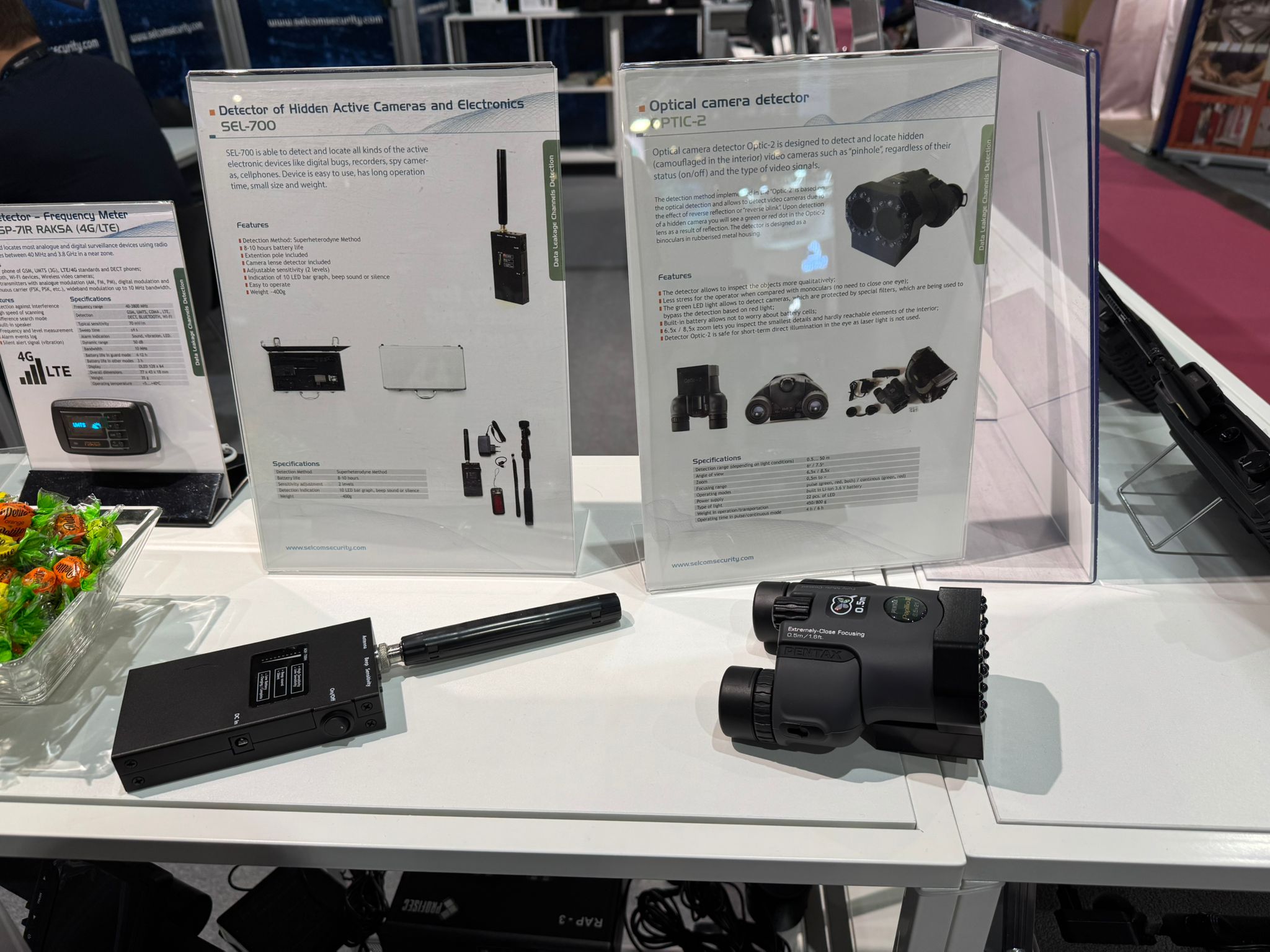
The Optic-2 is a professional optical hidden-camera detector designed to locate concealed camera lenses and pinhole cameras.
It is fundamentally different from an RF detector.
An RF detector asks:
“Is this device transmitting a wireless signal?”
Optic-2 asks:
“Can I identify the optical signature of a camera lens?”
That distinction is important because a hidden camera may not be transmitting at the time of inspection.
The camera may be:
- Powered off
- Recording locally
- Operating intermittently
- Connected by wire
- Using a non-wireless video connection
- Waiting for activation
The Optic-2 therefore provides an inspection method that does not depend on wireless transmission.
How Optic-2 Detects Hidden Camera Lenses
Reverse Reflection / Reverse Blink
The Optic-2 uses an optical detection principle based on reverse reflection, also described as reverse blink.
The device illuminates the inspection area with LEDs.
When light reaches a camera lens, part of that light can be reflected back toward the detector.
Through the Optic-2 viewing optics, the operator may see the reflected lens as a distinctive:
Green or red point of light
This creates a visual contrast between ordinary objects and a potentially reflective camera lens.
The method is particularly useful for identifying small lenses that may otherwise blend into the surrounding environment.
Why Optical Detection Does Not Depend on RF
One of the main advantages of optical lens detection is that it investigates the physical lens itself.
An RF detector requires a detectable transmission.
Optic-2 does not.
This means the optical method can be relevant when the suspected camera:
- Is switched off
- Is not transmitting
- Stores footage locally
- Uses a wired connection
- Transmits intermittently
- Uses an unfamiliar wireless technology
The detection principle is therefore complementary to:
- RF detection
- Wi-Fi detection
- Bluetooth detection
- Cellular detection
- Spectrum analysis
- Physical inspection
No wireless signal is required for the optical lens-reflection method to be relevant.
Red and Green Optical Detection
Multiple Illumination Modes for Different Inspection Conditions
The Optic-2 provides five operating modes:
- Continuous Green
- Continuous Red
- Pulsed Green
- Pulsed Red
- Pulsed Red/Green
The different illumination modes give the operator alternative ways to inspect the same area.
This matters because camera lenses and optical filters can behave differently under different illumination conditions.
Green Illumination
The manufacturer specifically notes that green illumination can help detect cameras protected by special filters intended to reduce detection using red illumination.
Red Illumination
Red illumination provides the primary optical reflection mode used to reveal suitable camera lenses.
Red/Green Pulse Mode
Alternating illumination provides another inspection mode when a lens is difficult to distinguish under a single illumination colour.
The objective is not to classify the camera automatically.
It is to increase the operator’s ability to visually identify a potentially reflective lens.
Binocular Inspection Design
Inspect With Both Eyes
The Optic-2 is built as a binocular optical instrument rather than a monocular detector.
This provides a practical advantage during extended inspection work.
The operator can use both eyes while examining the environment.
The manufacturer describes this design as reducing operator eye strain compared with monocular inspection because the operator does not need to close one eye.
This can be particularly useful during systematic room inspections where the operator may spend significant time examining:
- Fixtures
- Furniture
- Decorative objects
- Ceiling areas
- Wall surfaces
- Equipment
- Small openings
- Difficult-to-reach locations
Optical Magnification
Examine Small Details From a Distance
The Optic-2 provides 6.5x / 8.5x optical magnification, depending on configuration.
Some documentation specifies 6.5x as the standard configuration, while current manufacturer/distributor documentation also lists 6.5x / 8.5x.
Magnification helps the operator examine small areas without immediately approaching the suspected object.
This can be useful when inspecting:
- Pinhole openings
- Small apertures
- Furniture details
- Fixtures
- Ceiling fittings
- Decorative objects
- Hard-to-access areas
Magnification does not increase the physical size of a hidden camera.
It increases the operator’s ability to visually inspect the area through the optical system.
Detection Range
Up to 50 Metres Under Suitable Lighting Conditions
The manufacturer specifies a detection range of:
0.5–50 metres
However, this figure is explicitly dependent on ambient lighting conditions.
The practical detection distance can vary according to:
- Ambient illumination
- Lens size
- Lens orientation
- Distance
- Obstructions
- Reflective surfaces
- Camera concealment
- Optical conditions
- Operator technique
Therefore, 50 metres should be treated as a manufacturer-specified maximum under suitable conditions—not as a guaranteed detection distance for every hidden camera.
For closer inspection, the combination of optical magnification and adjustable focus becomes increasingly useful.
Focusing Range
The Optic-2 provides a focusing range from approximately:
0.5 m to infinity
This allows the operator to move between relatively close inspection and longer-distance viewing without changing to a separate optical instrument.
The ability to focus across this range supports both:
Initial room scanning
and
Detailed examination of a suspected location.
Five Inspection Modes
The Optic-2 provides five operating modes:
| Mode | Primary Use |
|---|---|
| Continuous Green | Continuous green optical illumination |
| Continuous Red | Continuous red optical illumination |
| Pulsed Green | Pulsed green illumination |
| Pulsed Red | Pulsed red illumination |
| Pulsed Red/Green | Alternating red/green illumination |
These modes provide flexibility when inspecting different environments and potentially filtered or difficult-to-see lenses.
The operator can compare the same area under different illumination conditions.
22-LED Optical Illumination
The detector uses:
22 LEDs
for optical illumination.
The LEDs provide the illumination required for the reverse-reflection detection method.
The system uses green, red and red/green illumination combinations rather than relying on a single colour.
This gives the operator additional inspection options when investigating lenses with different optical characteristics.
Built-In Rechargeable Battery
The Optic-2 uses a built-in rechargeable:
Li-ion 3.6 V battery
The manufacturer specifies approximately:
- At least 4 hours in pulse mode
- Not less than 6 hours in continuous mode
under the stated operating conditions.
This allows the detector to be used during extended inspection sessions without relying on disposable batteries.
Professional Optical Housing
The detector is constructed as a binocular optical instrument in a rubberised metal housing.
The design supports portable field inspection while providing a dedicated optical viewing system rather than a consumer flashlight-style camera finder.
The main unit weighs approximately:
450 g
and the complete transport package with accessories is approximately:
800 g
Why Optic-2 Is Different From a Basic Hidden Camera Finder
Many consumer hidden-camera products rely on:
- Flashlight-style LEDs
- Smartphone cameras
- Simple RF detection
- Visual inspection alone
- Basic lens filters
The Optic-2 takes a dedicated optical approach.
Its architecture combines:
Reverse Reflection
Binocular Viewing
Optical Magnification
Red/Green Illumination
Multiple Pulse Modes
Adjustable Focus
This makes it particularly relevant to professional inspection workflows where the operator needs a dedicated optical lens-detection instrument rather than a general-purpose consumer device.
Optic-2 vs RF Camera Detection
| Inspection Requirement | RF Camera Detection | Optic-2 |
|---|---|---|
| Detect wireless camera transmission | Yes | Not its primary function |
| Detect a camera that is not transmitting | Usually no | Yes, through optical lens detection |
| Detect powered-off camera | Usually no | Yes, subject to optical visibility |
| Detect wired camera lens | No RF transmission required | Yes, if the lens can be optically detected |
| Identify lens reflection | No | Primary function |
| Inspect pinhole lenses | Model-dependent | Designed for this application |
| Magnified optical inspection | Usually no | 6.5x / 8.5x |
| Red/green optical illumination | Usually no | Yes |
| Historical RF activity | Yes, on some systems | No |
| Wireless signal classification | Model-dependent | No |
The two technologies investigate different characteristics.
RF detection investigates transmission.
Optic-2 investigates the lens.
Optic-2 vs Smartphone Camera Inspection
A smartphone can provide useful visual inspection, but it is not specifically designed around reverse-reflection lens detection.
The Optic-2 provides:
- Dedicated optical illumination
- Binocular viewing
- Optical magnification
- Multiple illumination modes
- Adjustable focus
- Purpose-built lens reflection detection
This creates a more specialized workflow.
A smartphone can be useful as an additional inspection tool.
The Optic-2 is designed specifically for camera-lens detection.
Professional Selection vs Commodity Hidden Camera Finders
There are many inexpensive hidden-camera finders sold through online marketplaces.
Some can be appropriate for basic personal or consumer inspection.
Professional procurement involves a different question.
| Selection Factor | Commodity Finder | Optic-2 |
|---|---|---|
| Primary purpose | General-purpose detection | Dedicated optical lens detection |
| Detection principle | Varies | Reverse reflection / reverse blink |
| Binocular viewing | Rare | Yes |
| Optical magnification | Model-dependent | 6.5x / 8.5x |
| Red illumination | Model-dependent | Yes |
| Green illumination | Model-dependent | Yes |
| Pulse modes | Model-dependent | 5 operating modes |
| Focus range | Model-dependent | 0.5 m–∞ |
| Detection range | Varies | 0.5–50 m depending on lighting |
| Dedicated optical design | Varies | Yes |
| Professional TSCM orientation | Model-dependent | Yes |
| Field inspection workflow | Basic | Dedicated visual inspection |
The difference is not simply that a professional instrument must outperform every inexpensive device in every specification.
The difference is the inspection method, optical design and workflow built around the task.
For professional TSCM work, the relevant question is not:
“Does this device have LEDs?”
It is:
“Does the instrument provide a repeatable optical method for locating camera lenses?”
How Optic-2 Fits Into a TSCM Inspection
The Optic-2 is best used as one layer of a broader technical inspection.
A professional workflow may include:
1. Establish the Inspection Area
Identify rooms, furniture, fixtures, equipment and objects requiring examination.
2. Conduct Visual Observation
Look for physical irregularities, apertures, unexplained objects and potential camera locations.
3. Conduct Optical Lens Detection
Use the Optic-2 to scan suitable areas for reflected lens signatures.
4. Change Illumination Mode
Compare continuous and pulsed red/green modes where appropriate.
5. Magnify the Suspected Area
Use the optical magnification to examine the potential lens more closely.
6. Physically Verify
Inspect the object and determine whether the reflected point corresponds to an actual camera lens.
7. Cross-Check
Use additional methods such as RF detection, Wi-Fi analysis or physical inspection where appropriate.
8. Document the Finding
Record the location, observation, verification result and relevant inspection conditions.
Observe → Detect → Magnify → Locate → Verify → Cross-Check → Document
Where Optic-2 Camera Lens Finder Can Be Used
Hotel Rooms
Optic-2 can support optical inspection of objects and fixtures where concealed pinhole cameras may be placed.
Potential areas include:
- Smoke detectors
- Alarm clocks
- Lamps
- Decorative objects
- Electronics
- Wall fixtures
- Furniture
The presence of a reflected point does not automatically confirm a hidden camera. Physical verification remains necessary.
Executive Offices
Sensitive offices may contain numerous objects, fixtures and equipment.
The Optic-2 can provide a dedicated optical inspection layer for identifying potentially concealed camera lenses.
Boardrooms and Meeting Rooms
Conference environments can contain many potential camera concealment locations.
Optical lens detection can complement RF and physical inspection methods.
Temporary Offices and Travel Locations
Portable optical inspection equipment can be useful when entering unfamiliar environments where the operator wants to perform a visual camera-lens check.
Government and Institutional Facilities
Professional security teams can incorporate optical lens detection into broader inspection procedures where authorized.
Corporate Security
Security professionals can use the Optic-2 as part of privacy and technical-security inspections of sensitive areas.
What Optic-2 Camera Lens Finder Can and Cannot Tell You
What It Can Help Detect
Optic-2 can help operators:
- Detect suitable hidden camera lenses
- Detect pinhole camera lenses
- Locate reflected lens signatures
- Investigate powered-on or powered-off cameras
- Inspect cameras regardless of their video-signal type
- Examine small areas using optical magnification
- Compare red and green illumination
- Inspect difficult-to-reach areas
- Narrow down locations requiring physical verification
What It Cannot Automatically Determine
Optic-2 does not automatically:
- Identify every hidden camera
- Confirm that every reflected point is a camera
- Determine whether a camera is recording
- Determine whether a camera is transmitting
- Identify who installed a camera
- Determine whether a camera is authorized
- Identify the owner of a device
- Replace physical inspection
- Replace RF or wireless analysis
- Guarantee detection at 50 m in every environment
A reflective point may have another optical explanation.
Professional verification remains essential.
Understanding False Positives
Optical inspection is based on reflected light.
Therefore, other reflective objects can produce visible points or highlights.
Potential sources may include:
- Glass
- Polished metal
- Decorative surfaces
- Optical instruments
- Reflective plastics
- LEDs
- Other small lenses
The correct process is:
Reflected Point → Examine → Magnify → Assess → Physically Verify
A visible point is an observation.
It is not automatically a confirmed surveillance device.
Understanding Environmental Conditions
Optical detection performance depends on the inspection environment.
Important variables include:
- Ambient light
- Distance
- Lens orientation
- Concealment
- Viewing angle
- Reflective surfaces
- Background lighting
- Operator positioning
This is why the manufacturer specifies the detection range as dependent on ambient light.
Professional operators should therefore adapt scanning technique to the environment rather than treating the 50 m figure as a universal operating distance.
Technical Specifications
| Parameter | Specification |
|---|---|
| Product Type | Professional Optical Hidden Camera Detector |
| Detection Principle | Reverse reflection / reverse blink |
| Detection Target | Hidden and camouflaged video camera lenses, including pinhole types |
| Detection Range | 0.5–50 m, depending on ambient light |
| Angle of View | 6° / 7.5° depending on configuration |
| Magnification | 6.5x / 8.5x depending on configuration |
| Focusing Range | 0.5 m to infinity |
| Operating Modes | Continuous green, continuous red, pulsed green, pulsed red, pulsed red/green |
| Illumination | LED |
| Number of LEDs | 22 |
| Illumination Colours | Green, red, red/green |
| Battery | Built-in rechargeable Li-ion |
| Battery Voltage | 3.6 V |
| Pulse-Mode Runtime | At least 4 hours |
| Continuous-Mode Runtime | At least 6 hours |
| Main Unit Weight | 450 g |
| Transport Weight | 800 g with accessories |
| Housing | Rubberised metal binocular housing |
| Laser | Not used |
Where manufacturer documentation lists alternative values for angle of view or magnification, the final procurement configuration should be confirmed with the supplier.
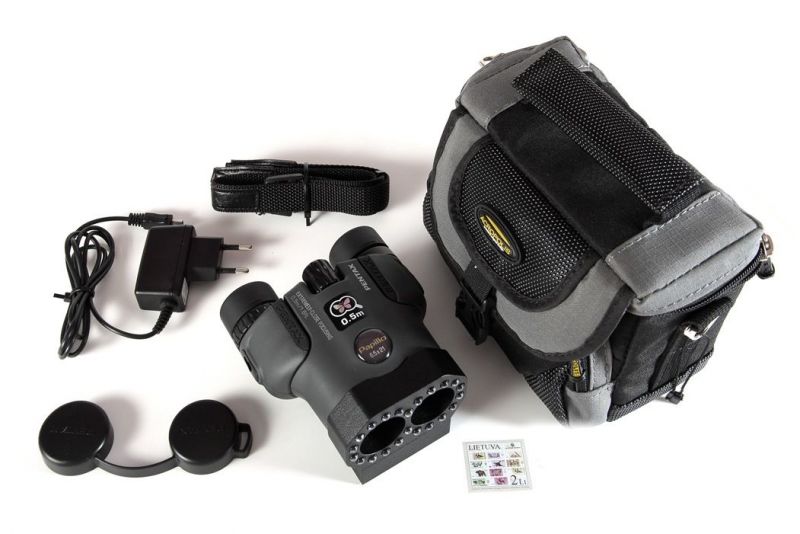
What’s in the Box
The standard delivery set includes:
- Optic-2 detector
- Built-in rechargeable Li-ion 3.6 V battery
- 5 V / 0.6 A charger
- Strap
- Transport bag
- User manual
The supplied configuration should be confirmed before procurement.
Frequently Asked Questions
What is the Optic-2?
Optic-2 is a professional optical hidden-camera detector designed to locate concealed and pinhole camera lenses through reverse reflection.
How does Optic-2 detect hidden cameras?
It illuminates the inspection area and uses an optical viewing system to identify reflected light from suitable camera lenses.
What is reverse blink?
Reverse blink, or reverse reflection, is the optical effect used by the Optic-2 to make suitable camera lenses appear as a visible reflected point through the detector.
Can Optic-2 detect a camera that is switched off?
Yes, the optical detection method does not depend on the camera transmitting a signal, so powered-off cameras may still be detectable if their lens produces the required optical reflection and is within suitable inspection conditions.
Can Optic-2 detect a camera that is not transmitting?
Yes. Its detection principle is optical rather than wireless, so active video or RF transmission is not required.
Can Optic-2 detect pinhole cameras?
Yes. The device is specifically designed to locate concealed camera lenses including pinhole-type cameras.
What colours does Optic-2 use?
The detector uses green and red illumination, including red/green pulsed operation.
Does Optic-2 use a laser?
No. Manufacturer documentation specifies LED illumination and states that laser radiation is not used.
Why does Optic-2 use both red and green light?
Different camera lenses and optical filters may respond differently to illumination. Green illumination can also assist with cameras using special filters intended to reduce detection under red illumination.
What is the detection range of Optic-2?
The manufacturer specifies 0.5–50 metres, depending on ambient lighting conditions.
Does Optic-2 always detect cameras from 50 metres?
No. The 50 m figure is dependent on lighting and other inspection conditions. Lens size, orientation, concealment and environment can affect practical detection.
What is the magnification?
Manufacturer documentation specifies 6.5x / 8.5x, depending on configuration. Some manuals specify 6.5x.
What is the field of view?
Documentation specifies 6° / 7.5°, depending on configuration.
How close can Optic-2 focus?
The focusing range starts at approximately 0.5 metres and extends to infinity.
How long does the battery last?
The manufacturer specifies at least 4 hours in pulse mode and not less than 6 hours in continuous mode, under stated conditions.
Is Optic-2 suitable for TSCM?
Yes. Its dedicated optical lens-detection capability can form part of a professional TSCM inspection alongside RF analysis, physical inspection and other detection methods.
Is Optic-2 an RF detector?
No.
Optic-2 is an optical camera-lens detector. It detects reflected light from suitable camera lenses rather than RF transmissions.
Can Optic-2 replace an RF detector?
No.
The two technologies investigate different characteristics.
Optic-2 investigates the physical optical lens.
RF equipment investigates electromagnetic transmissions.
Can Optic-2 detect wired cameras?
It can help detect the lens of a wired camera because the optical method does not require wireless transmission.
The camera lens must still be optically visible to the detection method.
Can Optic-2 detect a camera recording locally?
Potentially, yes, if the camera lens produces the required optical reflection and the inspection conditions are suitable. Local recording does not prevent optical lens detection.
Can Optic-2 identify whether a camera is recording?
No.
It detects the optical characteristics of the lens. It does not determine the camera’s recording status.
Can Optic-2 identify the exact camera model?
No.
Physical verification is required to identify the actual camera.
Can ordinary reflective objects trigger Optic-2?
Yes. Optical reflections can originate from objects other than camera lenses.
A detected point therefore requires further examination and verification.
Who should use Optic-2?
The instrument is particularly relevant to:
- TSCM specialists
- Counter-surveillance professionals
- Corporate security teams
- Government security personnel
- Technical-security professionals
- Authorized privacy-inspection teams
What should I consider before buying a hidden camera lens detector?
Consider:
- Optical detection principle
- Detection range
- Ambient-light dependency
- Magnification
- Field of view
- Focusing range
- Illumination colours
- Pulse modes
- Binocular versus monocular design
- Battery life
- Weight
- Portability
- Physical verification workflow
- Compatibility with broader TSCM equipment
The important question is not simply:
“How many LEDs does it have?”
It is:
“Does the optical system provide a practical method for locating camera lenses in the environments I actually inspect?”
Procurement & Deployment Considerations
Before procurement, professional users should evaluate:
Inspection Environment
Determine whether the equipment will primarily be used in:
- Hotels
- Offices
- Boardrooms
- Vehicles
- Residences
- Government facilities
- Temporary workspaces
- Other controlled environments
Optical Conditions
The specified detection range depends on ambient lighting.
Testing the instrument under representative conditions is therefore more meaningful than relying solely on the maximum published distance.
Operator Training
Optical lens detection is simple in principle but still requires disciplined scanning technique and the ability to distinguish camera-lens reflections from ordinary reflective objects.
Cross-Check Equipment
Optic-2 should generally complement, rather than replace:
- RF detection
- Spectrum analysis
- Wireless analysis
- Physical inspection
- Other TSCM technologies
Verification
A reflected point should be treated as an indication requiring further examination.
The final finding should be based on physical verification wherever appropriate.
Professional Selection Over Commodity Specification
A hidden-camera detector can be inexpensive and still perform a useful task.
The question for professional procurement is not whether inexpensive products exist.
They do.
The question is whether the instrument is designed around the actual inspection workflow.
With Optic-2, the professional selection criteria include:
Dedicated optical detection
Reverse-reflection methodology
Binocular inspection
Optical magnification
Multiple illumination modes
Adjustable focus
Field portability
These characteristics matter when the objective is systematic camera-lens inspection rather than casual visual checking.
The difference is not simply the hardware.
It is the inspection method built around the hardware.
Global Procurement Through Archthetic
Optic-2 is specialized TSCM equipment rather than a general consumer electronics accessory.
Archthetic connects professional buyers with specialized security and counter-surveillance technologies through a global procurement infrastructure.
For organizations evaluating Optic-2, procurement should consider:
- Intended inspection environment
- Required optical configuration
- Regional deployment
- Technical documentation
- Accessories
- Operator requirements
- Applicable privacy and surveillance laws
- International fulfillment
- Deployment support
Discover → Evaluate → Procure → Deploy
The objective is not simply to purchase a detector.
It is to select an inspection capability that fits the actual security requirement.
Legal & Operational Considerations
Hidden-camera detection should be conducted only in environments and circumstances where the operator is authorized to perform the inspection.
Privacy, surveillance, property-access and other laws may vary by jurisdiction.
Optic-2 provides an inspection capability.
It does not determine whether a camera is lawful, authorized or malicious.
Focused Conclusion
The Optic-2 Professional Hidden Camera Lens Detector addresses a specific TSCM requirement:
Locate the physical lens of a concealed camera without depending on wireless transmission.
Its reverse-reflection detection method, binocular optical design, red/green illumination, multiple pulse modes, optical magnification and adjustable focus provide a dedicated visual inspection approach for hidden and pinhole camera lenses.
The platform is particularly valuable when a suspected camera may be:
- Powered off
- Not transmitting
- Wired
- Recording locally
- Concealed inside an object or fixture
But optical detection is not a substitute for complete TSCM methodology.
The professional workflow remains:
Detect → Magnify → Assess → Locate → Physically Verify
Optic-2 — Dedicated Optical Detection for Hidden Camera Lens Inspection.


Reviews
There are no reviews yet.