
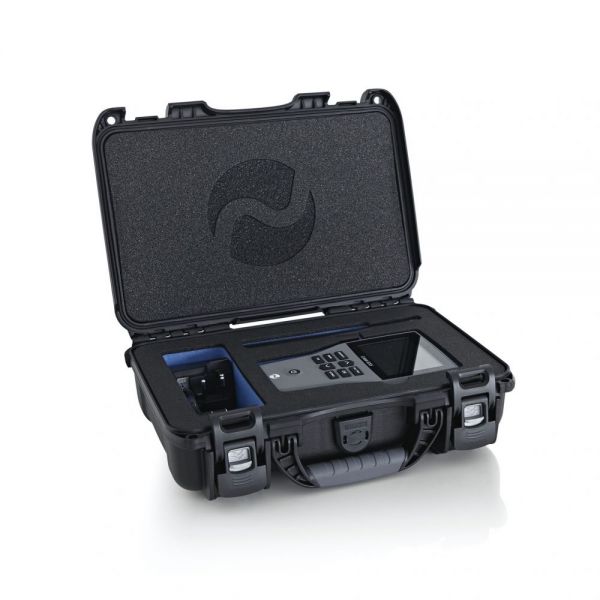
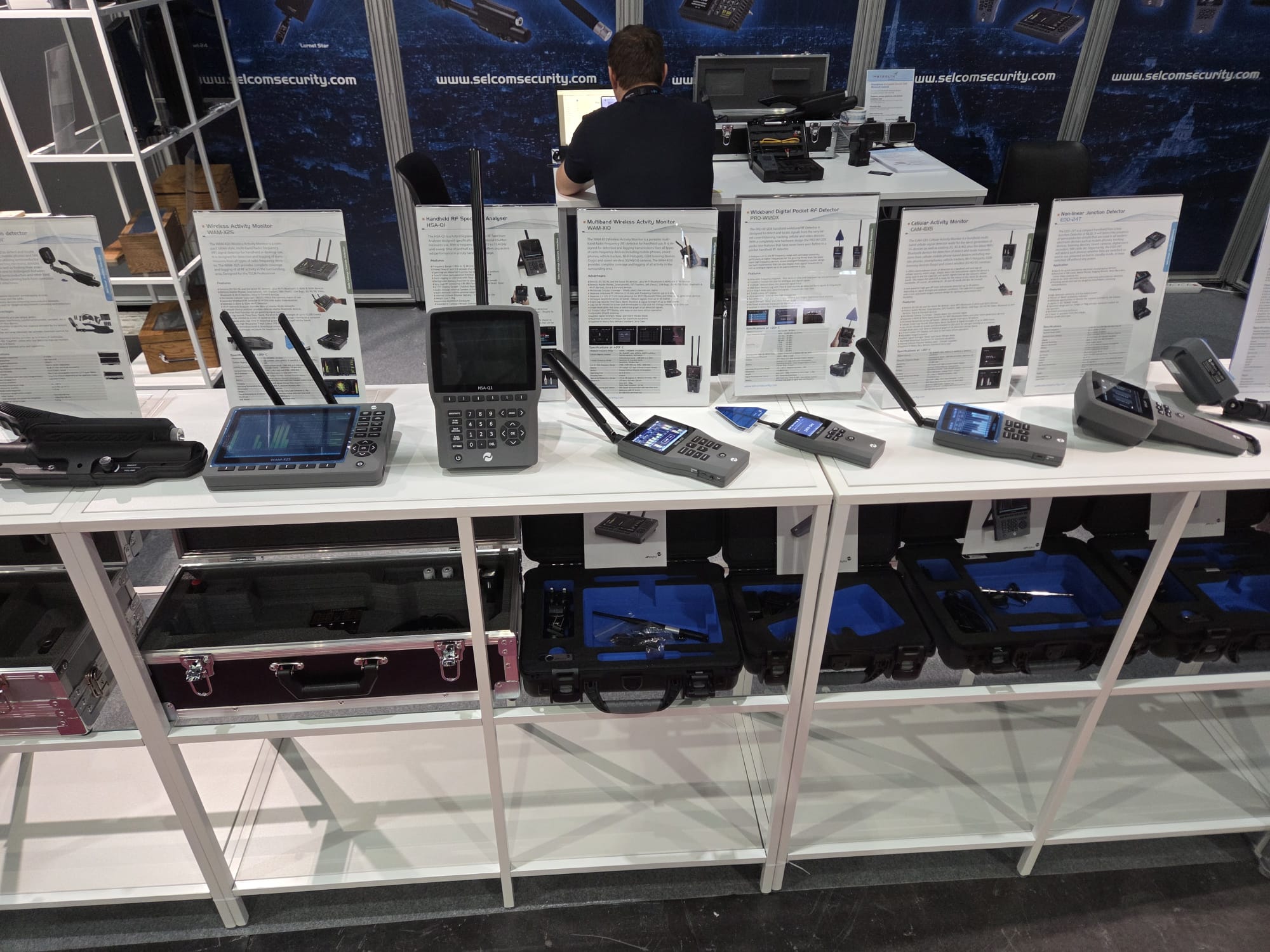


Description
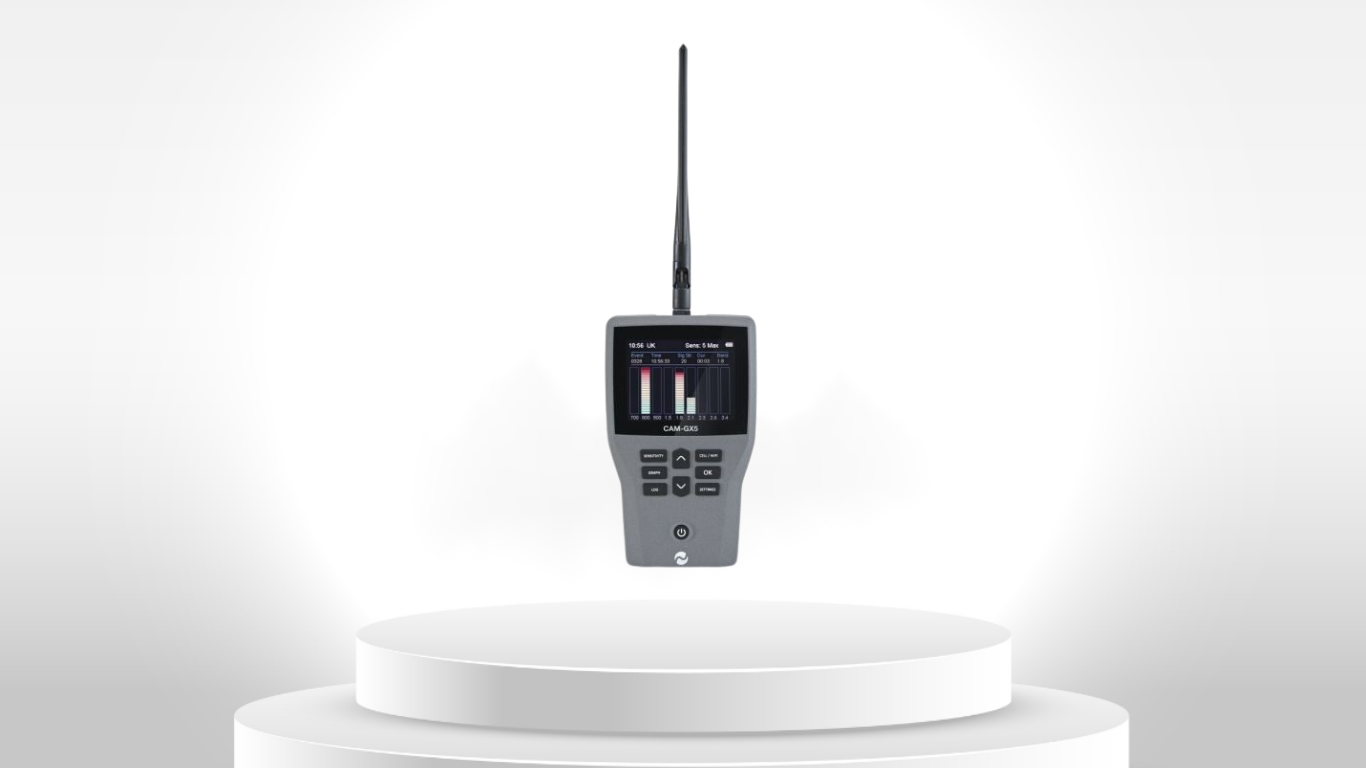
CAM-GX5 Global Signal Defense & Cellular Activity Monitor
Professional Cellular & Wireless Activity Monitoring for TSCM
Detect cellular activity. Identify wireless activity. Locate the source. Review what happened.
The CAM-GX5 Cellular Activity Monitor is a professional handheld detection platform designed to monitor and locate cellular and selected wireless activity in environments where unauthorized wireless communications may present a security concern.
It supports detection across relevant 2G, 3G, 4G and 5G cellular bands, together with separate 2.4 GHz and 5 GHz detection for Wi-Fi, Bluetooth and other compatible wireless devices.
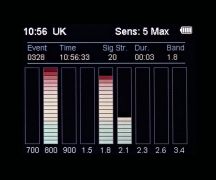
Unlike a basic signal indicator that simply shows that RF energy exists, the CAM-GX5 provides band-specific signal-strength information, event logging, graphical activity review and source-localization assistance.
This makes it particularly relevant to professional TSCM, security and technical-inspection workflows where the question is not simply:
“Is there a wireless signal?”
but:
“What wireless activity is present, when did it occur, on which band, and where should we investigate?”
What Is the CAM-GX5?
The CAM-GX5 is a handheld cellular activity monitor and wireless signal detection instrument developed for professional security and TSCM applications.
Its primary purpose is to detect and help locate transmissions from cellular and selected wireless devices operating within supported frequency bands.
Depending on the environment and detected signal, this can include activity associated with:
- Mobile phones
- Smartphones
- Cellular devices
- GPS tracking devices
- Wi-Fi hotspots
- GSM-based listening devices
- Wireless video devices
- Bluetooth devices
- Wi-Fi devices
- Other compatible wireless transmitters
The manufacturer positions the CAM-GX5 for environments where unauthorized wireless activity may need to be identified, including sensitive meeting rooms, offices, examination environments, hospitals, correctional facilities and vehicles.
The device is therefore best understood as an activity-monitoring and source-localization tool, rather than an automatic classifier of whether a detected device is legitimate or malicious.
Why Cellular Activity Monitoring Matters
Modern security environments contain a large amount of legitimate wireless activity.
A room may contain:
- Smartphones
- Laptops
- Wi-Fi access points
- Bluetooth equipment
- Cellular hotspots
- IoT devices
- Tracking devices
- Wireless cameras
- Building systems
The challenge for a professional TSCM operator is therefore not simply detecting RF energy.
It is understanding:
What activity is present?
Which band is active?
How strong is the signal?
When did it occur?
Does the activity repeat?
Where should the operator investigate?
The CAM-GX5 is designed around these questions.
Cellular Detection
Monitor 2G, 3G, 4G and 5G Activity
The CAM-GX5 supports detection of relevant cellular activity across:
- 2G
- 3G
- 4G
- 5G
Its specified detection range is:
300 MHz–6 GHz
with a maximum of 10 displayable bands depending on the selected regional configuration.
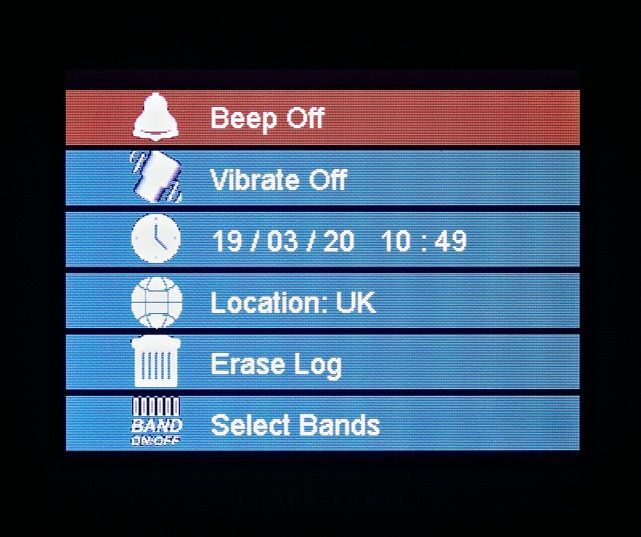
The system is designed around international cellular environments, allowing the relevant region to be selected according to the deployment location.
This is particularly useful for organizations operating across multiple countries because cellular band usage differs between markets.
Important 5G Consideration
5G should not be interpreted as a universal single frequency range.
Different countries and operators use different 5G bands.
The CAM-GX5 therefore uses regional band configuration rather than treating “5G” as one globally identical signal.
For professional deployment, the relevant regional configuration should be confirmed before procurement.
Detect and Locate Cellular Transmissions
Detection is only the first step.
The CAM-GX5 provides an individual signal-strength indication for detected bands to help operators determine where the signal is becoming stronger.
Combined with its adjustable hinged antenna, this supports a practical localization workflow:
Detect → Orient → Move → Compare Signal Strength → Narrow the Search Area
The objective is to help the operator determine where an active wireless source may be located.
A stronger signal does not automatically identify the physical device.
Signal propagation can be affected by:
- Walls
- Building materials
- Reflections
- Distance
- Antenna orientation
- Other RF sources
- Device transmission power
- Environmental conditions
Professional localization therefore requires operator judgment.
2.4 GHz and 5 GHz Wireless Activity
Go Beyond Cellular Signals
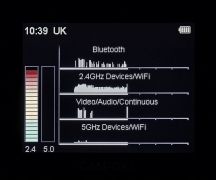
The CAM-GX5 includes separate detection for 2.4 GHz and 5 GHz activity.
This extends the inspection beyond cellular networks to investigate wireless activity associated with:
- Wi-Fi
- Bluetooth
- Wireless video
- Store-and-forward devices
- Other compatible 2.4 GHz and 5 GHz transmitters
The manufacturer specifies that signal-processing algorithms help analyze detected activity and identify whether the signal is associated with Bluetooth, Wi-Fi or other 2.4/5 GHz activity.
This is particularly relevant in modern environments where wireless devices may not use cellular networks at all.
Event Logging
Turn a Live Detection Into Historical Evidence
One of the CAM-GX5’s important differences from a basic RF signal detector is its ability to retain detected activity.
The cellular event log can store up to:
4,000 events
Each recorded cellular event can include:
- Time
- Date
- Duration
- Detected band
- Signal strength
This creates a historical record of cellular activity rather than requiring the operator to observe every transmission in real time.
Why Historical Logging Matters
Wireless devices do not necessarily transmit continuously.
Some devices may communicate:
- Briefly
- Periodically
- At specific times
- Only when data is transmitted
- When a connection is established
- In repeated short bursts
A short inspection may therefore miss an intermittent transmission.
Historical event logging provides another layer of information.
For example:
No activity during the first observation
does not necessarily mean:
No wireless activity occurred during the inspection period.
The event history can provide additional context.
It can help the operator identify:
- Repeated transmissions
- Short-duration events
- Changes in activity
- Activity concentrated at specific times
- Persistent signals
- Intermittent transmission patterns
The log does not automatically identify the device or prove surveillance intent.
It provides information for professional assessment.
Graph Mode
See Wireless Activity Over Time
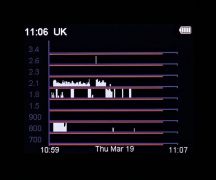
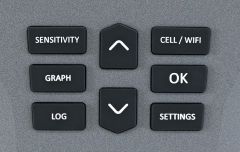
The CAM-GX5 provides graph-based viewing for detected activity.
Cellular events can be reviewed graphically, while the 2.4 GHz and 5 GHz activity log can retain up to 24 hours of historical activity.
Graphical visualization can make recurring patterns easier to recognize than a simple list of events.
A professional operator may therefore compare:
Time → Band → Duration → Signal Strength → Pattern
to determine whether further investigation is warranted.
2.4 GHz / 5 GHz Historical Activity
The CAM-GX5 can retain up to:
24 hours of 2.4 GHz / 5 GHz / Wi-Fi / Bluetooth activity
for later review.
This is particularly useful when investigating intermittent wireless activity.
Rather than relying exclusively on what is visible on the display at one moment, the operator can review the activity history and determine whether a signal appeared repeatedly or at specific intervals.
Signal Strength and Source Localization
Know Where to Look Next
The CAM-GX5 uses individual signal-strength indicators for detected bands.
This allows the operator to compare signal strength while changing position.
A typical workflow is:
Signal Detected
↓
Identify Active Band
↓
Orient Antenna
↓
Move Through the Area
↓
Compare Signal Strength
↓
Narrow the Search Area
↓
Identify the Physical Source
The CAM-GX5 assists with the localization stage.
It does not automatically determine the exact physical device responsible for every signal.
Physical inspection remains necessary.
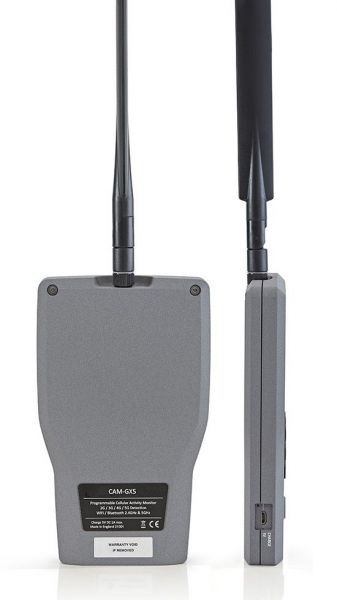
Adjustable Hinged Antenna
The adjustable hinged antenna provides flexibility during field operation.
The operator can change antenna orientation while investigating a detected source.
This can be useful when moving between:
- Rooms
- Corridors
- Vehicles
- Furniture
- Meeting spaces
- Offices
- Other enclosed environments
Antenna positioning should be considered part of the inspection technique because signal strength can vary with orientation and surrounding structures.
Up to 50 Metres Detection
The CAM-GX5 manufacturer specifies detection from up to approximately:
50 metres
under appropriate conditions.
This should not be interpreted as a guaranteed detection distance for every device.
Actual detection range depends on factors including:
- Signal strength
- Transmission characteristics
- Antenna orientation
- Building construction
- Environmental RF activity
- Target location
- Interference
- Device configuration
The correct interpretation is therefore:
Up to 50 metres under suitable conditions—not a universal guaranteed range.
Worldwide Cellular Coverage
Designed for International Deployment
The CAM-GX5 supports regional configurations covering:
- UK
- Europe
- Asia
- Africa
- North America
- South America
- Australia
The specified detection range is 300 MHz–6 GHz, with up to 10 displayable bands.
This makes the CAM-GX5 suitable for organizations conducting security inspections across different geographic markets.
However, international deployment still requires appropriate regional configuration.
Worldwide coverage means configurable international band support—not that every cellular band is simultaneously active in every country.
Silent Operation for Sensitive Environments
Audible Beep or Silent Vibration
The CAM-GX5 provides two practical notification modes.
Audible Signal-Strength Beep
The operator can monitor changes in signal strength through audible feedback without continuously looking at the display.
Silent Vibration
For environments where audible operation is inappropriate, the unit provides a silent vibration mode.
This can be useful during sensitive inspections where maintaining a low operational profile matters.
Professional TSCM Applications
Sensitive Meeting Rooms
The CAM-GX5 can help identify unauthorized cellular or wireless activity during security inspections of sensitive meeting environments.
Executive Offices
Corporate offices can contain extensive legitimate wireless activity.
The CAM-GX5 helps operators identify and localize activity requiring further assessment rather than relying only on visual inspection.
Government and Institutional Facilities
Facilities where unauthorized mobile communications are restricted may benefit from cellular activity monitoring as part of broader security procedures.
Examination Environments
Where unauthorized mobile phone use is prohibited, the CAM-GX5 can provide activity-monitoring capabilities for suitable environments.
Hospitals and Controlled Facilities
Wireless activity monitoring can form part of security procedures in environments where mobile communications are restricted or controlled.
Vehicles
The CAM-GX5 can assist in investigating cellular activity associated with devices operating inside or around vehicles, including potential tracking-related transmissions.
Professional TSCM Sweeps
The CAM-GX5 can complement:
- RF spectrum analysis
- Wideband RF detection
- NLJD
- Wireline analysis
- Hidden-camera detection
- Physical inspection
Its role is specifically focused on cellular and selected wireless activity.
CAM-GX5 in a Professional TSCM Workflow
The CAM-GX5 works best as part of a layered inspection methodology.
1. Establish the Environment
Identify expected cellular, Wi-Fi and Bluetooth activity.
2. Conduct the Initial Scan
Monitor relevant cellular and wireless bands.
3. Identify Activity
Record active bands and signal-strength information.
4. Review Patterns
Use event logging and graph mode to identify intermittent or recurring activity.
5. Localize
Use antenna orientation and signal-strength changes to narrow the source location.
6. Identify the Physical Source
Determine whether the source is a phone, hotspot, tracker, camera, legitimate infrastructure or another device.
7. Cross-Check
Use additional TSCM equipment when the finding requires further investigation.
8. Document
Record the detected band, time, duration, signal strength, location and physical findings.
Detect → Record → Analyze → Locate → Identify → Verify → Report
CAM-GX5 vs a Basic RF Detector
| Requirement | Basic RF Detector | CAM-GX5 |
|---|---|---|
| Detect RF activity | Yes | Yes |
| Cellular-focused detection | Model-dependent | Yes |
| 2G / 3G / 4G / 5G | Model-dependent | Yes |
| 2.4 GHz detection | Model-dependent | Yes |
| 5 GHz detection | Model-dependent | Yes |
| Wi-Fi/Bluetooth activity analysis | Model-dependent | Yes |
| Band-specific indication | Model-dependent | Yes |
| Signal-strength localization | Model-dependent | Yes |
| Cellular event logging | Usually limited | Up to 4,000 events |
| Historical activity review | Usually limited | Yes |
| 24-hour 2.4/5 GHz activity log | Usually unavailable | Yes |
| Graphical activity review | Model-dependent | Yes |
| Silent vibration mode | Model-dependent | Yes |
| International regional configuration | Model-dependent | Yes |
The distinction is not simply sensitivity.
It is the amount of information available to the operator after a signal has been detected.
CAM-GX5 vs a Smartphone Detection App
Software-based signal information from a smartphone is not equivalent to dedicated TSCM detection hardware.
A smartphone is primarily designed as a communication device.
The CAM-GX5 is designed specifically for:
- Wireless activity monitoring
- Cellular band detection
- Signal-strength observation
- Source localization
- Historical event logging
- Professional field inspection
The CAM-GX5 therefore belongs to a different equipment category.
Professional Selection vs Commodity Signal Detectors
There are inexpensive mobile-phone and RF detectors available across online marketplaces.
Some may be suitable for basic consumer applications.
The professional procurement question is different.
| Selection Factor | Commodity Detector | CAM-GX5 |
|---|---|---|
| Primary purpose | General signal indication | Professional cellular activity monitoring |
| Cellular band coverage | Often limited | 2G/3G/4G/5G regional support |
| Wireless coverage | Model-dependent | 2.4 GHz + 5 GHz |
| Signal localization | Basic or model-dependent | Band-specific signal-strength indication |
| Historical data | Often unavailable | 4,000 cellular events |
| Wireless activity history | Limited | Up to 24 hours |
| Graphical review | Rare/model-dependent | Yes |
| Regional configuration | Limited | International regional support |
| Operational modes | Basic indication | Audible + silent vibration |
| Professional workflow | General-purpose | TSCM/security inspection |
| Procurement objective | Low-cost detection | Detection + analysis + localization + documentation |
The difference is not necessarily that a professional instrument will outperform every inexpensive detector in every specification.
The difference is the information and workflow built around the detection process.
For a professional TSCM operator, knowing that RF energy exists may be only the beginning.
Knowing:
which band → when → how strong → how often → where
can be much more useful.
What Makes the CAM-GX5 Different?
The CAM-GX5 combines several capabilities that are often treated as separate inspection requirements:
Cellular Detection
2.4 GHz Detection
5 GHz Detection
Signal-Strength Localization
Historical Event Logging
Graphical Analysis
International Regional Coverage
This creates a workflow that moves beyond simple signal indication.
Detect → Understand → Locate → Review
What CAM-GX5 Can and Cannot Tell You
What It Can Help Detect
The CAM-GX5 can help identify activity associated with supported:
- 2G cellular devices
- 3G cellular devices
- 4G cellular devices
- 5G cellular devices
- Wi-Fi devices
- Bluetooth devices
- Wireless video devices
- GPS/cellular tracking devices
- Other compatible wireless transmitters
What It Cannot Automatically Determine
The CAM-GX5 does not automatically:
- Prove that a detected device is malicious
- Identify the owner of a device
- Establish the exact physical device in every situation
- Prove that a signal is an eavesdropping transmission
- Distinguish every legitimate device from every unauthorized device
- Read the content of cellular communications
- Read SMS messages
- Identify a specific person associated with a signal
- Replace physical verification
- Replace full RF spectrum analysis
The correct professional methodology remains:
Detect → Assess → Locate → Identify → Verify
Understanding Legitimate Wireless Activity
A modern security environment contains many legitimate transmitters.
For example:
A smartphone may produce cellular activity.
A Wi-Fi access point may produce 2.4 GHz or 5 GHz activity.
A Bluetooth device may transmit periodically.
A vehicle may contain cellular-connected systems.
A legitimate tracker or IoT device may also communicate wirelessly.
Therefore:
Signal detected ≠ surveillance device confirmed
The CAM-GX5 provides information.
The professional operator provides the interpretation.
Technical Specifications
Cellular & Wireless Detection
| Parameter | Specification |
|---|---|
| Detection Frequency Range | 300 MHz–6 GHz |
| Cellular Technologies | 2G / 3G / 4G / 5G |
| Wireless Detection | 2.4 GHz / 5 GHz |
| Supported Wireless Activity | Wi-Fi / Bluetooth / compatible wireless devices |
| Maximum Displayable Bands | 10 |
| Detection Range | Up to 50 m under suitable conditions |
| Sensitivity | −70 dBm maximum |
| Regional Coverage | UK, Europe, Asia, Africa, North America, South America, Australia |
Display & Operation
| Parameter | Specification |
|---|---|
| Display | 3.5-inch TFT Colour Graphic Display |
| Display Type | High-contrast colour TFT |
| Signal Indication | Individual band signal-strength indicators |
| Antenna | Adjustable hinged antenna |
| Audible Mode | Signal-strength beep |
| Silent Mode | Vibration |
Event Logging
| Parameter | Specification |
|---|---|
| Cellular Event Capacity | Up to 4,000 events |
| Cellular Event Data | Time, date, duration, band, signal strength |
| 2.4/5 GHz Activity History | Up to 24 hours |
| Graph Mode | Real-time and historical activity |
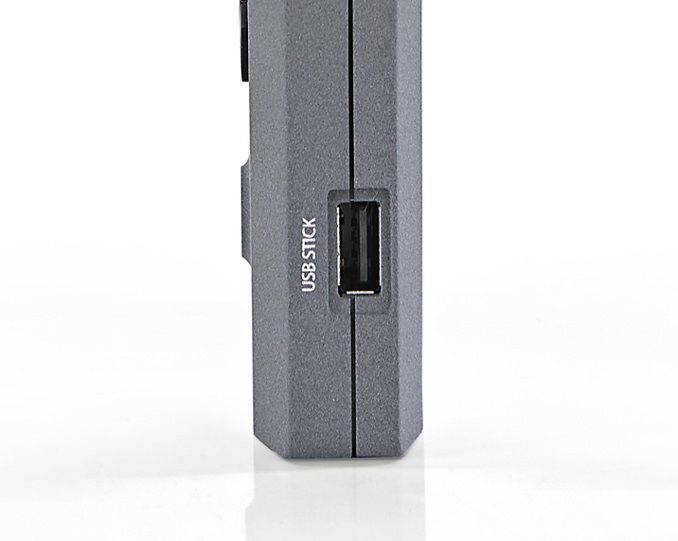
| Data Export | USB stick |
Power
| Parameter | Specification |
|---|---|
| Battery | Internal rechargeable Lithium-Polymer |
| Operating Time | Up to 6 hours |
| Charging Interface | Micro USB |
| Charging Time | Approximately 4 hours |
Physical
| Parameter | Specification |
|---|---|
| Main Unit Dimensions | 173 × 103 × 25 mm |
| Main Unit Weight | 400 g |
| Complete Carry Case Weight | 1.6 kg |
| Operating Temperature | −15°C to +50°C |
| Relative Humidity | <90% |
| Construction | Machined aircraft-grade aluminium enclosure |
| Carry Case | Heavy-duty protective case |
Specifications should be evaluated according to the manufacturer’s stated configuration and operating conditions.
Frequently Asked Questions
What is the CAM-GX5?
The CAM-GX5 is a professional handheld cellular activity monitor designed to detect and help locate cellular and selected wireless activity.
What does CAM-GX5 detect?
It detects supported 2G, 3G, 4G and 5G cellular activity, together with 2.4 GHz and 5 GHz wireless activity including Wi-Fi and Bluetooth.
Can CAM-GX5 detect 5G?
Yes. The CAM-GX5 is designed to detect supported 5G cellular activity within its configured regional bands.
5G availability varies by country and network, so the appropriate regional configuration should be confirmed before deployment.
Does CAM-GX5 detect Wi-Fi?
Yes. The CAM-GX5 provides separate 2.4 GHz and 5 GHz detection for Wi-Fi and other compatible wireless activity.
Does CAM-GX5 detect Bluetooth?
Yes. Bluetooth activity can be detected within the supported 2.4 GHz wireless detection capability.
Can CAM-GX5 detect GPS trackers?
It can detect transmissions from compatible cellular/GPS tracking devices when they transmit within supported bands.
It does not automatically identify every tracker.
Can CAM-GX5 detect hidden wireless cameras?
It may detect wireless camera transmissions operating within supported cellular, 2.4 GHz or 5 GHz bands.
A camera that is not transmitting, or that uses an unsupported communication method, may not produce a detectable signal.
Can CAM-GX5 locate a wireless source?
Yes. Band-specific signal-strength indicators and the adjustable antenna help operators narrow the likely source location.
How far can CAM-GX5 detect a signal?
The manufacturer specifies detection from up to approximately 50 metres, depending on signal strength and ambient conditions.
Actual detection range varies by environment and target.
How many cellular events can CAM-GX5 store?
The cellular event log can store up to 4,000 events.
What information does the event log record?
For detected cellular events, the system records:
- Time
- Date
- Duration
- Detected band
- Signal strength
How long can wireless activity be stored?
The CAM-GX5 can retain up to 24 hours of 2.4 GHz and 5 GHz/Wi-Fi/Bluetooth activity for later review.
Can CAM-GX5 show historical activity?
Yes. The system provides graphical viewing for real-time and historical activity.
Can the CAM-GX5 identify a specific phone?
Not automatically.
The system detects and analyzes supported wireless activity and provides information that can help locate the source.
Identifying the actual physical device requires further investigation.
Can CAM-GX5 read SMS messages?
No.
The device detects wireless activity associated with supported communication systems. It does not provide the content of SMS messages.
Does CAM-GX5 identify the owner of a phone?
No.
Signal detection does not establish the identity of the person using or owning the transmitting device.
Is CAM-GX5 an RF detector?
It is a specialized cellular and wireless activity detection instrument.
It overlaps with RF detection, but its design is particularly focused on cellular activity, 2.4/5 GHz wireless activity, event logging and source localization.
Is CAM-GX5 suitable for TSCM?
Yes.
It is designed for professional applications where cellular and wireless activity needs to be detected, analyzed and localized as part of a broader TSCM or security inspection.
Is CAM-GX5 a complete TSCM solution?
No single detector is a complete TSCM solution.
CAM-GX5 addresses cellular and selected wireless activity and should be used alongside appropriate physical inspection, RF analysis and other TSCM methods when required.
Does CAM-GX5 detect every wireless device?
No.
Detection depends on frequency, transmission behavior, device architecture, signal strength, regional configuration and environmental conditions.
Does a detected signal mean that a surveillance device is present?
No.
A detected signal may originate from a legitimate phone, Wi-Fi access point, Bluetooth device, vehicle system, IoT device or another authorized transmitter.
Professional identification and verification remain necessary.
What should I look for when buying a cellular activity monitor?
Consider:
- Cellular generation support
- Regional band coverage
- 5G support
- 2.4 GHz and 5 GHz detection
- Signal-strength localization
- Historical event logging
- Graphical analysis
- Detection sensitivity
- Battery life
- Field portability
- Data export
- Operational modes
- Professional support
- Integration with broader TSCM procedures
The important question is not only:
“How sensitive is the detector?”
It is:
“How much useful information does it provide after a signal is detected?”
Procurement & Deployment Considerations
Before procurement, professional users should confirm:
Regional Configuration
Confirm that the relevant cellular bands for the deployment country are supported.
Inspection Objective
Determine whether the requirement is:
- Mobile-phone detection
- Cellular activity monitoring
- Wireless camera investigation
- GPS/cellular tracker detection
- TSCM inspection
- Controlled wireless environment monitoring
RF Environment
High-density wireless environments may contain substantial legitimate activity.
Establishing a baseline before interpreting anomalies is therefore important.
Physical Verification
Detection should be followed by physical identification whenever appropriate.
Reporting
For professional inspections, record:
- Date and time
- Location
- Detected band
- Signal strength
- Duration
- Event pattern
- Operator observations
- Physical source
- Verification result
This creates a stronger distinction between:
Instrument output → Operator observation → Interpretation → Confirmed finding
Global Procurement Through Archthetic
The CAM-GX5 is specialized professional technology rather than a generic consumer electronics product.
Archthetic positions specialized security technologies around the complete procurement journey:
Discover → Evaluate → Procure → Deploy
For international organizations, procurement should consider more than the device itself.
Relevant considerations include:
- Regional configuration
- Intended deployment environment
- Professional application
- Technical documentation
- Accessories
- International fulfillment
- Operational requirements
- Applicable laws and regulations
- Post-purchase support
For organizations operating across multiple markets, Archthetic can help connect the technology with the appropriate professional procurement requirement.
Legal & Operational Considerations
Wireless activity monitoring may be subject to privacy, telecommunications, workplace, surveillance or other regulations depending on the jurisdiction and use case.
The CAM-GX5 should be operated only in accordance with applicable laws, organizational policies and authorized security procedures.
Detection is not authorization to intercept, access or disclose communications.
Focused Conclusion
The CAM-GX5 Cellular Activity Monitor is designed for a specific professional requirement:
Detecting, monitoring and helping locate cellular and selected wireless activity in environments where that activity requires security assessment.
Its value comes from combining:
2G / 3G / 4G / 5G Detection
2.4 GHz / 5 GHz Wireless Detection
Signal-Strength Localization
4,000-Event Cellular Logging
24-Hour Wireless Activity History
Graphical Review
International Regional Configuration
The result is more than a simple signal alarm.
It gives qualified operators a way to move from:
“A wireless signal exists.”
to:
“This band is active, this is when it occurred, this is how the activity behaved, and this is where we should investigate next.”
That is the role of the CAM-GX5 in a professional TSCM workflow.
Detect the activity. Understand the pattern. Locate the source. Verify the finding.


Reviews
There are no reviews yet.