


Description
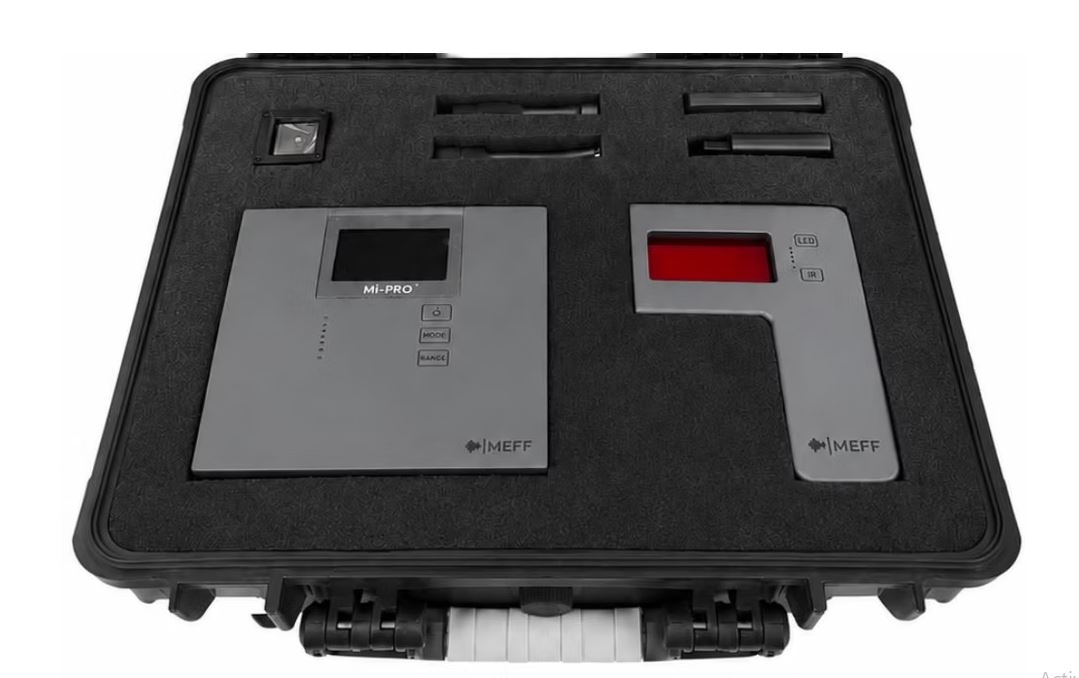
MEFF M1-PRO — Multi-Detection TSCM System for RF, GPS, Thermal, Laser & Infrared Surveillance Detection
Professional TSCM Detection | 0 kHz–20 GHz | Multi-Method Technical Surveillance Inspection
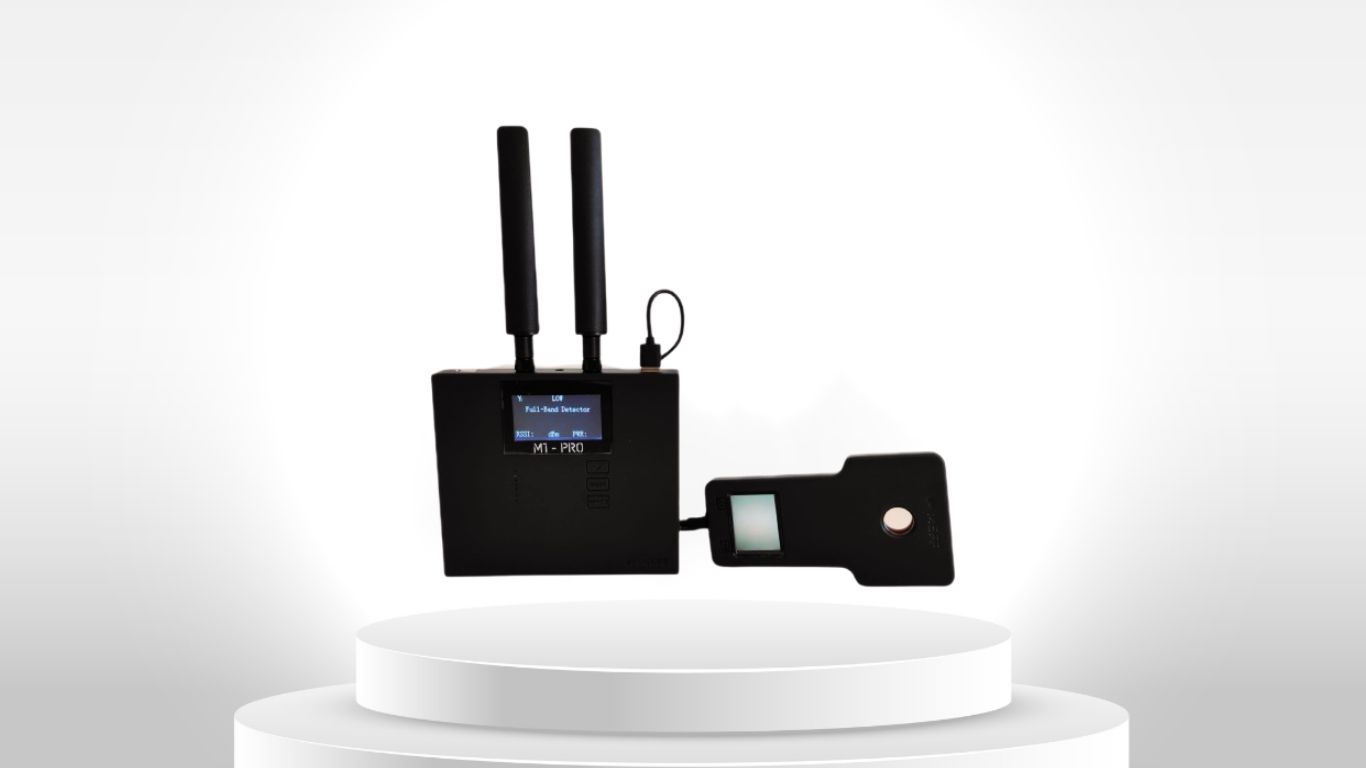
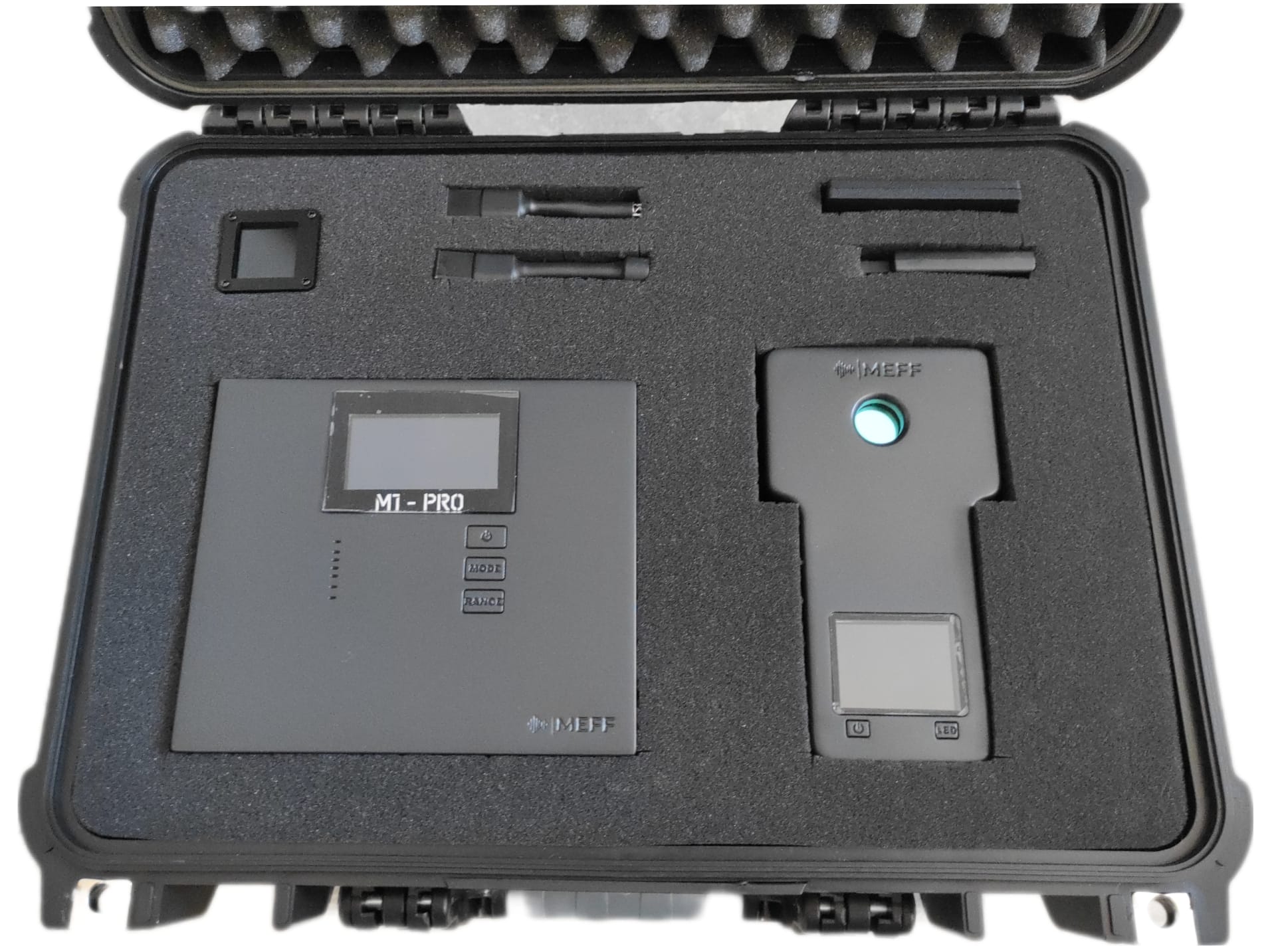
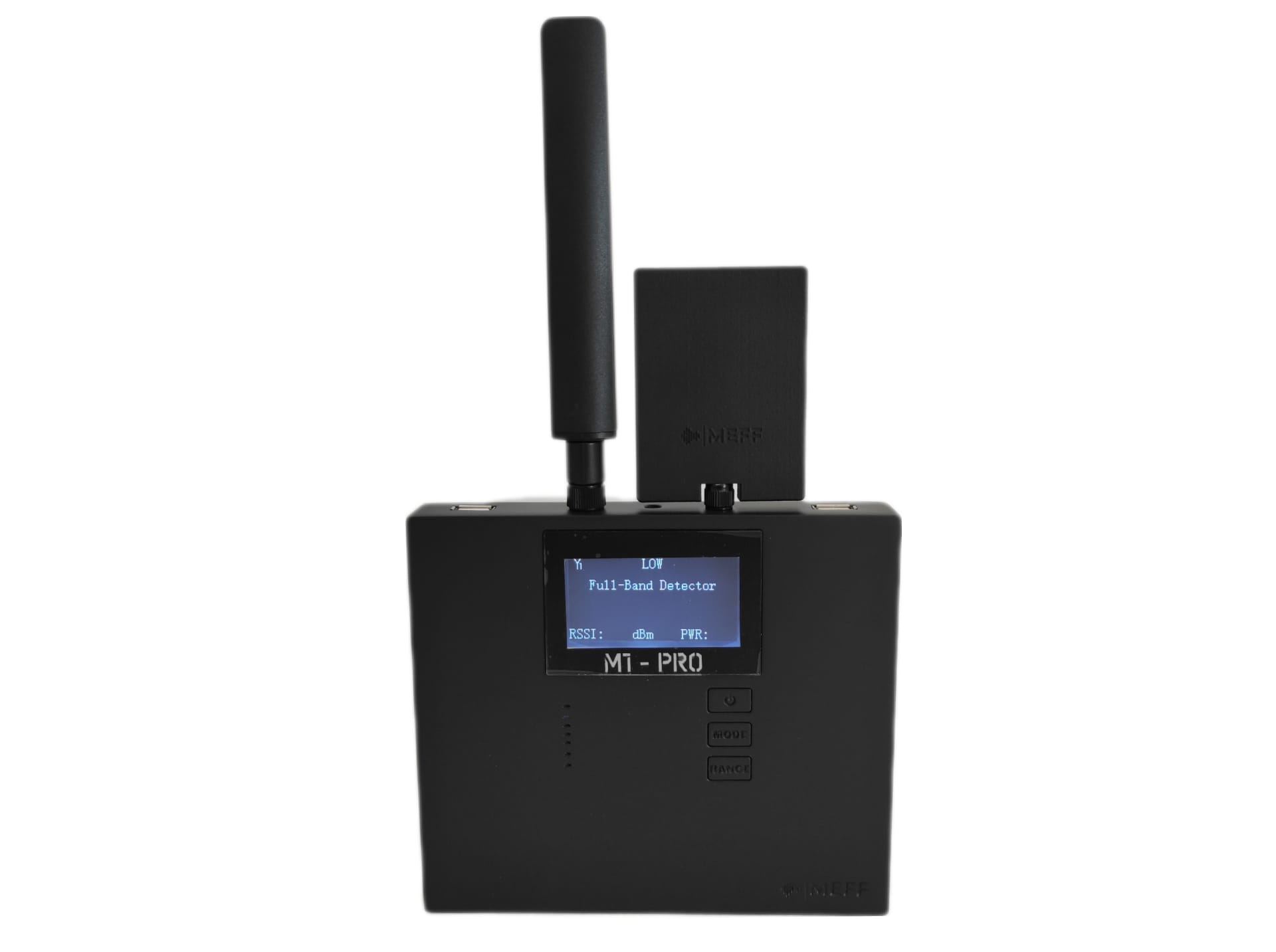
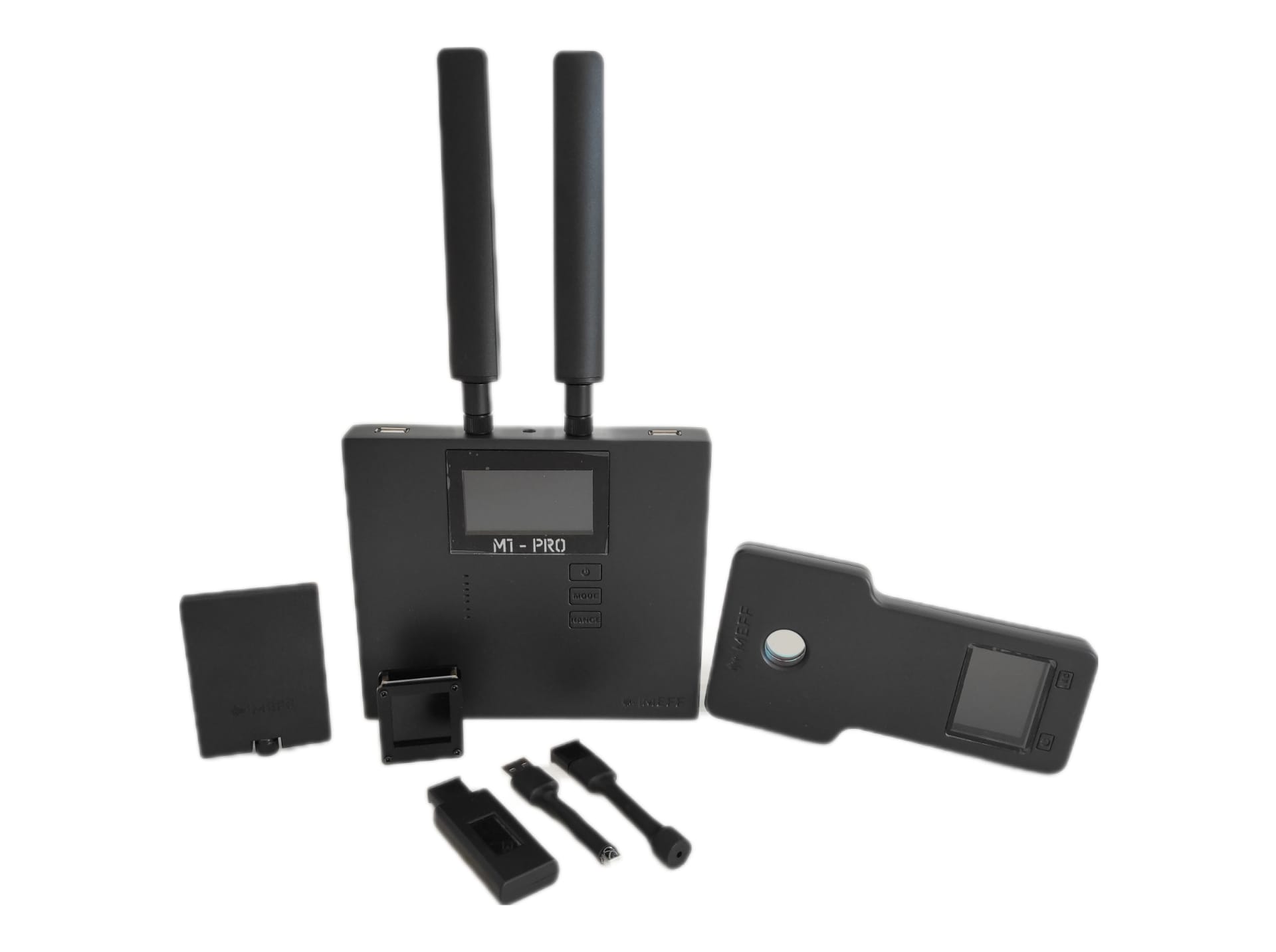
The MEFF M1-PRO is a professional multi-detection TSCM system designed to investigate wireless, wired, standby and specialized surveillance threats that may not be identified through conventional RF detection alone.
Manufactured in Italy, the M1-PRO combines wide-range RF detection, signal-distance measurement, GPS tracker activation, thermal detection, laser/infrared surveillance detection and real-time data recording within a single professional platform.
For security decision makers, this provides a broader approach to technical surveillance inspection: instead of depending on one detection method, security teams can investigate different threat signatures using multiple technologies within one platform.
For TSCM specialists, the M1-PRO provides multiple technical approaches for investigating different surveillance technologies and operating conditions.
Detect → Locate → Activate → Inspect → Verify → Document
Why MEFF M1-PRO Goes Beyond Conventional RF Bug Detection
A modern environment can contain a large amount of legitimate electronic activity.
Mobile phones, Wi-Fi access points, Bluetooth devices, cellular networks and other wireless equipment can all produce normal RF activity.
At the same time, a surveillance device may operate intermittently, remain in standby, transmit through cellular or wireless networks, generate heat, or use laser/infrared technology.
That creates a fundamental challenge for TSCM:
A device that is not behaving like a conventional RF transmitter may require a different detection method.
The M1-PRO addresses this by combining several inspection technologies in one professional platform.
Multi-Method Detection Architecture
The M1-PRO can approach a suspected threat through:
RF Detection
Investigate wireless transmissions across the specified 0 kHz–20 GHz range.
Distance Measurement
Help narrow the location of a detected transmitting source.
GPS Activation
Stimulate compatible GPS trackers operating in standby.
Thermal Detection
Investigate heat generated by powered electronic devices.
Laser & Infrared Detection
Investigate specialized optical surveillance technologies.
Historical Analysis
Record and retain technical information for current and previous investigations.
For a C-Suite or security decision maker, the advantage is straightforward:
Different threats can require different ways of looking for them. M1-PRO puts several of those approaches into one professional TSCM platform.
0 kHz–20 GHz RF Detection for Broad TSCM Coverage
The MEFF M1-PRO provides a specified RF detection range from 0 kHz to 20 GHz.
This broad range allows the operator to investigate RF activity associated with a wide variety of communication and surveillance technologies.
Documented detection applications include:
- 2G
- 3G
- 4G
- 5G
- GSM
- LTE
- Wi-Fi
- Bluetooth
- Mobile phones
- Wireless microphones
- Wireless cameras
- Audio transmitters
- Video transmitters
- Other RF-emitting devices within the supported range
For technical operators, broad frequency coverage provides a larger inspection window.
For decision makers, it means the platform can investigate a wider portion of the electronic environment without being limited to a narrow frequency segment.
Important: RF detection identifies detectable RF activity. It does not automatically determine whether a signal is legitimate, unauthorized or malicious.
Signal Distance Measurement for Source Investigation
Detecting a signal is only the beginning of a TSCM investigation.
The operator also needs to determine:
Where is the signal coming from?
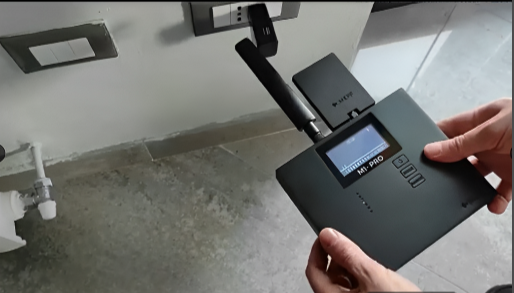
The M1-PRO includes a distance measurement function designed to help the operator investigate the proximity of detected transmitting sources.
As the operator moves through an environment, changes in signal characteristics can assist with narrowing the suspected source location.
A practical investigation can therefore progress from:
Signal detected → proximity assessed → area narrowed → physical source investigated
This can be useful when inspecting:
- Executive offices
- Conference rooms
- Hotel rooms
- Vehicles
- Residences
- Sensitive facilities
- Temporary meeting locations
Distance measurement is an investigative aid. It does not automatically identify the physical device responsible for a detected transmission.
GPS Activation for Standby Tracker Investigation
GPS trackers present a specific challenge during counter-surveillance inspections.
A tracker may not transmit continuously. Instead, it may remain in a standby state and communicate only periodically.
The M1-PRO includes a dedicated GPS Activation Antenna designed to stimulate compatible GPS tracking devices operating in standby so they can resume transmission.
This can support investigations involving:
- Executive vehicles
- Corporate vehicles
- Fleet vehicles
- High-value vehicles
- Personal transportation
- Sensitive assets
The investigation process can become:
Activate → Detect → Locate → Physically Verify
Why This Matters
A conventional RF sweep can potentially miss an intermittently transmitting tracker if the tracker is silent during the inspection.
GPS activation provides an additional method for investigating compatible standby devices.
Important: activation is designed for compatible GPS tracking devices. It is not a guarantee that every inactive tracker will become detectable.
Thermal Detection for Powered Concealed Electronics

A surveillance device does not necessarily need to transmit continuously to leave a detectable physical signature.
Powered electronics consume energy and may generate heat.
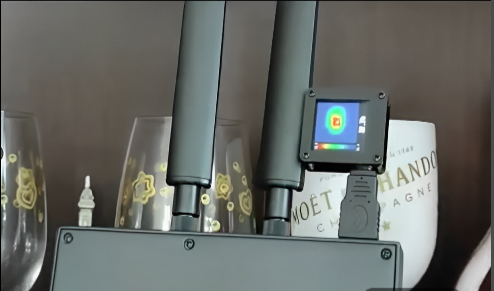
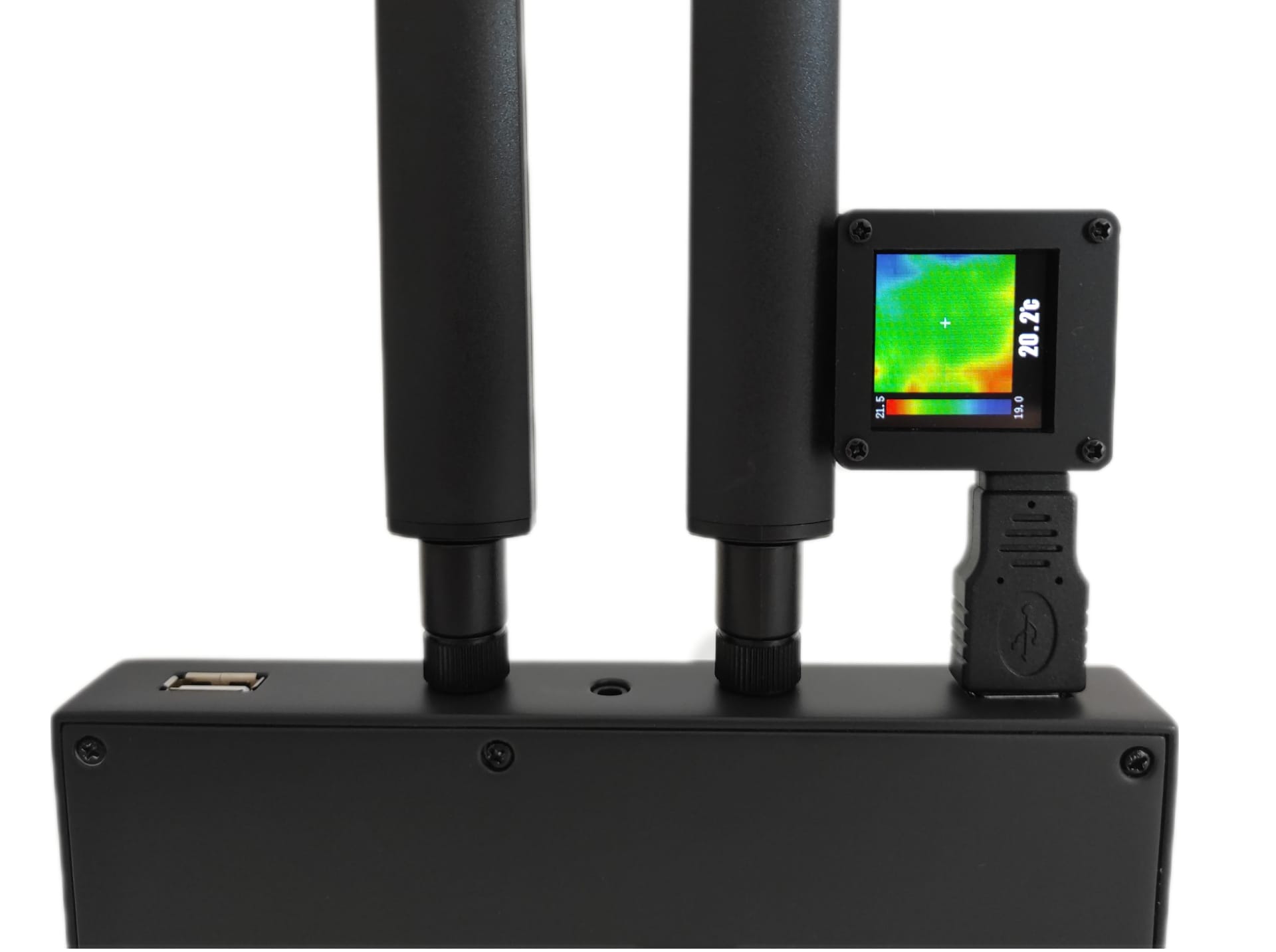
The M1-PRO includes a dedicated probe designed to identify heat generated by powered electronic devices.
This gives the operator another inspection method when RF detection alone does not provide sufficient information.
For example:
RF inspection → no obvious transmission → thermal investigation → unusual heat source → physical verification
This can be useful when investigating concealed electronics in:
- Furniture
- Vehicles
- Walls or concealed areas
- Office environments
- Hotel rooms
- Sensitive meeting spaces
Thermal detection does not identify an object as a surveillance device by itself. Legitimate electronics and environmental heat sources must be considered during technical verification.
Laser & Infrared Detection for Specialized Surveillance Threat



Not every surveillance technology depends on conventional radio transmission.
Some specialized microphone technologies can use laser or infrared methods to capture or transmit information.
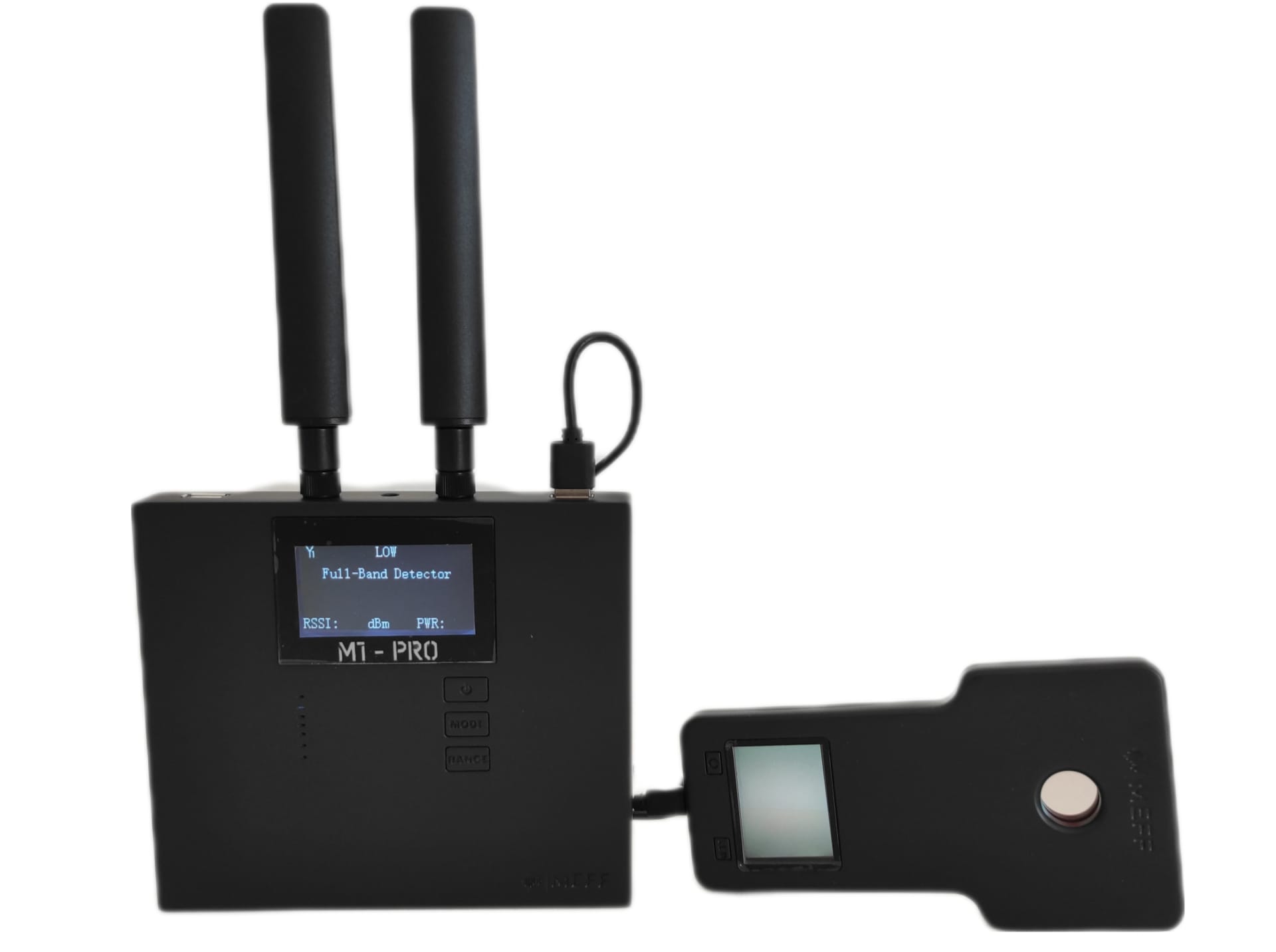
The M1-PRO includes a dedicated Laser/Infrared Antenna designed to investigate laser and infrared microphone surveillance.
This adds an important layer to a professional TSCM inspection because the suspected surveillance source may not behave like a conventional wireless bug.
For sensitive environments, the inspection can therefore extend beyond:
RF → Laser / Infrared
rather than relying exclusively on wireless signal detection.
Detection of Wireless Audio & Video Transmitters
The M1-PRO can investigate RF transmissions associated with wireless audio and video devices operating within its supported frequency range.
Potential applications include:
- Wireless microphones
- Audio transmitters
- Wireless cameras
- Video transmitters
- Cellular surveillance devices
- Wi-Fi surveillance devices
- Bluetooth-enabled devices
However, the presence of an RF transmission does not automatically prove that a surveillance device is present.
Professional TSCM requires the operator to distinguish between:
Known legitimate source → Unknown source → Potentially unauthorized source
and then physically verify relevant findings.
Detecting Devices That Do Not Behave Like Conventional RF Bugs
One of the major advantages of the M1-PRO is that it does not rely entirely on the assumption that every threat will be continuously transmitting RF.
A suspected surveillance device may:
- Transmit continuously
- Transmit periodically
- Remain in standby
- Use cellular communication
- Use Wi-Fi or Bluetooth
- Generate detectable heat
- Use laser transmission
- Use infrared technology
- Be concealed within another object
The M1-PRO provides different inspection methods for these different situations.
This is why it should be understood as a multi-detection TSCM system, rather than simply another RF detector.
Real-Time Analysis & Historical Threat Data
TSCM is not always a one-time inspection.
Sensitive locations may require repeat inspections, follow-up investigations or monitoring of changes in the electronic environment.
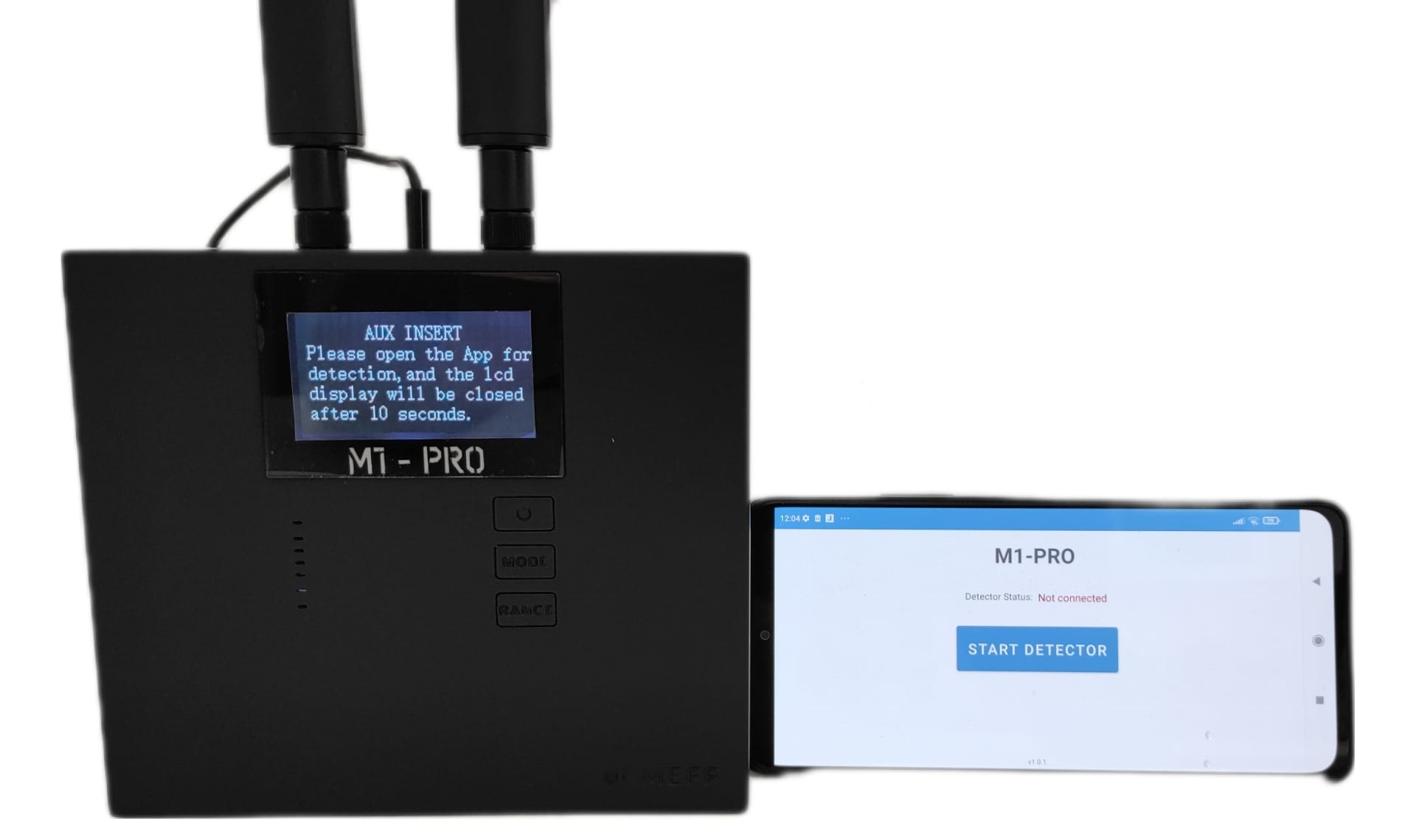
The M1-PRO can record and store real-time analysis data for immediate identification and historical review.
This can support:
- Current threat investigation
- Historical review
- Repeat inspections
- Follow-up investigations
- Comparison of previous findings
- Documentation of detected activity
For security teams, this provides a more structured way to retain technical inspection information.
For TSCM professionals, historical data can become part of the broader investigative record.
A Professional MEFF M1-PRO TSCM Inspection Workflow
1. Establish the Environment
Begin by examining the RF environment across the specified 0 kHz–20 GHz range.
The objective is to understand what detectable activity exists before determining whether anything requires further investigation.
2. Identify Unusual Activity
Review detected signals and identify activity that appears relevant, unexpected or inconsistent with the known environment.
3. Narrow the Source
Use signal behavior and distance measurement to help narrow the suspected location.
4. Investigate Specialized Threats
If the suspected device may be a standby GPS tracker, use the GPS Activation Antenna where appropriate.
If the suspected device may be powered but not transmitting, investigate using the thermal detection probe.
If an optical surveillance threat is suspected, use the Laser/Infrared Antenna.
5. Physically Verify
A detection result is not the final conclusion.
The suspected source should be physically investigated and classified as:
Known legitimate → Unknown → Requires further investigation → Confirmed threat
6. Record the Investigation
Use the system’s data-recording capabilities to retain relevant technical information for current or historical review.
The Result
Detection → Investigation → Verification → Documentation
This is the foundation of a more disciplined technical surveillance inspection.
Designed for High-Sensitivity Security Environments
Corporate Security
M1-PRO can support technical inspections of:
- Boardrooms
- Executive offices
- Confidential meeting rooms
- Strategy rooms
- Negotiation spaces
- Sensitive corporate facilities
For organizations protecting intellectual property, strategic discussions and confidential communications, technical surveillance can represent a significant information-security risk.
Executive Protection
M1-PRO can support counter-surveillance inspections involving:
- Executive vehicles
- Hotel rooms
- Residences
- Meeting venues
- Temporary locations
- Travel environments
Government & Sensitive Facilities
The system can support technical inspections where unauthorized surveillance could compromise:
- Confidential information
- Sensitive communications
- Restricted operations
- Government discussions
- Strategic information
Professional TSCM Consultants
The M1-PRO is designed for professionals who require multiple detection methodologies within their technical surveillance counter-measures workflow.
Security & Investigation Teams
It can support investigations where the surveillance method, transmission behavior or physical location of the suspected device is initially unknown.
Professional TSCM Equipment for International Security Operations
Modern security environments differ across countries because of variations in:
- Cellular networks
- Wireless infrastructure
- RF congestion
- Building construction
- Technology deployment
- Operational requirements
- Threat profiles
The M1-PRO’s broad detection architecture allows professional operators to investigate different environments using multiple technical methods rather than relying on a single detection technology.
This makes it relevant to international TSCM operations, corporate security, executive protection, government security and sensitive-site inspections.
What Can the MEFF M1-PRO Help Investigate?
RF & Wireless Surveillance
- RF transmitters
- GSM/LTE devices
- Cellular activity
- Wi-Fi devices
- Bluetooth devices
- Wireless microphones
- Wireless cameras
- Audio transmitters
- Video transmitters
Tracking Threats
- GPS tracking devices
- Compatible standby GPS trackers
- Periodic tracker transmissions
Specialized Surveillance
- Laser microphones
- Infrared microphone systems
- Concealed powered electronics
- Standby surveillance equipment
General Electronic Threat Investigation
- Unknown RF sources
- Unusual wireless activity
- Concealed powered electronics
- Potential unauthorized surveillance devices
Technical Specifications
RF Detection
- Frequency Range: 0 kHz–20 GHz
- Detection of supported RF transmissions
- GSM
- LTE
- 2G / 3G / 4G / 5G
- Wi-Fi
- Bluetooth
- Wireless audio transmission
- Wireless video transmission
- Signal-distance measurement
Specialized Detection
- Laser/Infrared Antenna: Detection of laser and infrared microphone surveillance
- GPS Activation Antenna: Activation of compatible GPS trackers operating in standby
- Thermal Detection Probe: Detection of heat generated by powered electronic devices
- Multi-method concealed-device investigation
Data & Analysis
- Real-time analysis data
- Data recording and storage
- Immediate threat identification
- Historical threat information
Manufacturing
- Designed and manufactured in Italy
- Professional multi-detection TSCM platform
Technical specifications and capabilities are subject to the manufacturer’s current documentation and the exact configuration supplied with the product.
Frequently Asked Questions About MEFF M1-PRO
What is the MEFF M1-PRO and what is it designed to detect?
The MEFF M1-PRO is a multi-detection TSCM system designed to investigate wireless, wired, standby and specialized electronic surveillance threats.
Its documented capabilities include RF detection, signal-distance measurement, GPS tracker activation, thermal detection, and laser/infrared surveillance detection.
For a security executive, this means the platform can investigate different types of potential surveillance rather than depending exclusively on RF detection.
For a TSCM professional, it provides multiple detection methodologies for different threat signatures and operating conditions.
What is the RF frequency range of the M1-PRO?
The specified RF detection range is 0 kHz to 20 GHz.
This provides broad coverage for investigating supported cellular, wireless and surveillance-related RF activity.
The frequency range alone does not mean that every device within 0–20 GHz can automatically be identified. Detection depends on the device’s transmission characteristics, operating state and the M1-PRO’s applicable detection methodology.
Is the M1-PRO an RF detector or a complete TSCM system?
The M1-PRO is a multi-detection TSCM platform, with RF detection forming one part of its capabilities.
It also incorporates:
- GPS activation
- Thermal detection
- Laser/infrared detection
- Signal-distance investigation
- Real-time and historical data recording
It should not, however, be treated as a substitute for professional TSCM methodology. A complete inspection may require physical examination, additional technologies and expert interpretation depending on the threat model.
Why would an expert choose M1-PRO instead of a conventional RF detector?
A conventional RF detector primarily answers:
“Is RF activity present?”
The M1-PRO is designed to support a broader set of questions:
“What type of activity might be present?”
“Where is the transmitting source?”
“Could a standby tracker be activated?”
“Is there a powered electronic device that is not transmitting?”
“Could the surveillance technology use laser or infrared instead of conventional RF?”
This multi-method approach is particularly relevant when the threat cannot be assumed to be a continuously transmitting RF bug.
How does the distance measurement function work during a TSCM inspection?
The distance measurement function assists the operator in assessing proximity to a detected transmitting source.
The operator can use changes in detected signal characteristics while moving through the inspection area to narrow the suspected source.
It should be understood as a source-location aid, not an automatic device-identification system.
Physical inspection remains necessary to determine what is actually producing the signal.
Can M1-PRO detect a GPS tracker?
Yes. The M1-PRO is designed to investigate GPS tracking devices and their associated transmissions.
It also includes a dedicated GPS Activation Antenna for compatible trackers operating in standby.
Why does M1-PRO have a GPS Activation Antenna?
Some GPS trackers do not transmit continuously.
A tracker may remain in standby and transmit location data only at intervals.
The GPS Activation Antenna is designed to stimulate compatible standby GPS trackers, potentially causing them to resume transmission so the M1-PRO can investigate the resulting RF activity.
This is particularly relevant to vehicle and executive-protection TSCM inspections.
Can M1-PRO detect a GPS tracker that is completely powered off?
No detection system should claim to reliably detect an electronic tracker that is completely powered off and producing no detectable physical, thermal or electronic signature.
The GPS Activation function is intended for compatible devices operating in standby, not completely powered-down equipment.
Can the thermal probe detect a hidden recorder?
The thermal probe is designed to detect heat generated by powered electronic devices.
It may therefore help an operator locate a concealed powered electronic device, including a device that is not currently transmitting RF.
However, thermal detection does not identify the device as an audio recorder automatically. The suspected object must be physically investigated and verified.
Why is thermal detection useful in TSCM?
RF detection depends on detectable RF activity.
A powered electronic device may exist without producing a useful RF transmission during the inspection.
Thermal inspection provides a different physical signature:
RF activity → electromagnetic signature
versus:
Thermal inspection → heat generated by powered electronics
Using both methods can provide additional information during a concealed-device investigation.
Can M1-PRO detect laser microphones?
Yes. The M1-PRO includes a dedicated Laser/Infrared Antenna designed to investigate laser and infrared microphone surveillance.
This extends the inspection beyond conventional RF surveillance technologies.
Why would a laser or infrared microphone require a different detection method?
Because optical surveillance technologies do not necessarily behave like conventional RF transmitters.
A conventional RF sweep may therefore not provide the information required to investigate a potential laser or infrared surveillance system.
The dedicated optical/infrared detection capability gives the TSCM operator another technical inspection method.
Can a laser microphone be positioned outside the protected room?
Certain laser-based surveillance technologies can potentially operate from outside a protected environment.
For highly sensitive rooms, this is one reason a comprehensive TSCM methodology may consider RF, physical, optical and other technical surveillance methods, rather than focusing exclusively on wireless transmitters inside the room.
Can M1-PRO detect Wi-Fi and Bluetooth devices?
Yes. Wi-Fi and Bluetooth transmissions can be investigated within the M1-PRO’s supported RF detection capabilities.
However, most modern environments contain legitimate Wi-Fi and Bluetooth devices.
Therefore:
Detection ≠ identification of a threat.
The operator must determine whether the detected source is expected, unknown or potentially unauthorized.
Can M1-PRO detect 2G, 3G, 4G and 5G signals?
Yes. The documented detection applications include 2G, 3G, 4G, 5G and LTE.
These technologies can be relevant to mobile phones, cellular surveillance equipment, GPS trackers and other wireless devices.
Can M1-PRO detect wireless cameras?
It can investigate RF transmissions from wireless cameras and video transmitters when they operate within its supported detection range.
A wireless camera that is not transmitting RF may require another detection method or physical inspection.
Can M1-PRO detect hidden cameras that are completely offline?
No single RF-based method can guarantee detection of a device that is completely inactive and producing no detectable signal.
The M1-PRO’s advantage is that it provides additional detection approaches, including thermal and specialized surveillance detection, but professional physical inspection remains important.
Can M1-PRO detect wired surveillance devices?
The M1-PRO is designed to investigate both wired and wireless surveillance scenarios through its multi-detection probe architecture.
The exact ability to identify a wired device depends on how the device is installed, powered and connected to the surrounding environment.
Can M1-PRO detect a surveillance device that is in standby?
Potentially, depending on the type of device.
The M1-PRO provides different approaches for standby scenarios:
- GPS Activation can stimulate compatible GPS trackers.
- Thermal detection can investigate heat from powered electronics.
- RF detection can identify intermittent transmissions when they occur.
A completely inactive device with no detectable signature cannot be guaranteed to be found by any single instrument.
Does M1-PRO detect every RF signal?
No.
The M1-PRO should be understood as a professional detection and investigation platform operating within its specified technical architecture.
Detection depends on the frequency, transmission characteristics, signal strength, operating state and environment.
Professional interpretation remains necessary to determine the significance of detected RF activity.
Is M1-PRO suitable for vehicle TSCM?
Yes.
Its RF detection, signal-distance measurement, GPS activation and thermal inspection capabilities make it particularly relevant to vehicle counter-surveillance investigations.
Vehicle inspections may involve suspected GPS trackers, cellular transmitters and concealed powered electronics.
Is M1-PRO suitable for executive protection?
Yes.
Executive protection teams can use the M1-PRO to support technical inspections of:
- Vehicles
- Hotel rooms
- Residences
- Offices
- Meeting venues
- Temporary locations
This can add a technical surveillance layer to broader protective-security procedures.
Is M1-PRO suitable for corporate TSCM?
Yes.
It can support inspections of boardrooms, executive offices, confidential meeting spaces and sensitive corporate facilities where unauthorized surveillance could expose strategic or commercially sensitive information.
Is M1-PRO suitable for government security operations?
The M1-PRO is designed for professional security and TSCM applications and can support inspections in sensitive environments where unauthorized surveillance is a concern.
Its multi-detection architecture can be relevant when the threat model extends beyond conventional RF transmitters.
Who should operate the M1-PRO?
The system is designed for TSCM professionals, counter-surveillance specialists, security teams, executive protection personnel, government/security organizations and professional investigators.
The instrument provides detection information; professional interpretation is required to determine what the detected information means in a particular environment.
Does buying M1-PRO mean an organization no longer has to worry about eavesdropping?
No security device can responsibly guarantee that a location is completely free of surveillance.
The value of M1-PRO is that it provides multiple technical methods for identifying and investigating potential surveillance signatures, helping security teams reduce blind spots during an appropriate TSCM inspection.
For high-value environments, the strongest protection comes from combining technology, professional methodology, physical inspection, operational security and repeat assessment.
What is the biggest advantage of M1-PRO for a C-Suite or security decision maker?
The primary advantage is inspection breadth.
Instead of purchasing a device designed around only one surveillance signature, M1-PRO combines several detection approaches within one professional platform.
That can help an organization investigate a wider range of potential threats while giving the TSCM team more options when a suspected device does not behave as expected.
What is the recommended M1-PRO TSCM workflow?
A practical workflow is:
1. RF Detection → establish the electronic environment
2. Signal Investigation → identify activity requiring attention
3. Distance Measurement → narrow the suspected transmitting source
4. GPS Activation → investigate compatible standby trackers
5. Thermal Inspection → investigate powered concealed electronics
6. Laser/Infrared Inspection → investigate specialized optical surveillance
7. Physical Verification → determine the actual source
8. Documentation → retain relevant technical findings
The objective is not simply to detect more signals.
The objective is to reduce uncertainty around potential surveillance threats.
MEFF M1-PRO — Multi-Detection TSCM Technology for Serious Security Environments
The MEFF M1-PRO is designed around a simple security reality:
Surveillance technology does not always announce itself in the same way.
Some threats transmit RF.
Some transmit intermittently.
Some trackers remain in standby.
Some powered devices leave a thermal signature.
Some specialized surveillance systems use laser or infrared technologies.
M1-PRO brings these different investigation methods together in one professional platform.
0 kHz–20 GHz RF Detection
Signal Distance Measurement
GPS Tracker Activation
Thermal Detection
Laser & Infrared Detection
Wireless Audio & Video Investigation
Real-Time & Historical Analysis
For organizations protecting confidential communications, executive environments, sensitive facilities, intellectual property and high-value information, M1-PRO provides a broader technical approach to TSCM inspection.
The goal is not simply to find a signal.
The goal is to give the security team more ways to find, investigate and verify what should not be there.


Reviews
There are no reviews yet.