
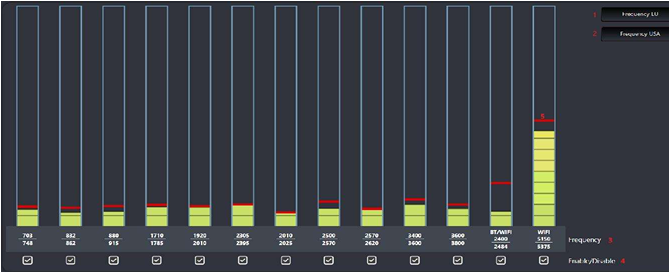
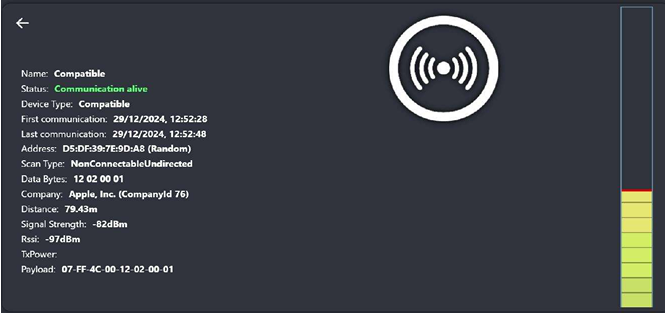
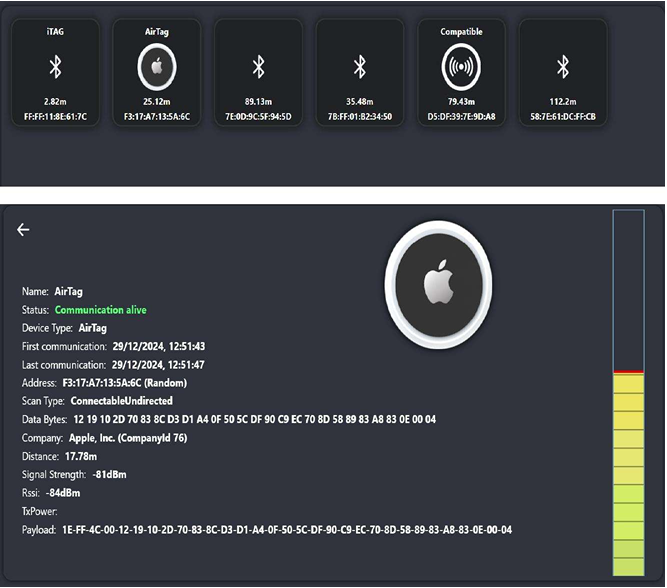
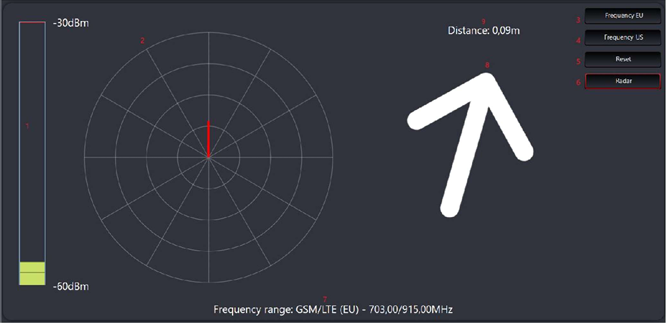


Description
MEFF M2-PRO — AI-Powered TSCM Spectrum Analyzer for RF, Wireless & Physical Line Investigation
100 Hz–24 GHz | Targeted Threat Detection | Signal Demodulation | 360° Directional Locating | Sentinel Monitoring
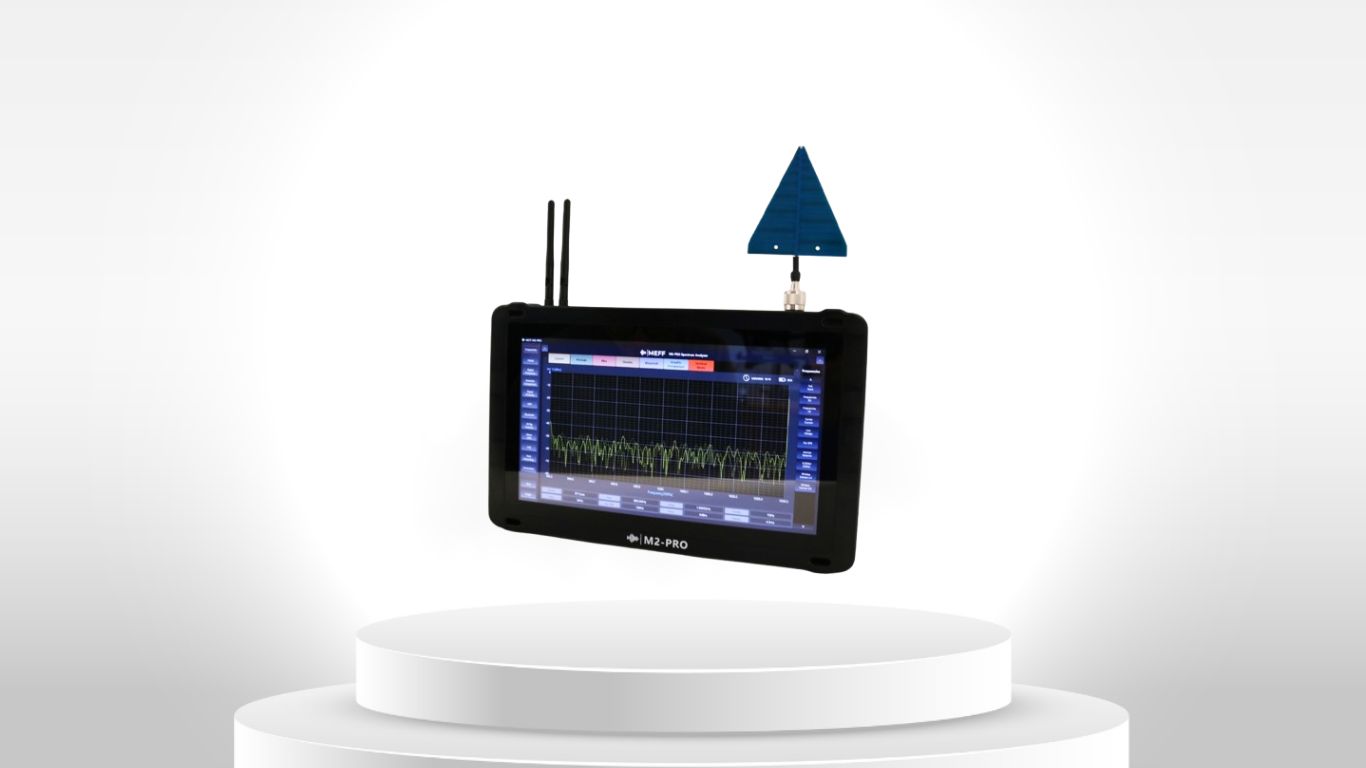
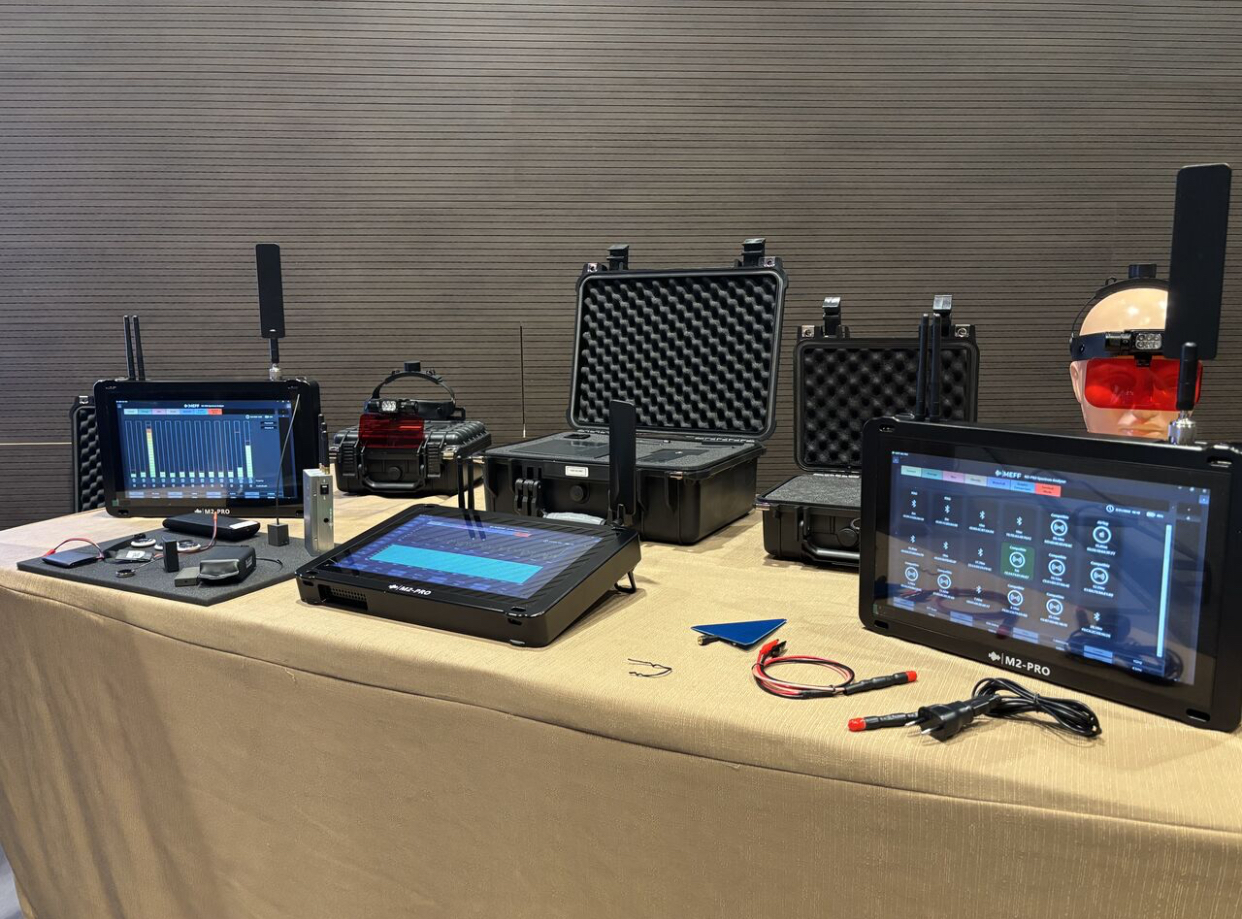
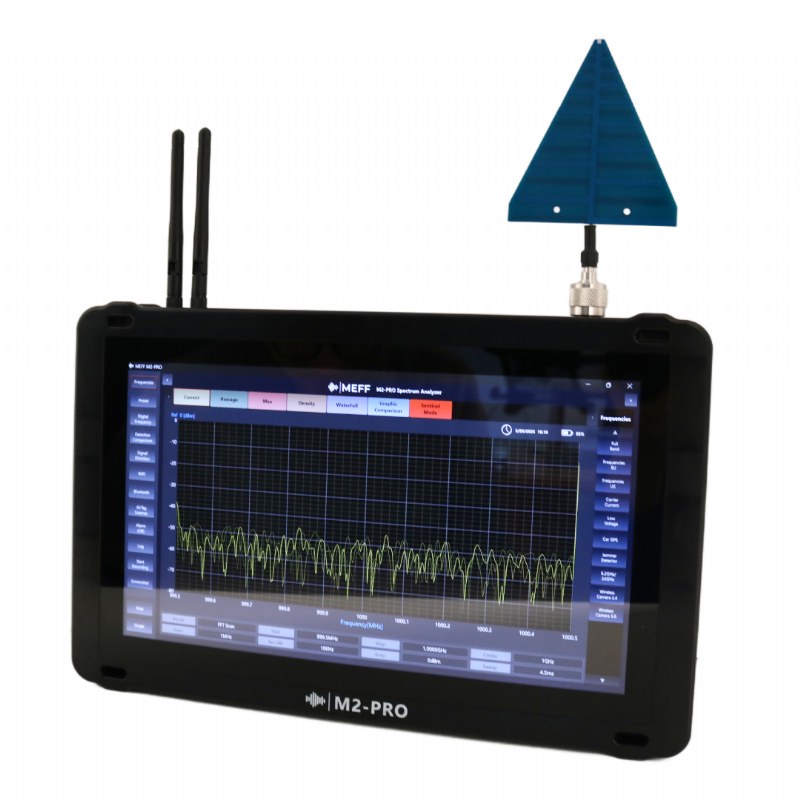
The MEFF M2-PRO is a professional TSCM spectrum analysis and threat investigation platform designed to help security professionals detect, analyze, locate and document suspicious activity across RF, wireless and selected physical communication pathways.
Operating from 100 Hz to 24 GHz, the M2-PRO combines high-speed spectrum scanning with targeted detection for AirTags, BLE, Wi-Fi, Bluetooth and wireless cameras, while also providing 360° directional radar locating, signal demodulation, physical line inspection, room-baseline comparison, autonomous monitoring and on-device reporting.
In practical terms, it allows an operator to move beyond simply asking:
“Is there a signal here?”
and investigate:
“What is transmitting, where is it coming from, how is it behaving, is it different from the established environment, and does it require further investigation?”
That makes the M2-PRO particularly suited to professional TSCM inspections, counter-surveillance, sensitive-room security, corporate security assessments and technical security compliance programs.
Why the MEFF M2-PRO Is Different
Many RF detectors are designed primarily to indicate that RF energy is present.
The M2-PRO approaches the problem differently by combining several layers of investigation within one platform:
Detection → Analyze → Identify → Locate → Compare → Monitor → Report
A TSCM operator can use the system to establish an RF baseline, investigate unusual activity, examine signal characteristics, locate a transmitting source, compare the environment against previous measurements and continue monitoring after the inspection.
It also extends beyond RF-only investigation with dedicated tools for power lines, DC carrier currents, LAN/Ethernet infrastructure and analog telephone lines.
This makes the M2-PRO a multi-layer technical security inspection platform, rather than simply a handheld RF detector.
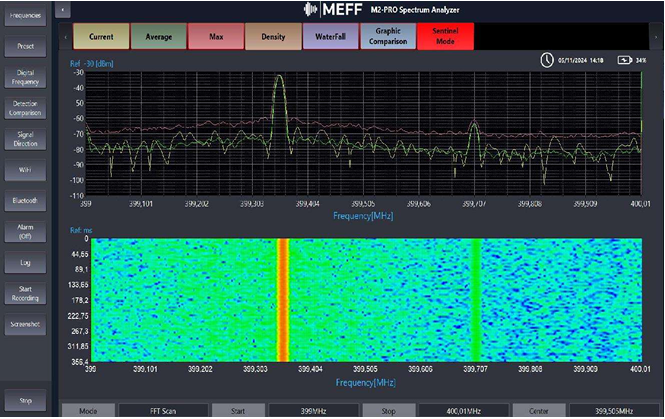
100 Hz–24 GHz Spectrum Coverage with High-Speed Scanning
The M2-PRO covers 100 Hz to 24 GHz, providing a broad operating range for investigating RF activity across a wide variety of wireless technologies and signal sources.
Its sweep system supports microsecond-range scanning, with a maximum scan interval of up to 250 ms, allowing the operator to rapidly examine the spectrum and investigate transient or changing RF activity.
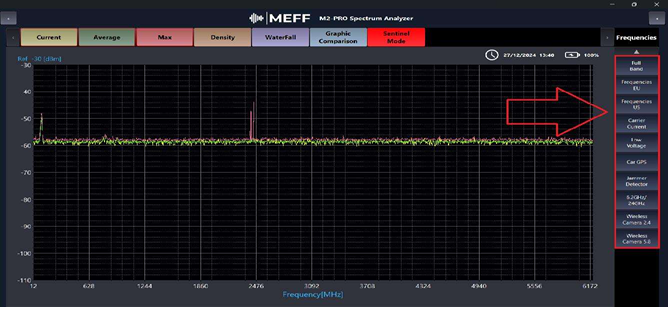
Regional filtering can be configured for:
- EU
- US
- ASIA
This helps operators focus the inspection on relevant regional signal standards rather than treating every frequency as equally relevant.
Targeted Wireless Threat Detection
The M2-PRO combines broad spectrum analysis with dedicated detection functions for specific wireless technologies.
AirTag & BLE Detection
The system provides dedicated scanning for Apple AirTags and BLE devices, with available information including MAC address and vendor identification.
This can support investigations involving potential unauthorized tracking devices or unknown Bluetooth-based equipment.
Wi-Fi & Bluetooth Identification
The M2-PRO can identify supported Wi-Fi and Bluetooth devices, including MAC address and vendor information where available.
This gives the operator more context than simply seeing RF energy on a spectrum display.
Wireless Camera Detection
The system provides targeted detection for wireless video cameras operating at 2.4 GHz and 5.8 GHz.
This can complement dedicated camera-detection equipment when conducting a broader TSCM inspection.
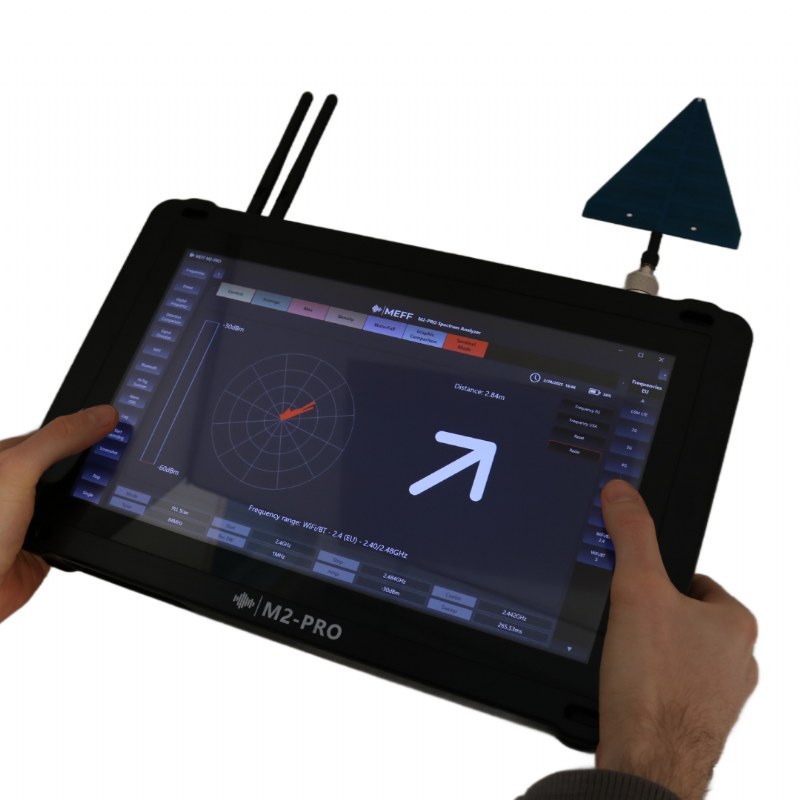
360° Directional Radar Locating
Detecting a suspicious transmission is only the beginning.
The M2-PRO includes 360° directional radar locating to help the operator investigate the direction and approximate source location of a target transmitter.
Instead of simply watching a signal rise on a display, the operator can use directional information to progressively narrow the search area.
A simple way to understand it:
Detect the signal → determine direction → move toward the source → investigate the physical area.
The directional system supports source localization but does not automatically identify the physical device or establish that a transmitter is unauthorized.
Advanced Signal Analysis & Demodulation
For experienced TSCM professionals, RF detection is only one part of the investigation.
The M2-PRO provides tools for examining how a signal is structured and behaving, including analog and digital demodulation.
Analog Demodulation
Supports:
- AM
- FM
- PM
Digital Demodulation
Supports:
- MSK
- GMSK
- BPSK
- QPSK
- 8PSK
These functions allow qualified operators to move beyond signal presence and examine supported signal characteristics in greater detail.
Professional DSP & I/Q Analysis
For advanced RF analysis, the M2-PRO provides visual DSP tools including:
- Complex I/Q analysis
- Error Vector Magnitude (EVM)
- Eye Diagrams
- Phase Demodulation
- Signal Density Persistence
- Constellation-style analysis
For a non-technical buyer:
These tools help specialists understand how a signal behaves, rather than simply showing that a signal exists.
For an experienced RF or TSCM professional, they provide a deeper analytical layer for investigating supported digital and analog transmissions.
Manual RF Measurement Controls
The M2-PRO provides detailed control over key spectrum-analysis parameters, including:
- Resolution Bandwidth (RBW)
- Video Bandwidth (VBW)
- Occupied Bandwidth (OBW)
- Channel Power
- Up to 5 simultaneous multi-marker comparisons
This allows experienced operators to adjust the analysis according to the signal and inspection objective rather than relying exclusively on automatic settings.
Physical Line & Power Inspection
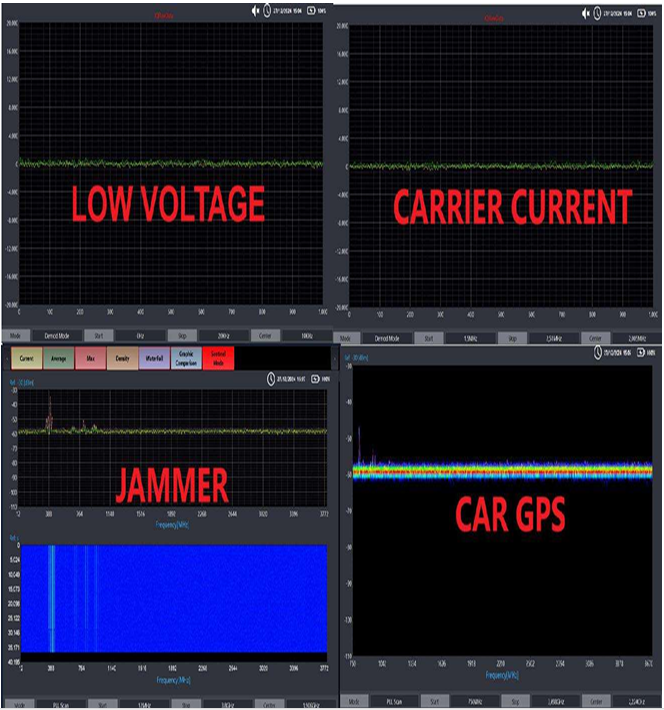
One of the major distinctions of the M2-PRO is that its inspection capabilities are not limited to wireless RF.
The platform includes integrated probes for investigating potential signal pathways through:
AC Power
220V power-line inspection.
DC Carrier Currents
3.7–12V DC carrier-current inspection.
LAN / Ethernet
Physical inspection of LAN/Ethernet infrastructure using the supplied accessories.
Analog Telephone Lines
Inspection capability for analog telephone lines.
This provides another layer of TSCM investigation when a potential surveillance or communication pathway may not be transmitting through conventional over-the-air RF.
Room Baseline Comparison
A professional TSCM inspection often needs more than a snapshot.
The M2-PRO’s Room Selection and Detection Comparison functions allow signal profiles to be stored and compared across:
- Different rooms
- Different inspection dates
- Before-and-after inspection conditions
- Target locations
This creates a practical baseline workflow:
Establish Normal → Store Baseline → Reinspect → Compare → Investigate New Activity
For security compliance teams, this can also support more structured documentation of changes within sensitive environments.
Sentinel Mode — Continuous RF Monitoring
A room can be clear during an inspection and still change later.
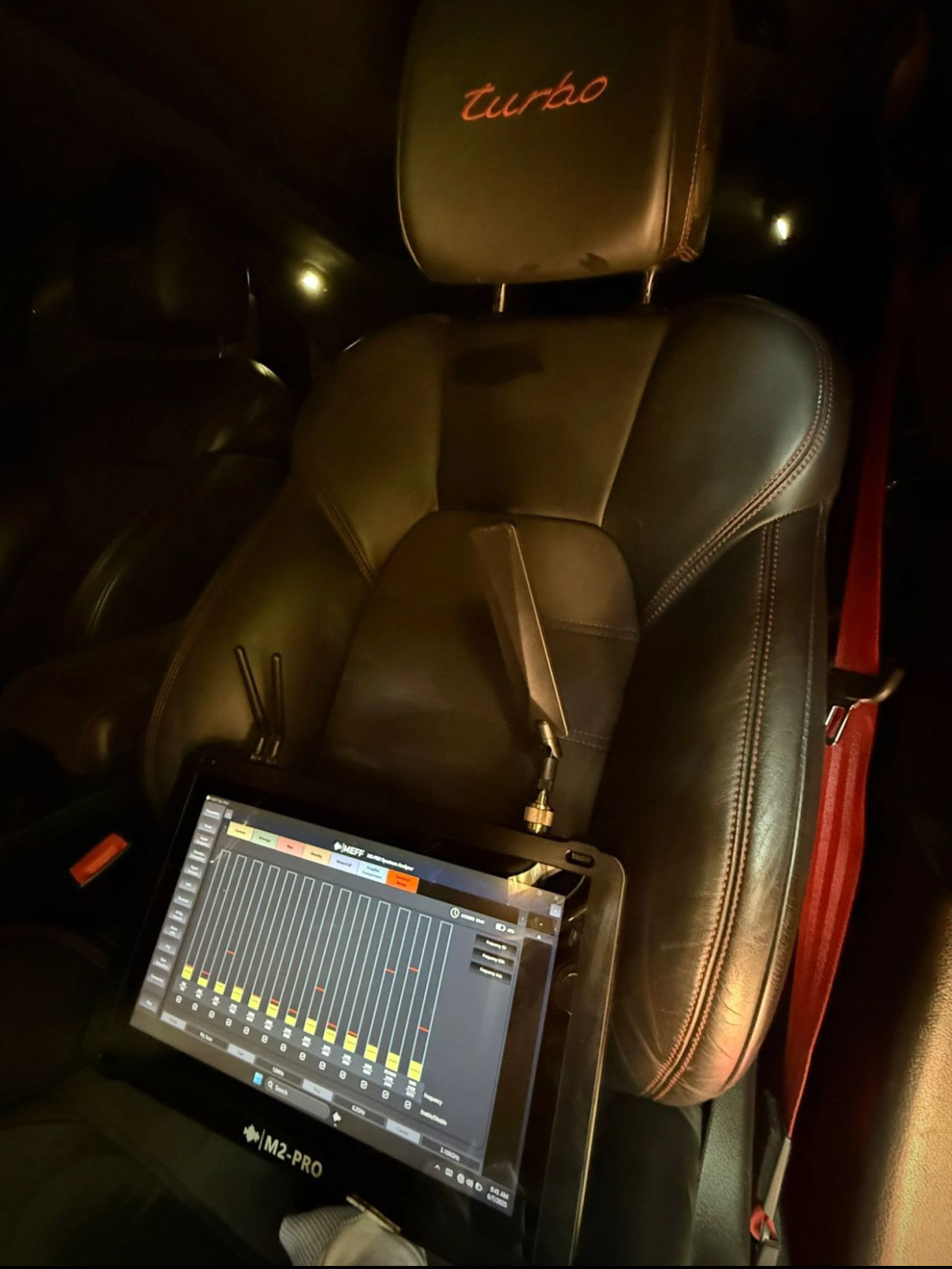
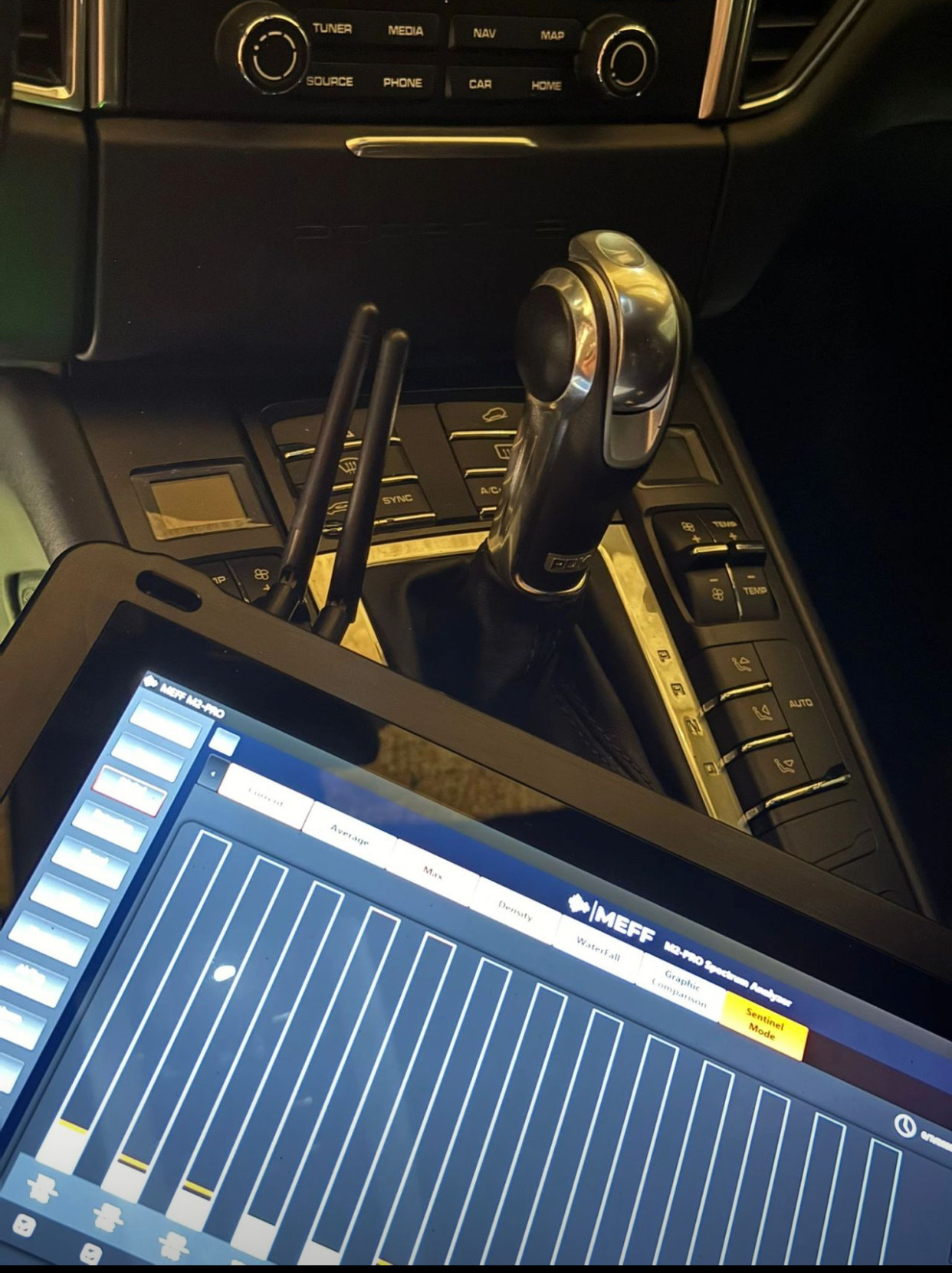
Sentinel Mode allows the M2-PRO to operate as an autonomous background monitoring platform, logging RF activity and using configurable dBm threshold alarms to identify activity that crosses the selected monitoring threshold.
This is particularly useful for environments where continuous monitoring matters, such as:
- Executive meeting rooms
- Sensitive conference rooms
- Government facilities
- High-security offices
- Critical technical areas
- Other controlled environments
The concept is simple:
Sweep → Establish Baseline → Clear → Monitor → Detect Change
Reporting Without External PC Software
The M2-PRO can generate and export PDF technical logs and screen captures directly from the device.
This allows operators to retain documentation of:
- Detection events
- Spectrum observations
- Screen captures
- Inspection results
- Technical measurements
For TSCM teams, this can reduce the gap between technical inspection and formal reporting.
For security management, it provides a practical inspection record that can be retained for internal documentation and review.
Remote Operation & Centralized Monitoring
The M2-PRO includes built-in Wi-Fi and Ethernet connectivity and is pre-configured with AnyDesk Professional for remote operation.
This enables scenarios where the device is deployed at a sensitive location while authorized personnel access the system remotely.
Potential applications include:
Remote room monitoring → Central security oversight → Remote technical review → SOC monitoring
Actual integration depends on the organization’s network, security architecture and deployment configuration.
Built for Field Deployment
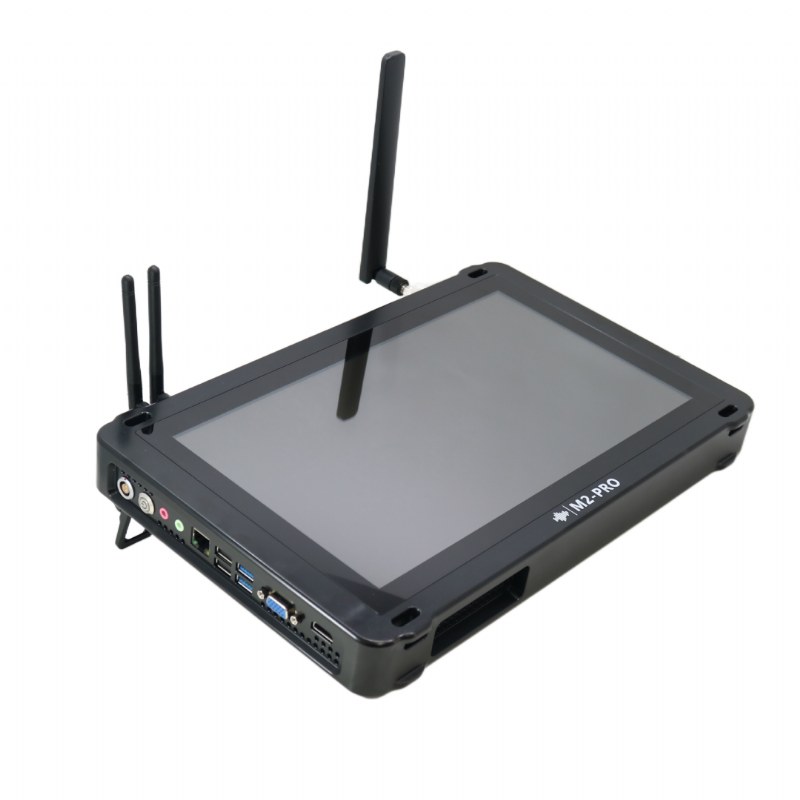
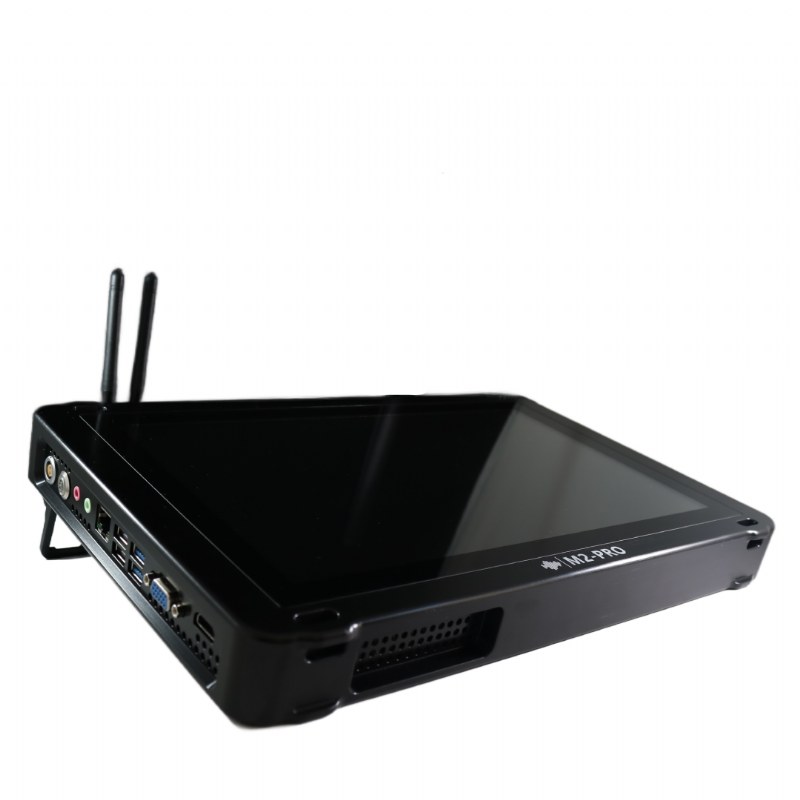
The M2-PRO combines substantial analytical capability with a self-contained portable design.
Hardware
- 13-inch Full HD capacitive touchscreen
- Ruggedized aluminum alloy chassis
- 128 GB internal storage
- Up to 7 hours continuous battery life
- Built-in Wi-Fi
- Ethernet connectivity
Included Inspection Accessories
The system is supplied with:
- 3 directional/omni antennas
- High-voltage probes
- Low-voltage probes
- LAN splitters
- Shoulder strap
- Military-grade protective carrying case
This allows the M2-PRO to arrive as a prepared inspection platform rather than requiring the operator to assemble multiple accessories before deployment.
How M2-PRO Fits Into a Professional TSCM Workflow
A practical M2-PRO workflow can look like this:
1. Establish the Environment
Perform a wideband scan across 100 Hz–24 GHz.
2. Identify Relevant Activity
Use targeted detection for supported Wi-Fi, Bluetooth, BLE, AirTag and wireless-camera activity.
3. Analyze the Signal
Use spectrum, waterfall, I/Q and available demodulation tools to investigate signal characteristics.
4. Locate the Source
Use 360° directional radar locating to narrow down the suspected transmitter.
5. Inspect Other Pathways
Where appropriate, investigate 220V, DC carrier currents, LAN/Ethernet and analog telephone lines.
6. Compare Against the Baseline
Use Room Selection and Detection Comparison to identify activity that differs from the established environment.
7. Continue Monitoring
Deploy Sentinel Mode when ongoing RF monitoring is required.
8. Document the Inspection
Generate technical PDFs and screen captures directly from the device.
Detection → Analysis → Localization → Physical Inspection → Comparison → Monitoring → Reporting
Who Is MEFF M2-PRO Designed For?
The M2-PRO can serve different levels of security and technical teams without requiring everyone to operate at the same technical depth.
TSCM Professionals
Advanced spectrum analysis, directional locating, demodulation, I/Q analysis, line inspection and baseline comparison.
Security & Risk Teams
A broader understanding of the RF environment, targeted wireless-device detection and continuous monitoring.
Security Compliance Teams
Repeatable baseline comparisons, inspection records, technical logs and PDF reporting.
Enterprise Security Operations
Remote access, Sentinel monitoring and centralized oversight.
Government & High-Security Facilities
Multi-layer inspection across RF, wireless, physical communication pathways and ongoing monitoring.
C-Suite & Decision Makers
A single professional platform capable of supporting detection, investigation, monitoring and documentation without requiring management to interpret every technical measurement themselves.
MEFF M2-PRO Technical Specifications
| Specification | Details |
|---|---|
| Frequency Range | 100 Hz–24 GHz |
| Sweep Speed | Microsecond-range scanning; up to 250 ms maximum |
| Display | 13-inch Full HD capacitive touchscreen |
| Internal Storage | 128 GB |
| Battery Life | Up to 7 hours continuous operation |
| Chassis | Ruggedized aluminum alloy |
| Connectivity | Wi-Fi + Ethernet |
| Remote Access | AnyDesk Professional pre-configured |
| Regional Filtering | EU / US / ASIA |
| Directional Locating | 360° radar locating |
| Targeted Detection | AirTag, BLE, Wi-Fi, Bluetooth, 2.4 GHz & 5.8 GHz wireless cameras |
| Analog Demodulation | AM, FM, PM |
| Digital Demodulation | MSK, GMSK, BPSK, QPSK, 8PSK |
| DSP Analysis | I/Q, EVM, Eye Diagram, Phase Demodulation, Signal Density Persistence |
| RF Controls | RBW, VBW, OBW, Channel Power |
| Multi-Marker Analysis | Up to 5 simultaneous markers |
| Physical Inspection | 220V, 3.7–12V DC, LAN/Ethernet, analog telephone lines |
| Monitoring | Sentinel Mode + configurable dBm thresholds |
| Baseline Analysis | Room Selection + Detection Comparison |
| Reporting | On-device PDF generation and export |
FREQUENTLY ASKED QUESTIONS ABOUT MEFF M2-PRO
What is the MEFF M2-Pro?
The MEFF M2-Pro is a professional spectrum analyzer and TSCM inspection platform designed to detect, analyze, locate and monitor RF and other signal activity in sensitive environments.
It covers 100 Hz to 24 GHz and combines wideband spectrum scanning, targeted wireless-device detection, directional locating, signal analysis, physical-line inspection, automated monitoring and technical reporting.
For a security decision maker, the practical difference is simple: the M2-Pro can go beyond showing that “a signal exists.” It helps operators understand what is present, what has changed, where activity may be coming from, and what should be investigated further.
What is the MEFF M2-Pro used for in a TSCM inspection?
The M2-Pro can support multiple stages of a professional TSCM inspection, including:
- RF environment assessment
- Wideband spectrum scanning
- Wireless-device detection
- AirTag and BLE detection
- Wi-Fi and Bluetooth device identification
- Wireless camera detection
- Directional signal locating
- RF signal analysis
- Analog and digital demodulation
- Power-line and DC carrier-current inspection
- LAN/Ethernet inspection
- Analog telephone-line inspection
- Room baseline comparison
- Continuous RF monitoring
- Technical event logging and PDF reporting
This makes it useful not only during an initial sweep, but also for investigation, verification, post-sweep monitoring and documentation.
What frequency range does the MEFF M2-Pro cover?
The M2-Pro covers 100 Hz to 24 GHz.
This broad frequency range allows the system to investigate many types of RF and wireless activity, including signals associated with cellular networks, Wi-Fi, Bluetooth, wireless cameras and other transmitting technologies.
The advantage for a TSCM operator is that the operator does not need to know the exact frequency of a potential threat before beginning a broad spectrum inspection.
How fast can the MEFF M2-Pro scan the RF spectrum?
The M2-Pro provides microsecond-range scanning, with a maximum sweep-speed specification of up to 250 ms, depending on the selected operating configuration.
Fast scanning is important because some wireless transmissions may be brief, intermittent or changing over time.
A faster scanning capability can therefore help an operator observe RF activity that may be difficult to capture with slower scanning methods.
Can the M2-Pro detect Wi-Fi and Bluetooth devices?
Yes.
The M2-Pro provides dedicated detection for Wi-Fi and Bluetooth devices and can provide available device information including MAC address and vendor identification.
This can help an operator distinguish known wireless infrastructure from devices that require further investigation.
Important: Detection of a Wi-Fi or Bluetooth signal does not automatically mean that the source is a surveillance device or unauthorized. The operator must investigate and verify the source.
Can the M2-Pro detect AirTags and BLE devices?
Yes.
The M2-Pro includes dedicated scanning for Apple AirTags and Bluetooth Low Energy (BLE) devices.
Where available, the system can provide information such as signal strength, MAC address and vendor identification.
This can be useful when investigating unknown Bluetooth-based devices in offices, vehicles, executive environments or other sensitive locations.
Can the M2-Pro detect wireless cameras?
Yes.
The M2-Pro provides targeted detection for 2.4 GHz and 5.8 GHz wireless video cameras.
The detection capability can be combined with spectrum analysis and directional locating to investigate suspected wireless-camera activity.
Important: Detecting an RF transmission does not automatically identify the physical device. A professional inspection should verify the source before determining whether it represents an unauthorized surveillance threat.
How does the 360° directional radar help locate a signal?
Detection tells the operator that RF activity is present. Directional locating helps investigate where that activity is coming from.
The M2-Pro’s 360° directional radar locating provides directional guidance toward the apparent source of a selected RF signal.
A practical workflow can therefore move from:
Signal Detected → Direction Identified → Operator Moves Toward Source → Source Investigated
Important: Directional information is an investigation aid. It does not automatically identify the device or prove that the source is unauthorized.
Can the M2-Pro analyze signals instead of simply detecting them?
Yes.
The M2-Pro includes advanced signal-analysis functions that allow experienced operators to examine RF activity in considerably more detail than a basic RF detector.
These include:
- Complex I/Q analysis
- Error Vector Magnitude (EVM)
- Eye diagrams
- Phase demodulation
- Signal density and persistence graphs
- Channel power
- Occupied bandwidth
- Resolution bandwidth
- Video bandwidth
- Up to 5 simultaneous multi-marker comparisons
For a non-technical decision maker, the practical difference is simple:
The M2-Pro can move from “something is transmitting” toward understanding how that transmission behaves.
What is I/Q analysis and why would a TSCM specialist use it?
I/Q, or in-phase and quadrature, data provides a more detailed representation of a radio signal than simply measuring signal strength.
For an RF or TSCM specialist, I/Q analysis can help examine characteristics such as modulation behavior, signal structure and changes within a transmission.
For a security manager, the benefit is that the inspection team has access to deeper technical information when a suspicious signal requires further investigation.
What signal demodulation does the M2-Pro support?
The M2-Pro supports both analog and digital demodulation.
Analog demodulation includes:
- AM
- FM
- PM
Digital demodulation includes:
- MSK
- GMSK
- BPSK
- QPSK
- 8PSK
These functions allow qualified operators to examine supported transmissions at a deeper technical level.
Important: Demodulation capability does not mean that every intercepted communication can automatically be converted into readable content. Results depend on the signal characteristics and selected analysis method.
What are RBW, VBW, OBW and Channel Power used for?
These are measurement controls used by experienced RF and TSCM operators to examine signals more precisely.
RBW — Resolution Bandwidth controls the frequency resolution used during spectrum measurement.
VBW — Video Bandwidth controls filtering applied to displayed measurement information.
OBW — Occupied Bandwidth helps determine how much frequency bandwidth is occupied by a transmission.
Channel Power measures the power contained within a defined frequency channel.
For a non-technical user, the simple explanation is:
These controls give the specialist more ways to examine a suspicious signal accurately instead of relying only on signal strength.
What is Sentinel Mode on the MEFF M2-Pro?
Sentinel Mode is designed for autonomous background RF monitoring.
After a room or sensitive environment has been inspected, the M2-Pro can continue monitoring according to configured dBm threshold alarms.
When activity crosses the defined threshold, the system can generate an alert and record the event.
This makes Sentinel Mode particularly useful when security teams need to continue watching a sensitive environment after the initial TSCM sweep has been completed.
Can the M2-Pro monitor a room after it has been cleared?
Yes.
The M2-Pro can establish a baseline profile of the RF environment and compare subsequent measurements against that baseline.
For example:
Initial Inspection → Baseline Created → Later Inspection → New Activity Detected → Investigation
This can be useful for executive offices, meeting rooms, hotels, government facilities and other locations where the RF environment may change over time.
What are Room Selection and Detection Comparison?
Room Selection and Detection Comparison allow the M2-Pro to store information about different inspection environments and compare later measurements against previously recorded baselines.
For example:
Room A → Initial Baseline → Second Inspection → RF Environment Changed
The operator can then focus on the differences that require investigation.
For organizations conducting recurring TSCM inspections, this can create a more repeatable and evidence-based inspection process.
Can the M2-Pro compare today’s RF environment with a previous inspection?
Yes.
The Room Selection and Detection Comparison functions support comparison between stored baseline information and subsequent measurements.
This can help identify new or changed RF activity that was not present during a previous inspection.
Can the M2-Pro inspect electrical power lines?
Yes.
The M2-Pro includes integrated probes for inspecting:
- 220 V power lines
- 3.7–12 V DC carrier currents
This extends the inspection beyond conventional over-the-air RF detection.
A qualified TSCM specialist can use these capabilities to investigate relevant signal activity through electrical or DC-powered infrastructure.
Can the M2-Pro inspect LAN and telephone lines?
Yes.
The M2-Pro provides physical inspection capabilities for:
- LAN/Ethernet infrastructure
- Analog telephone lines
This allows the operator to investigate signal activity associated with connected infrastructure in addition to wireless RF activity.
Does the M2-Pro replace all other TSCM equipment?
No.
The M2-Pro is a highly capable multi-function TSCM and spectrum-analysis platform, but professional TSCM inspections can require multiple detection technologies.
Depending on the threat model and environment, an inspection may also require:
- NLJD
- Dedicated camera detection
- Physical inspection
- Optical inspection
- Wired-line analysis
- Specialized RF analysis
- Other counter-surveillance technologies
Important: The M2-Pro should be considered a major component of a professional TSCM workflow, not equipment that automatically replaces every other inspection technology.
Is the MEFF M2-Pro an NLJD?
No.
The M2-Pro is primarily a spectrum analyzer and RF/signal inspection platform.
An NLJD (Non-Linear Junction Detector) uses a different detection principle to identify semiconductor junctions and electronic components.
Therefore, if an inspection specifically requires NLJD capability, a dedicated NLJD should be used.
Can the M2-Pro detect a device that is not transmitting?
Not necessarily.
RF detection depends on detectable signal activity.
A device that is completely inactive and produces no detectable RF transmission may not be identified through RF scanning alone.
Important: This is one reason professional TSCM inspections use multiple complementary detection technologies according to the threat model.
Can the M2-Pro detect mobile phones and cellular activity?
The M2-Pro’s 100 Hz–24 GHz frequency coverage supports investigation of many cellular and wireless technologies.
The system also provides regional filtering for EU, US and ASIA signal standards.
Actual detection depends on the signal’s frequency, transmission state, signal strength, environmental interference and other technical characteristics.
What does regional band filtering do?
The M2-Pro provides regional filtering configured for:
- EU
- US
- ASIA
This allows operators to focus spectrum inspection on relevant frequency allocations for the target region.
For organizations conducting international TSCM work, regional configuration can make inspections more practical across different wireless environments.
Can the M2-Pro detect every RF device?
No.
No RF detector or spectrum analyzer should be described as automatically detecting every possible wireless device.
The M2-Pro covers 100 Hz–24 GHz and provides extensive signal-analysis capabilities, but detection depends on factors such as frequency, transmission state, signal strength, antenna characteristics and environmental conditions.
Can the M2-Pro generate TSCM reports?
Yes.
The M2-Pro can generate and export PDF technical logs and screen captures directly from the device.
This allows operators to document relevant measurements, detected activity and technical observations without requiring separate software simply to create the basic report.
Does the M2-Pro require a computer to generate reports?
No.
The M2-Pro includes on-device PDF generation and 128 GB of internal onboard storage.
Technical logs and screen captures can therefore be generated directly from the platform.
A computer can still be used for broader data management, remote access, centralized review or organizational reporting workflows.
Can the MEFF M2-Pro be operated remotely?
Yes.
The M2-Pro includes built-in Wi-Fi and Ethernet connectivity and is pre-configured with AnyDesk Professional.
This supports authorized remote operation and technical review where network connectivity and organizational security policies permit.
Can the M2-Pro support centralized security monitoring?
Yes.
The combination of:
Wi-Fi + Ethernet + AnyDesk Professional + Sentinel Mode + Event Logging
can support centralized monitoring workflows.
This can be useful for organizations managing multiple sensitive environments or requiring technical teams to monitor inspection systems remotely.
Important: Remote deployment should always follow the organization’s cybersecurity, network-access and authorization policies.
How much battery life does the MEFF M2-Pro provide?
The M2-Pro provides approximately 7 hours of continuous battery operation, depending on operating conditions and functions being used.
This supports extended field inspections without requiring continuous connection to mains power.
What type of display does the M2-Pro use?
The M2-Pro features a 13-inch Full HD capacitive touchscreen.
The large display provides practical visibility when reviewing spectrum activity, waterfall information, waveforms, signal-analysis graphs, device information and inspection records.
Is the MEFF M2-Pro suitable for mobile TSCM inspections?
Yes.
The M2-Pro combines:
Ruggedized aluminum alloy chassis + 13-inch touchscreen + 7-hour battery + 128 GB storage + integrated connectivity + multiple antennas and probes + protective carrying case
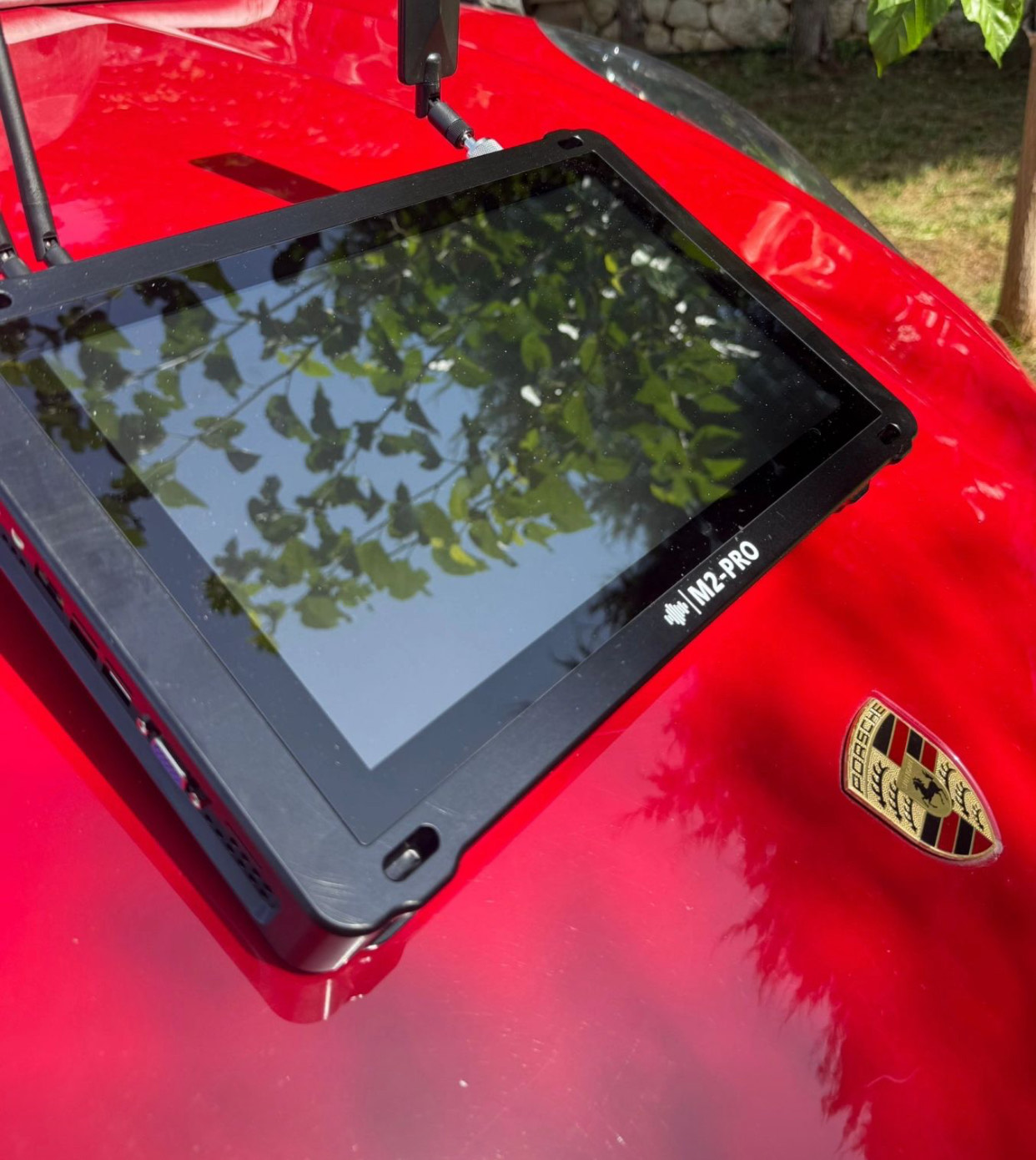
This allows it to be deployed across environments such as:
- Hotels
- Corporate offices
- Executive spaces
- Conference rooms
- Government facilities
- Vehicles
- Technical facilities
- Other sensitive environments
Who is the MEFF M2-Pro designed for?
The M2-Pro is particularly suited to:
- Professional TSCM practitioners
- Counter-surveillance specialists
- Corporate security teams
- Security and risk managers
- Government security teams
- Law enforcement
- Executive protection teams
- RF and DSP specialists
- Technical security consultants
- Organizations responsible for sensitive facilities
It is designed for users who need a professional technical inspection platform, rather than a basic RF detector.
What makes the MEFF M2-Pro different from a basic RF detector?
A basic RF detector may primarily answer:
“Is RF activity present?”
The M2-Pro is designed to support a broader investigation:
Detect → Locate → Analyze → Compare → Monitor → Report
An operator can detect an unusual signal, investigate its direction, analyze its characteristics, compare it with an established room baseline, monitor the environment for changes and document the inspection.
That combination positions the M2-Pro as a professional TSCM inspection and spectrum-analysis platform, rather than simply another RF signal detector.
What is included with the MEFF M2-Pro?
The package includes:
- MEFF M2-Pro main unit
- 3 directional/omni antennas
- High-voltage and low-voltage probes
- LAN splitters
- Shoulder strap
- Military-grade custom protective carrying case
The package is designed to provide a field-ready inspection platform for professional deployment.
Is the M2-Pro suitable for security compliance and documented inspections?
Yes, it can support organizations that require a more structured, repeatable and documentable technical inspection process.
Its capabilities include:
- Baseline comparison
- Event logging
- Technical measurements
- PDF reporting
- Screen capture
- Continuous monitoring
These functions can help organizations retain an inspection record and establish a more consistent technical security workflow.
Important: The M2-Pro itself does not automatically establish regulatory compliance. Actual compliance requirements depend on the organization’s industry, jurisdiction, internal policies and applicable standards.
What is the recommended TSCM workflow with the MEFF M2-Pro?
A practical workflow can be structured as:
1. Establish the RF Environment
Scan the location and understand its normal RF activity.
2. Detect
Identify signals or wireless devices requiring further investigation.
3. Locate
Use directional radar and signal-level information to investigate the apparent source.
4. Analyze
Use spectrum, waveform, I/Q, demodulation and DSP tools where appropriate.
5. Inspect Infrastructure
Investigate relevant power, DC, LAN/Ethernet and telephone lines.
6. Compare
Use Room Selection and Detection Comparison to identify changes from the established baseline.
7. Verify
Determine whether relevant activity is legitimate, unknown or requires further investigation.
8. Monitor
Activate Sentinel Mode for continued observation after the area has been cleared.
9. Report
Generate PDF technical records and retain relevant event information.
The complete workflow can therefore be summarized as:
Detection → Localization → Analysis → Verification → Monitoring → Reporting
Why is the MEFF M2-Pro useful beyond a one-time TSCM sweep?
Because a professional security inspection does not always end when the room has been cleared.
The M2-Pro can help establish a baseline, investigate changes, continue monitoring and document subsequent events.
This creates a more continuous security workflow:
Inspect → Establish Baseline → Detect Change → Investigate → Monitor → Document
For organizations protecting sensitive rooms, executive environments or recurring meeting spaces, this can be more valuable than performing isolated RF sweeps with no historical comparison.
Can the M2-Pro help distinguish normal RF activity from a new signal?
Yes, through its Room Selection and Detection Comparison functions.
The system can retain RF environment information and compare later measurements against stored baseline profiles.
This does not automatically determine whether a new signal is malicious. Instead, it helps the operator identify what has changed, so the relevant source can be investigated.
Is the MEFF M2-Pro suitable for TSCM teams that need both technical depth and operational reporting?
Yes.
The M2-Pro combines advanced technical analysis with functions intended for practical field operations.
A TSCM specialist can access I/Q analysis, demodulation, RBW/VBW/OBW controls and DSP measurements, while security managers can benefit from baseline comparison, Sentinel Mode, event logging and PDF reporting.
This makes the platform suitable for organizations where technical findings need to be transformed into a repeatable and documented security process.
What’s Included with MEFF M2-PRO
- MEFF M2-PRO Main Unit
- 3 × Directional/Omni Antennas
- High-Voltage Probes
- Low-Voltage Probes
- LAN Splitters
- Shoulder Strap
- Military-Grade Protective Carrying Case


Reviews
There are no reviews yet.