




Description
Nonlinear Junction Detector (NLJD) AT-803B with Infrared Imaging
Detect the hidden electronics. Then see what you are investigating.
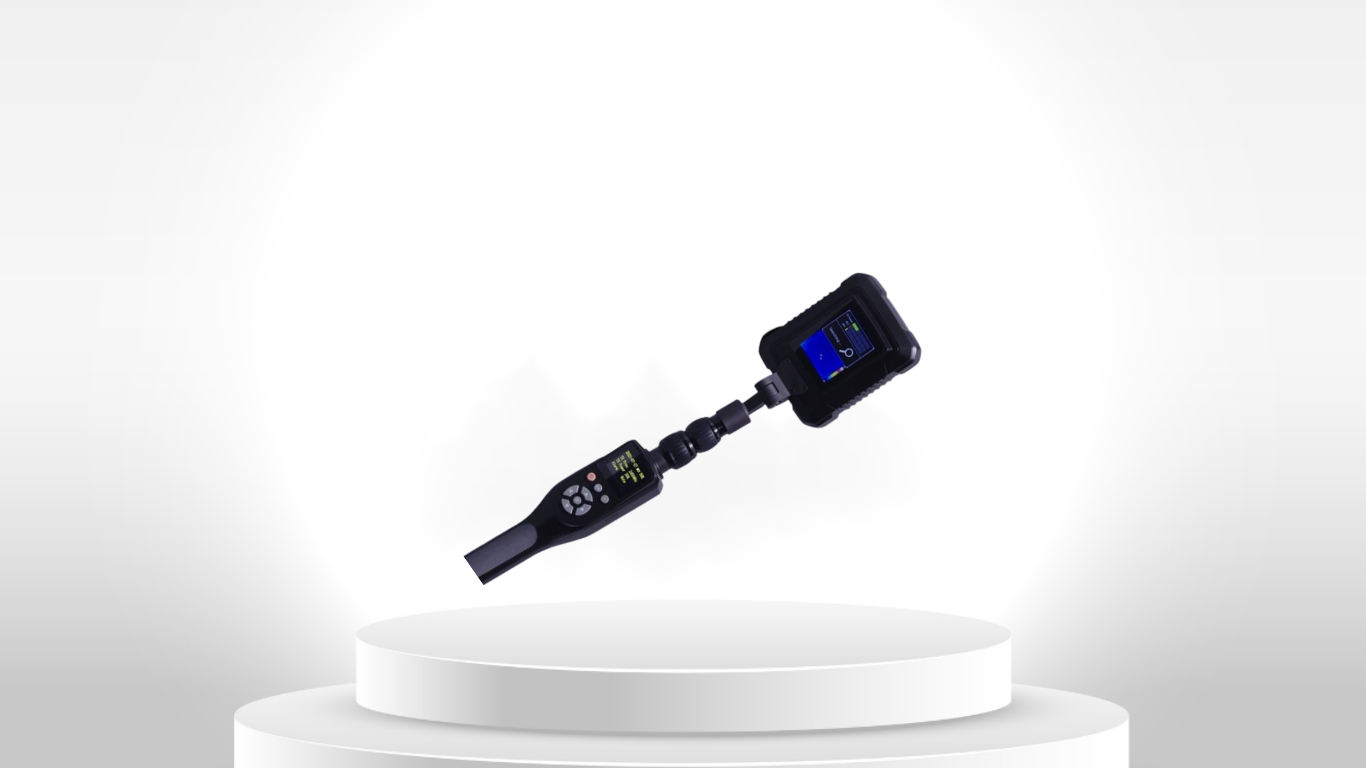
The Nonlinear Junction Detector (NLJD) AT-803B combines professional nonlinear junction detection with integrated infrared imaging to investigate concealed electronic devices and provide additional visual information during the inspection.
That combination addresses a practical TSCM problem: detecting a suspicious electronic response is only the beginning. The operator still needs to understand what is present, determine whether it requires further investigation, and move toward physical verification.
The AT-803B is designed to investigate electronic devices concealed inside walls, floors, ceilings, lamps, furniture and containers, whether those devices are transmitting, switched on or switched off.
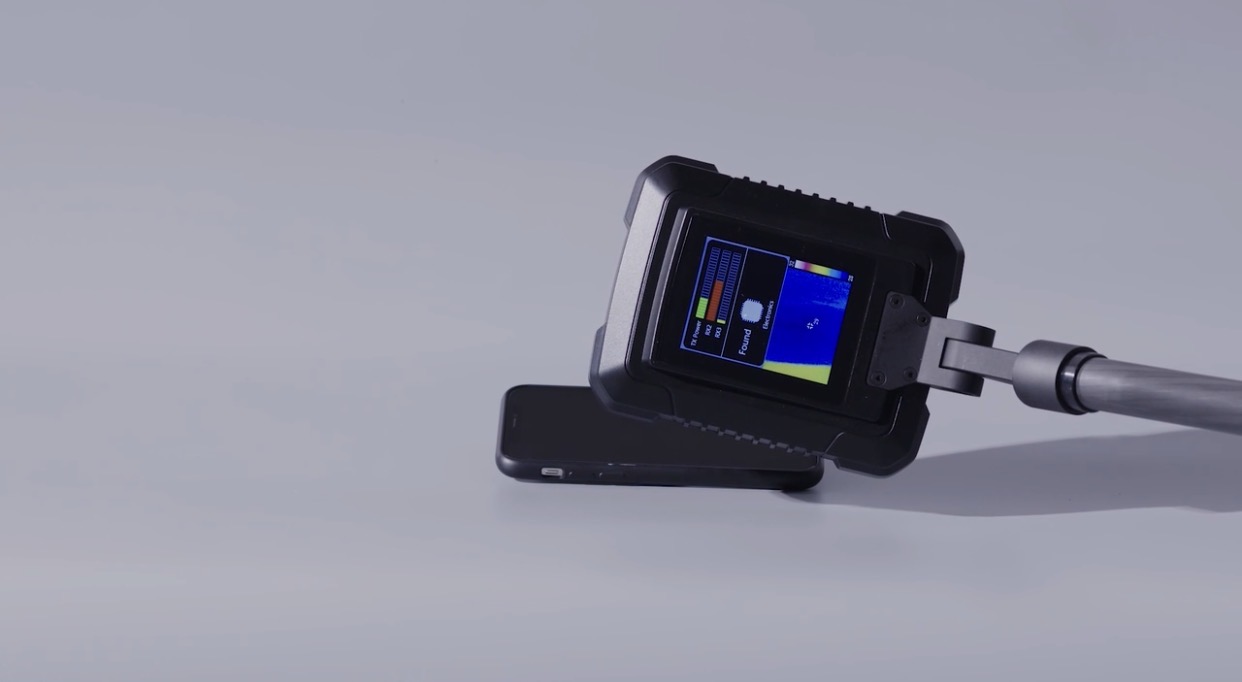
Its infrared imaging function adds another layer of information by displaying the infrared characteristics of the inspected target while the nonlinear detection process is being performed.
Detection identifies what deserves attention. Infrared imaging helps the operator understand what they are looking at.
Why the AT-803B Combines NLJD with Infrared Imaging
A conventional detection response can answer an important question:
Is there an electronic response here?
But during a professional TSCM inspection, another question immediately follows:
What is causing that response, and does it require further investigation?
The AT-803B combines nonlinear junction detection with infrared imaging to help answer both questions within the same inspection process.
The NLJD system investigates nonlinear harmonic responses associated with electronic components.
The infrared imaging system provides visual information about the inspected area.
Together, they help the operator move more efficiently from:
Detection → Assessment → Target Localization → Physical Verification
This is the defining capability of the AT-803B.
Nonlinear Junction Detection for Concealed Electronics
The AT-803B uses independently developed nonlinear harmonic detection technology and algorithms to investigate concealed electronic devices.
Unlike detection methods that depend primarily on an active wireless transmission, nonlinear junction detection can investigate electronic devices regardless of whether they are currently transmitting or switched on or off.
This makes NLJD particularly relevant when inspecting for electronics that may intentionally or unintentionally fall outside the detection window of conventional RF-focused equipment.
Potential inspection targets can include concealed:
- Recording devices
- Mobile communication electronics
- Hidden cameras
- Voice recorders
- Other semiconductor-based electronic devices
An NLJD response should always be treated as an indication requiring professional assessment rather than automatic proof of a surveillance device.
Infrared Imaging for Faster Target Assessment
The defining difference of the AT-803B is its integrated infrared imaging capability.
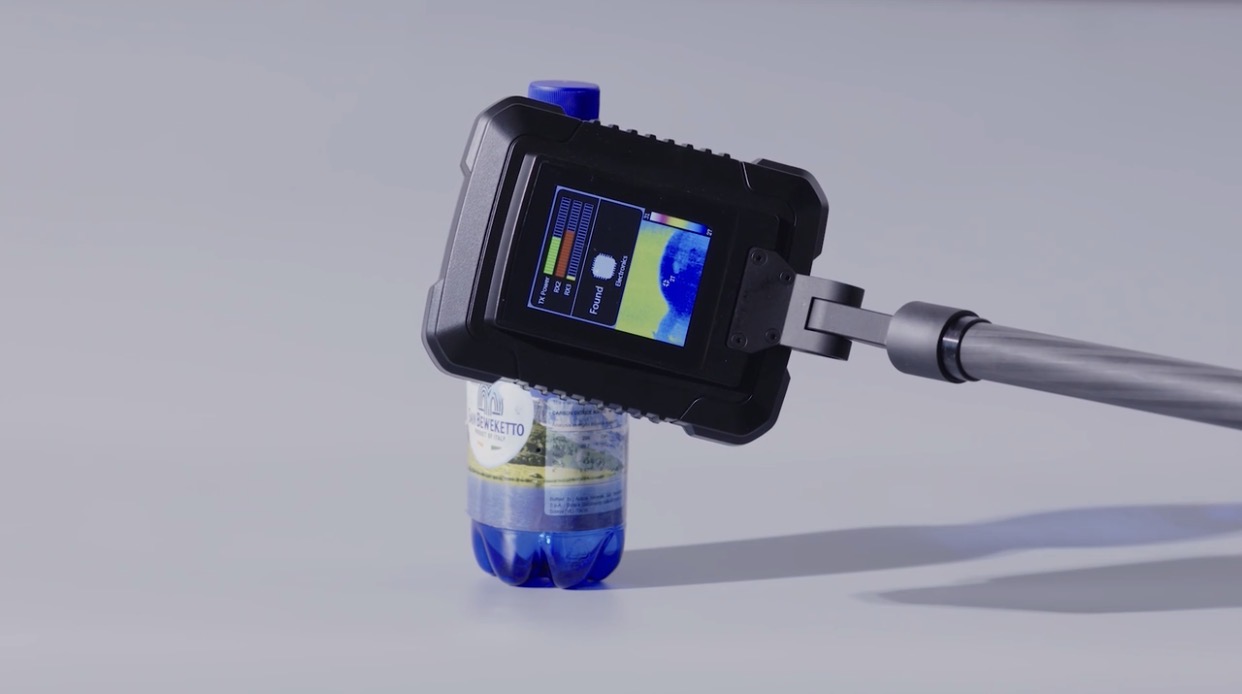
The system synchronizes infrared imaging with nonlinear junction detection so the operator can view the inspected target while investigating a potential electronic response.
This can provide useful visual context when a detection response requires further assessment.
Instead of relying only on a harmonic signal indication, the operator can consider additional information from the inspected area before deciding how to proceed.
The practical objective is straightforward:
Detect a potential target, understand the area, and investigate with greater confidence.
How NLJD with Infrared Imaging Works
Detect
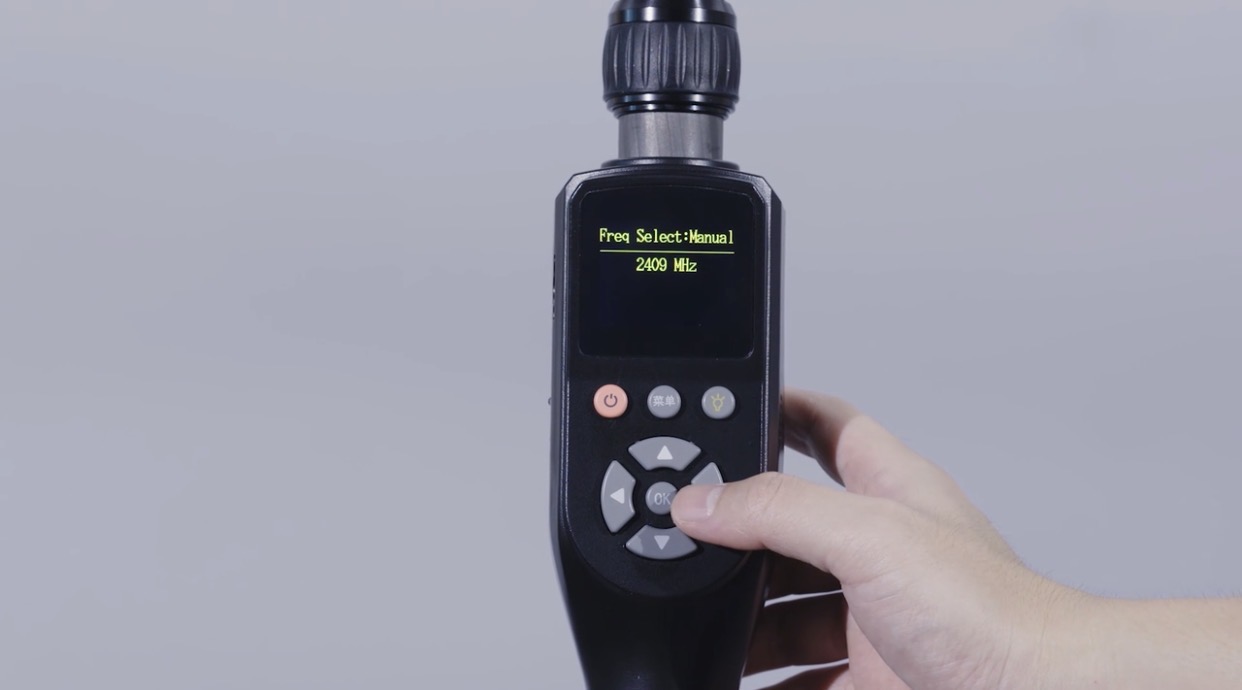
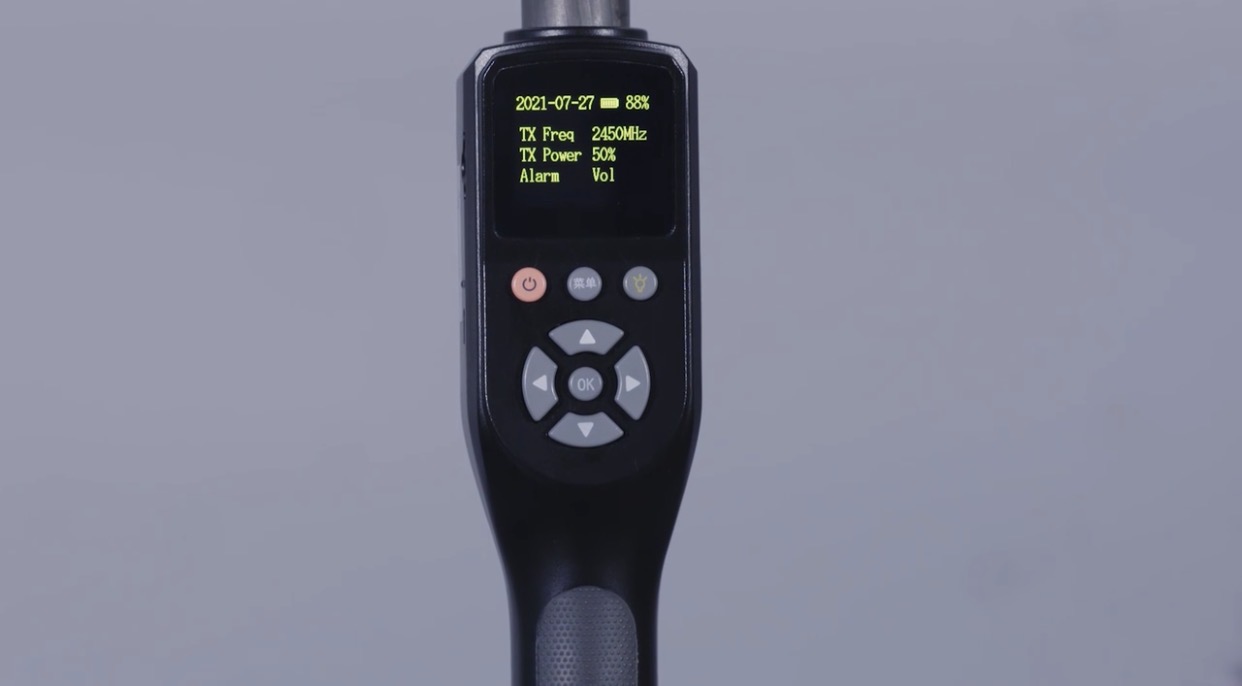
The AT-803B transmits a signal in the 2.4–2.5 GHz range toward the inspection area.
Analyze
The system receives nonlinear harmonic responses in the 2nd and 3rd harmonic ranges:
- 4.8–5.0 GHz
- 7.2–7.5 GHz
These responses form the core nonlinear junction detection process.
Visualize
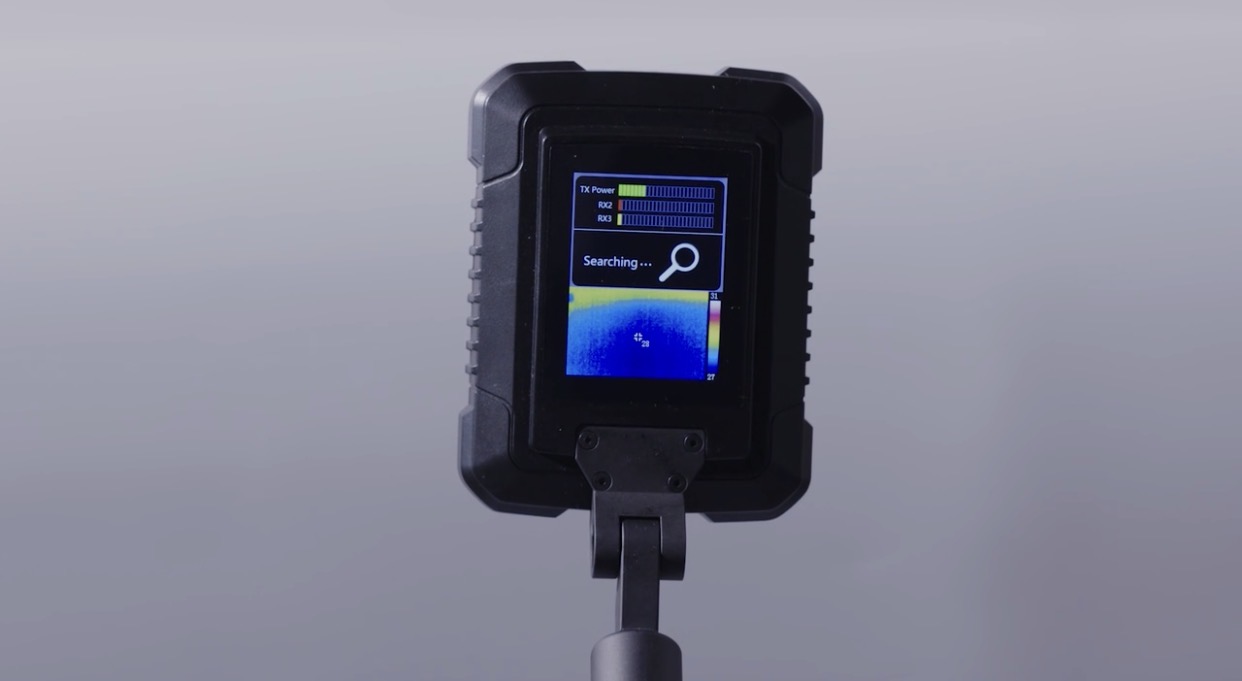
The integrated infrared imaging system provides an infrared image of the inspected object.
Assess
The operator evaluates the harmonic response together with the available infrared information to determine whether the area requires additional investigation.
Verify
Any suspicious finding should ultimately be physically inspected and identified.
The AT-803B supports the detection and assessment stages; professional TSCM methodology remains essential for final verification.
Why Infrared Imaging Matters in TSCM
Modern inspection environments contain large amounts of legitimate electronics.
A detector can therefore produce findings that require interpretation rather than immediate confirmation.
This creates a familiar TSCM challenge:
The more electronics an environment contains, the more important efficient target assessment becomes.
The infrared imaging function of the AT-803B is designed to provide additional context during this process.
It can help an operator make faster judgments about where further investigation is justified instead of treating every detection response as an isolated finding.
This is particularly valuable when inspecting multiple rooms, complex structures or environments where unnecessary investigation can consume significant operator time.
NLJD with Infrared Imaging for Lower False-Alarm Burden
The AT-803B incorporates a non-destructive detection algorithm designed to improve detection capability while reducing unnecessary false alarms.
Infrared imaging adds another source of information to the assessment process.
This does not mean that every detection can be automatically classified.
Legitimate electronic devices can also contain semiconductor components and may generate nonlinear responses.
The advantage is that the operator has more information available when deciding whether a finding deserves further investigation.
The goal is not to eliminate professional judgment. It is to make professional judgment better informed.
High Sensitivity to Electronic Devices
The AT-803B is designed with high sensitivity to electronic devices, including devices containing SIM cards.
This is particularly relevant when investigating potential covert recording equipment and mobile communication devices.
The specified receive sensitivity is ≤ −140 dBm.
For professional operators, sensitivity should not be considered in isolation. Actual detection performance also depends on target construction, orientation, distance, surrounding materials and environmental conditions.
NLJD Detection Through Structural Materials
The AT-803B is specified to penetrate up to 370 mm of brick wall, with the supplied product information stating compliance with the C-level product standard specified in GA1236-2015.
This capability can be relevant when a potential electronic target is concealed behind a physical structure and cannot be directly accessed during the initial inspection.
Potential inspection areas include:
- Walls
- Floors
- Ceilings
- Furniture
- Lamps
- Containers
- Other concealed spaces
Actual penetration and detection performance depends on the material, structure, target and inspection conditions.
Detection Distance for Professional Inspection
The AT-803B specifies a detection distance of ≥6 metres, with the supplied product information stating compliance with the C-level product standard specified in GA1236-2015.
The practical benefit is the ability to begin investigating a potential area without immediately approaching the suspected location.
Detection distance should not be interpreted as a universal guaranteed range. Target characteristics, environment, construction materials and operator technique all influence real-world results.
Infrared Imaging Specifications
The integrated infrared imaging system provides:
- 160 × 120 infrared imaging resolution
- 12 μm pixel size
- <50 mK / 0.050°C thermal imaging sensitivity
- 57° horizontal field of view
- 71° diagonal field of view
- F/1.1 infrared lens
These specifications support the visual assessment function of the AT-803B.
The practical value is that the operator receives infrared information while conducting nonlinear junction detection, rather than having to rely solely on the harmonic response.
Audio and Vibration Alerts
The AT-803B provides multiple ways to monitor detection activity.
The interface supports:
- LCD display of received harmonic signal strength
- Infrared imaging display
- Audio alerts
- Headphone connection
- External speaker connection
- Vibration alerts
Multiple alert methods can be useful in different inspection environments and allow the operator to maintain attention on the physical sweep rather than depending exclusively on the display.
Designed for Professional TSCM Workflow
The AT-803B is best used as part of a broader technical surveillance countermeasures methodology.
A practical workflow can be:
Detect → Visualize → Assess → Locate → Verify
The nonlinear junction detector identifies a potential electronic response.
Infrared imaging provides additional visual information.
The operator interprets the finding.
The suspicious area is localized.
Physical inspection establishes what the object actually is.
This distinction matters because no NLJD should be treated as an automatic device classifier.
What the AT-803B Can and Cannot Tell You
What It Can Do
The AT-803B can help operators:
- Investigate concealed electronic devices
- Investigate electronics that are switched off
- Investigate electronics that are not actively transmitting
- Detect nonlinear harmonic responses
- Inspect through specified structural materials
- Assess potential targets using infrared imaging
- Reduce unnecessary investigation through additional visual context
- Work with audio and vibration feedback during a sweep
What It Does Not Do
The AT-803B does not automatically prove that every nonlinear response is a surveillance device.
It does not replace:
- Physical inspection
- Target identification
- RF analysis
- Spectrum analysis
- Other TSCM methodologies where appropriate
Its value is as a specialized detection and assessment layer within a professional inspection process.
Applications for the NLJD with Infrared Imaging
Confidential Meeting Rooms
Sensitive meeting environments can contain concealed recording or communication devices.
The AT-803B can help investigate potential electronics hidden within walls, furniture, ceilings and other structures.
Executive and Corporate Security
Executive offices, boardrooms and confidential workspaces may require inspection methods that do not rely exclusively on active RF transmissions.
The AT-803B provides an additional layer for investigating concealed electronics.
Government and Sensitive Facilities
Sensitive facilities can benefit from professional inspection equipment capable of investigating electronic devices that may be inactive or concealed within structural materials.
Hotels and Privacy-Sensitive Locations
Hotels, residences and other privacy-sensitive environments can contain concealed electronics in furniture, walls, ceilings and other difficult-to-access locations.
The combination of NLJD detection and infrared imaging provides a practical approach to investigating these areas.
Vehicles and Enclosed Spaces
The AT-803B can also be considered for inspection of enclosed environments where electronic devices may be concealed within structural components or furnishings.
Actual suitability depends on the inspection environment and professional methodology.
What Makes AT-803B Different from a Conventional NLJD?
The core NLJD principle is not new.
The differentiator is how the AT-803B combines it with infrared imaging.
A conventional NLJD primarily provides information about nonlinear electronic responses.
AT-803B adds a visual assessment layer.
This creates a more complete inspection sequence:
Electronic Response → Infrared Context → Operator Assessment → Physical Verification
That distinction is important when the objective is not simply to detect a response, but to determine what deserves further investigation.
Technical Specifications
| Parameter | Specification |
|---|---|
| Product Type | Nonlinear Junction Detector with Infrared Imaging |
| Transmit Frequency | 2.4–2.5 GHz |
| Receive Harmonics | 4.8–5.0 GHz / 7.2–7.5 GHz |
| Harmonic Detection | 2nd and 3rd harmonics |
| Transmit Power | 0–4 W EIRP, maximum pulse mode |
| Receive Sensitivity | ≤ −140 dBm |
| Penetrability | Up to 370 mm brick wall |
| Detection Distance | ≥6 m |
| Detection Standard | C-level product standard specified in GA1236-2015 |
| Battery | Replaceable lithium battery |
| Operating Time | Up to 7 hours standby |
| Infrared Imaging | 160 × 120 |
| Pixel Size | 12 μm |
| Thermal Imaging Sensitivity | <50 mK / 0.050°C |
| Horizontal FOV | 57° |
| Diagonal FOV | 71° |
| Infrared Lens | F/1.1 |
| Display | LCD harmonic signal strength + infrared imaging |
| Alerts | Audio, headphones/external speakers and vibration |
| Dimensions | 750 × 114 × 108 mm |
| Weight | 1.55 kg ±0.05 kg |
| Working Temperature | −30°C to +55°C |
| Working Humidity | ≤93% RH, non-condensing |
Specifications are based on the supplied AT-803B product information. Confirm the final configuration and applicable specifications with the manufacturer before procurement.
Frequently Asked Questions About the NLJD with Infrared Imaging AT-803B
What is the Nonlinear Junction Detector (NLJD) AT-803B?
The AT-803B is a professional Nonlinear Junction Detector that combines nonlinear harmonic detection with integrated infrared imaging.
It is designed to investigate concealed electronic devices and provide additional visual information to help operators assess potential targets.
What is the main advantage of AT-803B?
Its defining advantage is the combination of NLJD detection and infrared imaging.
The NLJD function investigates potential electronic responses, while infrared imaging provides additional visual context during the same inspection.
Why does an NLJD need infrared imaging?
NLJD detection can indicate that a suspicious electronic response deserves attention.
The next challenge is understanding what is physically present.
Infrared imaging adds another source of visual information, helping operators assess the inspected area before proceeding to physical verification.
How does infrared imaging complement nonlinear junction detection?
The two functions answer different parts of the same inspection problem.
NLJD: Is there a nonlinear electronic response?
Infrared imaging: What does the inspected area look like in infrared?
The operator can then determine whether further physical investigation is justified.
Does infrared imaging automatically identify a hidden camera?
No.
Infrared imaging provides visual information; it does not automatically classify an object as a hidden camera.
Professional interpretation and physical verification remain necessary.
Can AT-803B detect a device that is switched off?
Yes.
The product is designed to investigate electronic devices whether they are switched on or off.
Can it detect a device that is not transmitting?
Yes.
NLJD detection does not depend solely on an active wireless transmission from the target.
This is one reason NLJD technology can complement conventional RF detection during TSCM inspections.
Can AT-803B detect hidden cameras?
It can investigate concealed electronic devices containing semiconductor components, including potential hidden-camera electronics.
However, a nonlinear response alone does not establish the identity of the device.
Can it detect voice recorders and mobile communication devices?
Potentially, yes.
Electronic devices containing semiconductor components can produce nonlinear responses.
The AT-803B is specifically described as having high sensitivity to devices with SIM cards, which is relevant to covert recording and mobile communication devices.
What does the infrared imaging system actually add to a TSCM sweep?
It provides another information layer during target assessment.
Instead of relying solely on a harmonic signal response, the operator can also view the infrared image of the inspected area.
This can help make the inspection process faster and more informed.
What is the infrared resolution of AT-803B?
The infrared imaging system uses a 160 × 120 imaging matrix with 12 μm pixel size.
What does <50 mK thermal sensitivity mean?
It means the infrared imaging system specifies thermal sensitivity below 50 millikelvin, or 0.050°C.
For a TSCM operator, this is a technical measure of the imaging system’s ability to distinguish small temperature differences.
It should be considered together with field of view, optics, environmental conditions and the actual inspection target.
Can infrared imaging eliminate false alarms?
No detection system should be understood as eliminating false alarms completely.
AT-803B is designed to reduce the false-alarm burden by combining nonlinear detection with additional infrared information.
The operator still needs to interpret the result and verify the target.
Can legitimate electronics trigger the AT-803B?
Yes.
Legitimate electronics contain semiconductor junctions and can produce nonlinear responses.
This is why professional interpretation is essential.
The objective is not simply to find an electronic response, but to determine whether the response represents something that requires further investigation.
Why are 2nd and 3rd harmonic responses important?
The AT-803B receives nonlinear harmonic responses at:
4.8–5.0 GHz — 2nd harmonic
7.2–7.5 GHz — 3rd harmonic
These responses form part of the nonlinear junction detection process.
Experienced operators can use harmonic behavior as part of their assessment of a potential electronic target.
What is the transmit frequency of AT-803B?
The transmit frequency is 2.4–2.5 GHz.
What is the receive sensitivity?
The specified receive sensitivity is ≤ −140 dBm.
Sensitivity is only one part of overall detection performance and should be evaluated together with distance, penetration, target characteristics and inspection conditions.
How far can AT-803B detect?
The specified detection distance is ≥6 m.
Actual results depend on the target, environment, construction material and operator technique.
Can AT-803B detect through walls?
The supplied specification states penetration through up to 370 mm of brick wall, with C-level compliance according to GA1236-2015.
The result can vary according to wall construction, target characteristics and inspection conditions.
Does AT-803B replace an RF detector?
No.
RF detection and NLJD detection investigate different characteristics.
RF detectors focus on active radio-frequency emissions, while NLJD investigates nonlinear electronic responses.
They can therefore complement each other in a broader TSCM methodology.
Does AT-803B replace spectrum analysis?
No.
Spectrum analysis can identify and characterize RF activity.
NLJD provides a different detection mechanism for investigating concealed electronics.
Does the infrared imaging function replace physical inspection?
No.
It provides additional visual information to support operator assessment.
Physical inspection remains necessary to identify and verify a suspicious target.
Is AT-803B suitable for professional TSCM operators?
Yes.
The combination of nonlinear harmonic detection, structural penetration, infrared imaging, multiple alert methods and professional inspection controls makes it suited to specialized TSCM workflows.
What should an expert consider when evaluating an NLJD with infrared imaging?
An expert should consider:
- Nonlinear detection principle
- Transmit frequency
- 2nd and 3rd harmonic response
- Receive sensitivity
- Detection distance
- Structural penetration
- Infrared resolution
- Thermal sensitivity
- Field of view
- False-alarm behavior
- Target assessment workflow
- Operator interface
- Alert options
- Battery architecture
- Environmental operating range
- Applicable standards
- Manufacturer support
The most important question is not which specification is highest.
It is whether the combined capability addresses the actual inspection problem.
Is AT-803B useful for environments with many legitimate electronic devices?
This is one of the environments where the additional infrared assessment layer can be particularly useful.
When many legitimate electronics are present, the challenge becomes distinguishing findings that deserve investigation from findings that can be reasonably explained.
The AT-803B is designed to support that assessment process rather than relying on a detection response alone.


Reviews
There are no reviews yet.