




Description
Nonlinear Junction Detector (NLJD) AT-801 for TSCM
A hidden electronic device does not need to be transmitting to become a security concern.
It may be switched off, inactive, or concealed inside a wall, floor, ceiling, lamp, piece of furniture, vehicle, or container.
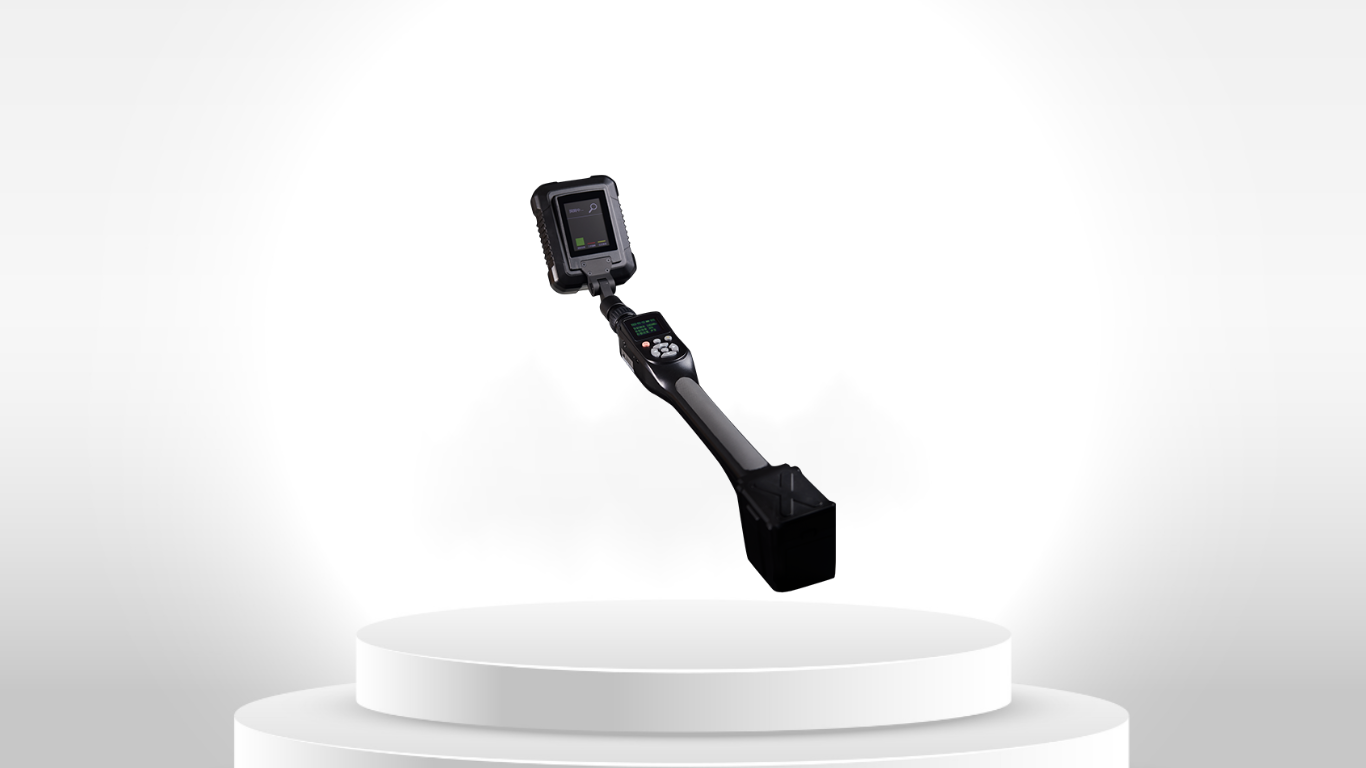
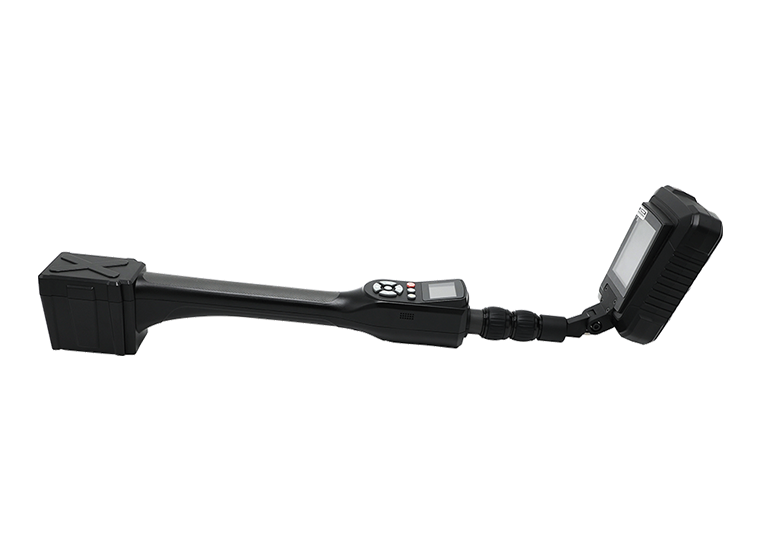
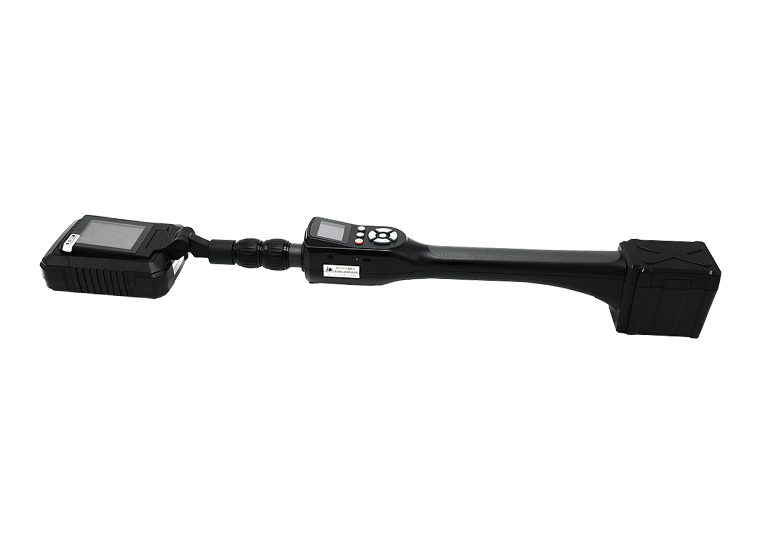
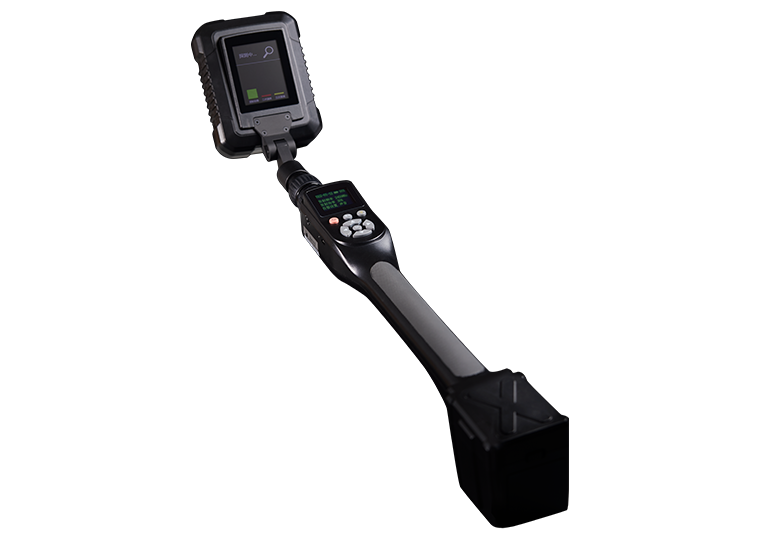
The Nonlinear Junction Detector (NLJD) AT-801 is a professional electronic detection instrument designed to investigate potential semiconductor-based electronic devices through their nonlinear harmonic response.
Unlike conventional RF detection, NLJD technology does not depend solely on an active wireless transmission from the target.
For TSCM professionals, this provides another detection layer for investigating concealed electronics that may not be identified through RF-focused inspection alone.
The question is not only:
“What is transmitting?”
It can also be:
“Could electronic hardware be hidden here?”
What Is a Nonlinear Junction Detector (NLJD)?
A Nonlinear Junction Detector (NLJD) is a specialized electronic detection instrument designed to investigate potential semiconductor-based electronic devices by analyzing nonlinear harmonic responses.
Unlike an RF detector, a Nonlinear Junction Detector does not depend solely on an active wireless transmission from the target.
The detector transmits an RF signal toward the inspection area and receives harmonic responses associated with nonlinear electronic junctions.
This makes NLJD technology particularly relevant to TSCM and counter-surveillance inspections where the objective extends beyond finding active RF transmissions.
Why Nonlinear Junction Detection Matters in TSCM
Modern TSCM inspections often use multiple technologies because different technologies answer different questions.
RF Detection
“Is something transmitting?”
RF detection primarily looks for active wireless emissions.
Nonlinear Junction Detection
“Is there a potential electronic target producing a nonlinear response?”
NLJD investigates nonlinear harmonic responses associated with electronic junctions.
Physical Inspection
“What physical object is actually present?”
Physical inspection is required to identify and verify the object producing a response.
These are different detection and verification layers.
A Nonlinear Junction Detector should therefore not be viewed simply as another RF detector.
Its value comes from applying a different detection principle to the same security problem.
How the Nonlinear Junction Detector (NLJD) AT-801 Works
The Nonlinear Junction Detector (NLJD) AT-801 transmits an RF signal toward the inspection area and receives harmonic responses associated with nonlinear electronic junctions.
Its published operating architecture includes:
- Transmit frequency: 2.4–2.5 GHz
- 2nd harmonic: 4.8–5.0 GHz
- 3rd harmonic: 7.2–7.5 GHz
The inspection process can be understood as:
Transmit → Interact with potential electronic target → Receive harmonic response → Evaluate → Locate → Verify
The important distinction is that the NLJD is not simply searching for an active wireless transmission.
It is investigating the electronic characteristics of potential semiconductor-based devices.
Nonlinear Junction Detector vs. RF Detector
Different Detection Principles
An RF detector primarily looks for active RF energy.
A Nonlinear Junction Detector investigates nonlinear harmonic responses associated with electronic junctions.
That difference becomes important when a potential electronic device may be:
- Switched off
- Inactive
- Not currently transmitting
- Concealed inside a structure
- Hidden within furniture or another object
The two technologies can therefore complement each other within a broader TSCM methodology.
Nonlinear Junction Detector (NLJD) AT-801 Detection Capabilities
≤ −140 dBm Receive Sensitivity
The AT-801 uses a built-in high-gain antenna with a manufacturer-specified receive sensitivity of ≤ −140 dBm.
AWP states that this capability can help identify equipment containing semiconductor devices hidden in locations such as walls or furniture.
For professional operators, sensitivity should not be evaluated in isolation.
Actual inspection performance can also depend on:
- Target characteristics
- Distance
- Target orientation
- Antenna position
- Structural material
- Environment
- Operator methodology
Sensitivity is a capability, not a complete inspection methodology.
Up to 370 mm Brick-Wall Detection
The AT-801 is specified for detection through a 370 mm-thick brick wall.
This capability can be relevant when a potential electronic target cannot be directly accessed.
However, the 370 mm figure is a manufacturer specification and should not be interpreted as a universal penetration depth for every material, environment, or target.
Actual results can vary according to:
- Construction material
- Target characteristics
- Target orientation
- Distance
- Environment
- Scanning position
The practical question is:
“Can the NLJD provide useful detection capability for the structure and inspection environment being assessed?”
≥6 Metres of Detection Distance
The Nonlinear Junction Detector (NLJD) AT-801 has a manufacturer-specified detection distance of ≥6 metres.
For a TSCM operator, working distance can influence how an inspection is performed.
It may be relevant when investigating:
- Confidential rooms
- Restricted areas
- Structural spaces
- Furniture
- Difficult-to-access locations
- Areas where close physical access is undesirable
Actual detection performance depends on the target and inspection conditions.
See It. Hear It. Feel It.
The Nonlinear Junction Detector (NLJD) AT-801 provides multiple ways for the operator to receive detection feedback.
LCD Harmonic Signal Display
The LCD displays received harmonic signal strength during inspection.
Audio Feedback
Audio alerts can be delivered through headphones or external speakers.
Vibration Feedback
Vibration provides a non-audible feedback option when the operator wants to maintain attention on the physical inspection environment.
This gives the operator multiple ways to monitor a potential response without relying on a single alert method.
Replaceable Battery for Professional Operations
The Nonlinear Junction Detector (NLJD) AT-801 uses a replaceable lithium battery.
AWP specifies:
- ≥4 hours operating time per battery in maximum pulse mode
- 2.5 hours fast charging per battery
For professional teams, replaceable batteries can allow additional charged batteries to be prepared for consecutive inspection tasks.
Where Nonlinear Junction Detection Fits
TSCM & Counter-Surveillance
NLJD technology provides a specialized detection layer for professional electronic security inspections.
It can complement:
- RF detectors
- Spectrum analyzers
- Physical inspection
- Other TSCM technologies
The objective is not to make one device responsible for every possible threat.
It is to apply the appropriate detection principle to the problem being investigated.
Confidential Meeting Rooms
AWP identifies confidential meeting environments and important company offices as applications for detecting unauthorized electronic devices.
Potential targets include:
- Electronic bugs
- Mobile phones
- SIM-card-containing devices
For organizations protecting sensitive discussions, a Nonlinear Junction Detector can provide another investigation capability beyond active RF detection.
Corporate Trade-Secret Protection
Sensitive business environments may require protection against unauthorized electronic devices.
Potential concerns include:
- Confidential meetings
- Commercial information
- Intellectual property
- Strategic discussions
- Sensitive business operations
The AT-801 can form part of an electronic security inspection workflow for investigating concealed electronics in these environments.
Personal Privacy Protection
AWP identifies homes, hotels, and other privacy-sensitive environments as applications for detecting potential concealed electronic equipment.
Potential targets include:
- Voice recorders
- Cameras
- Other electronic devices
A Nonlinear Junction Detector should be understood as a detection instrument, not an automatic device-identification system.
Government & Sensitive Facilities
AWP identifies government, public security, judicial, prison, commercial security, and personal privacy applications.
These environments can require multiple inspection technologies because different detection methods provide different forms of information.
What Can a Nonlinear Junction Detector Detect?
A Nonlinear Junction Detector is designed to investigate electronic devices containing semiconductor components.
Potential targets identified for the Nonlinear Junction Detector (NLJD) AT-801 include:
- Electronic surveillance devices
- Mobile phones
- SIM-card-containing devices
- Voice recorders
- Cameras
- Other concealed electronic equipment
However:
An NLJD response does not automatically identify the physical object.
It does not independently prove that a device is malicious, unauthorized, or surveillance equipment.
The professional process remains:
Detect → Investigate → Locate → Verify
Professional NLJD Inspection Workflow
01 — Detect
Identify a potential nonlinear electronic response.
02 — Investigate
Change inspection position, distance, or scanning approach where appropriate.
03 — Locate
Use the response to narrow the potential target area.
04 — Verify
Determine what physical object is producing the response.
05 — Document
Record the finding according to the organization’s TSCM or security inspection procedure.
The NLJD provides the detection capability.
Professional methodology provides the interpretation.
Why Legitimate Electronics Can Also Produce a Response
Legitimate electronic equipment also contains semiconductor components.
Potential sources can include:
- Mobile phones
- Computers
- Power supplies
- Electronic control equipment
- Building systems
- Consumer electronics
- Other legitimate electronic hardware
An experienced operator therefore interprets the response within the physical environment.
The correct workflow is:
Detect → Investigate → Identify → Verify
Not:
Detect → Assume “surveillance device.”
This distinction becomes increasingly important in modern offices, hotels, government facilities, and other environments containing significant amounts of legitimate electronics.
Expert NLJD Considerations
Is Higher Sensitivity Always Better?
No.
The Nonlinear Junction Detector (NLJD) AT-801 specifies ≤ −140 dBm receive sensitivity.
That is an important capability, but sensitivity is only one part of an NLJD’s overall performance.
Professional users should also evaluate:
- Harmonic response
- Receive dynamic range
- Target characteristics
- Antenna position
- Target orientation
- Detection distance
- Structural material
- Environmental conditions
- Operator methodology
- Verification procedure
The AT-801 specifies a 30 dB receive dynamic range.
The better question is therefore not:
“Which NLJD has the biggest number?”
It is:
“Which Nonlinear Junction Detector provides the capability required by this inspection problem?”
Why Do 2nd and 3rd Harmonics Matter?
The Nonlinear Junction Detector (NLJD) AT-801 receives:
- 4.8–5.0 GHz — 2nd harmonic
- 7.2–7.5 GHz — 3rd harmonic
These harmonic responses form part of the nonlinear junction detection process.
For an expert operator, harmonic behavior can provide additional information when evaluating a potential response.
However, one harmonic indication should not automatically be treated as proof of a surveillance device.
The operator still needs to consider:
- Target location
- Signal behavior
- Physical environment
- Known electronic sources
- Repeated inspection
- Physical verification
Can NLJD Replace RF Detection?
No.
RF detection and nonlinear junction detection investigate different characteristics.
RF Detection
Looks for active wireless emissions.
Nonlinear Junction Detection
Investigates nonlinear electronic responses.
Using both can therefore provide broader detection coverage than relying on either principle alone.
Can NLJD Replace Physical Inspection?
No.
A Nonlinear Junction Detector can identify a potential area of interest.
It does not automatically determine what physical object is present.
Physical inspection remains important for:
- Identification
- Verification
- Documentation
- Determining whether the device is authorized
- Determining whether further action is required
Detection is not the same as identification.
Why Operator Technique Matters
NLJD performance can be influenced by:
- Distance
- Antenna position
- Target orientation
- Structural material
- Environmental conditions
- Known electronic sources
- Scanning methodology
Professional equipment provides capability.
Operator methodology determines how that capability is interpreted and applied.
Who Is the Nonlinear Junction Detector (NLJD) AT-801 For?
TSCM Professionals
For operators who need a dedicated nonlinear junction detection capability for investigating concealed semiconductor-based electronics.
Security & Risk Teams
For organizations looking to add another electronic detection layer to sensitive environments.
C-Suite & Decision-Makers
The strategic concept is simple:
Electronic hardware may still be present even when it is not actively transmitting.
The Nonlinear Junction Detector (NLJD) AT-801 provides a specialized capability for investigating that detection gap.
Nonlinear Junction Detector (NLJD) AT-801 Technical Specifications
| Parameter | Specification |
|---|---|
| Product Type | Nonlinear Junction Detector (NLJD) |
| Working Band | 2400 MHz |
| Working Voltage | 7.4 V |
| Transmit Frequency | 2.4–2.5 GHz |
| 2nd Harmonic | 4.8–5.0 GHz |
| 3rd Harmonic | 7.2–7.5 GHz |
| Transmitting Power | 0–4 W EIRP, pulse mode (maximum) |
| Receive Sensitivity | ≤ −140 dBm |
| Receive Dynamic Range | 30 dB |
| Battery | Replaceable lithium battery |
| Operating Time | ≥4 hours per battery, maximum pulse mode |
| Charging Time | 2.5 hours per battery, fast charging |
| Detection Feedback | LCD / Audio / Vibration |
| Audio Output | Headphones or external speakers |
| Detection Distance | ≥6 m |
| Detection Penetration | Up to 370 mm brick wall, manufacturer specification |
| Size | 760 × 114 × 96 mm |
| Package Size | 700 × 330 × 180 mm |
| Weight | 1.48 kg ±0.05 kg |
| Operating Temperature | −10°C to +55°C |
| Operating Humidity | ≤93%, non-condensing |
Specifications are based on the manufacturer’s published AT-801 information. Product configurations and displayed parameters may change, so the actual supplied configuration should be confirmed before purchase.
Frequently Asked Questions About Nonlinear Junction Detectors
What is a Nonlinear Junction Detector (NLJD)?
A Nonlinear Junction Detector (NLJD) is a specialized electronic detection instrument designed to investigate potential semiconductor-based electronic devices by analyzing nonlinear harmonic responses.
Unlike an RF detector, an NLJD does not depend solely on an active wireless transmission from the target.
What is an NLJD used for in TSCM?
A Nonlinear Junction Detector is used to investigate potential concealed electronic devices that may not be actively transmitting.
It can complement RF detection, spectrum analysis, and physical inspection as part of a broader TSCM methodology.
Can an NLJD detect a switched-off device?
Yes.
The AT-801 manufacturer states that it can detect electronic devices regardless of whether they are transmitting signals and whether they are switched on or off.
Actual detection performance still depends on the target, distance, orientation, structure, and inspection environment.
Can an NLJD detect a device that is not transmitting?
Yes.
This is one of the core reasons nonlinear junction detection is relevant to TSCM.
The technology investigates nonlinear electronic responses rather than requiring an active wireless transmission from the target.
Why would a TSCM operator use an NLJD if they already have an RF detector?
Because the technologies answer different questions.
RF detector: Is something transmitting?
NLJD: Is there a potential electronic target producing a nonlinear response?
This makes NLJD a complementary detection capability rather than simply another RF detector.
Can a Nonlinear Junction Detector detect hidden cameras?
It can investigate concealed electronic equipment containing semiconductor components, including potential cameras.
However, an NLJD is not a camera-recognition system.
The operator must physically verify the target.
Can an NLJD detect hidden voice recorders?
Yes, concealed electronic recording equipment can be a potential NLJD target.
The AT-801 manufacturer specifically identifies voice recorders among potential devices relevant to its privacy-protection applications.
Can an NLJD detect mobile phones?
Yes, a mobile phone contains semiconductor electronics and can therefore produce a potential nonlinear response.
However, the response itself does not prove that the target is a mobile phone.
Physical verification is required.
Can an NLJD detect electronics inside furniture?
Yes.
The AT-801 is specified for investigating electronic devices hidden in locations including furniture and walls.
How far can the Nonlinear Junction Detector (NLJD) AT-801 detect?
The manufacturer specifies a detection distance of ≥6 metres.
Actual performance depends on the target, environment, and inspection conditions.
Can the AT-801 NLJD detect through walls?
The manufacturer specifies detection through a 370 mm-thick brick wall.
This is a manufacturer-stated capability and should not be interpreted as a universal penetration depth across all materials and targets.
What does −140 dBm sensitivity mean for an NLJD?
It describes the specified receive sensitivity of the AT-801 receiver.
For professional evaluation, it should be considered alongside dynamic range, harmonic response, target characteristics, distance, and operator methodology.
What is the AT-801 NLJD receive dynamic range?
The AT-801 specifies a 30 dB receive dynamic range.
This provides additional information about the receiver’s operating capability beyond sensitivity alone.
Why does an NLJD use second and third harmonics?
Harmonic responses provide the nonlinear signal information that the detector analyzes during inspection.
The AT-801 receives:
4.8–5.0 GHz — 2nd harmonic
7.2–7.5 GHz — 3rd harmonic
Professional interpretation should consider the overall response rather than treating a single indication as automatic proof of surveillance equipment.
Can legitimate electronics trigger an NLJD?
Yes.
Legitimate semiconductor-based electronics can produce nonlinear responses.
This is why professional NLJD inspection requires contextual analysis and physical verification.
Can an NLJD identify whether a device is malicious?
No.
An NLJD identifies a potential nonlinear electronic response.
It does not independently classify the physical device as malicious, unauthorized, or surveillance equipment.
Does NLJD replace spectrum analysis?
No.
Spectrum analysis investigates RF activity.
NLJD investigates nonlinear electronic responses.
They serve different purposes and can complement one another.
Does NLJD replace physical inspection?
No.
NLJD can help locate an area of interest.
Physical inspection is required to determine what is actually present.
Why does antenna positioning matter during NLJD inspection?
Distance, orientation, and positioning can affect the interaction between the transmitted RF signal and a potential nonlinear target.
Professional operators may therefore adjust position and scanning approach when investigating a suspicious response.
Does higher NLJD sensitivity automatically mean better detection?
No.
Sensitivity is important, but professional evaluation should also consider:
- Dynamic range
- Harmonic response
- Detection distance
- Target characteristics
- Structural materials
- Operator methodology
- Verification process
The best NLJD is not necessarily the one with the largest headline specification.
It is the one that provides the right capability for the inspection requirement.
What should a TSCM professional evaluate before buying an NLJD?
Look beyond sensitivity.
Evaluate:
- Detection principle
- Transmit frequency
- 2nd and 3rd harmonic response
- Receive sensitivity
- Receive dynamic range
- Detection distance
- Penetration capability
- Feedback methods
- Battery architecture
- Physical handling
- Operator workflow
- Verification methodology
- Manufacturer support
The objective is to select the technology whose capability matches the actual inspection requirement.
Is the Nonlinear Junction Detector (NLJD) AT-801 suitable for C-Suite decision-makers?
Yes.
The technical concept can be expressed simply:
Electronic hardware may still be present even when it is not actively transmitting.
The AT-801 provides a specialized capability for investigating that detection gap.
Is the Nonlinear Junction Detector (NLJD) AT-801 suitable for professional TSCM operators?
Yes.
Its published architecture includes ≤−140 dBm receive sensitivity, 30 dB receive dynamic range, second and third harmonic reception, ≥6 m detection distance, LCD/audio/vibration feedback, and replaceable batteries.
These capabilities make it relevant to professional electronic-security inspection workflows.


Reviews
There are no reviews yet.