


Description
K-PASS Secure PCM Audio Recorder — Password-Protected Professional Recording & Evidence Documentation
A professional audio recorder designed for secure recording, organized documentation and controlled access to sensitive audio files.
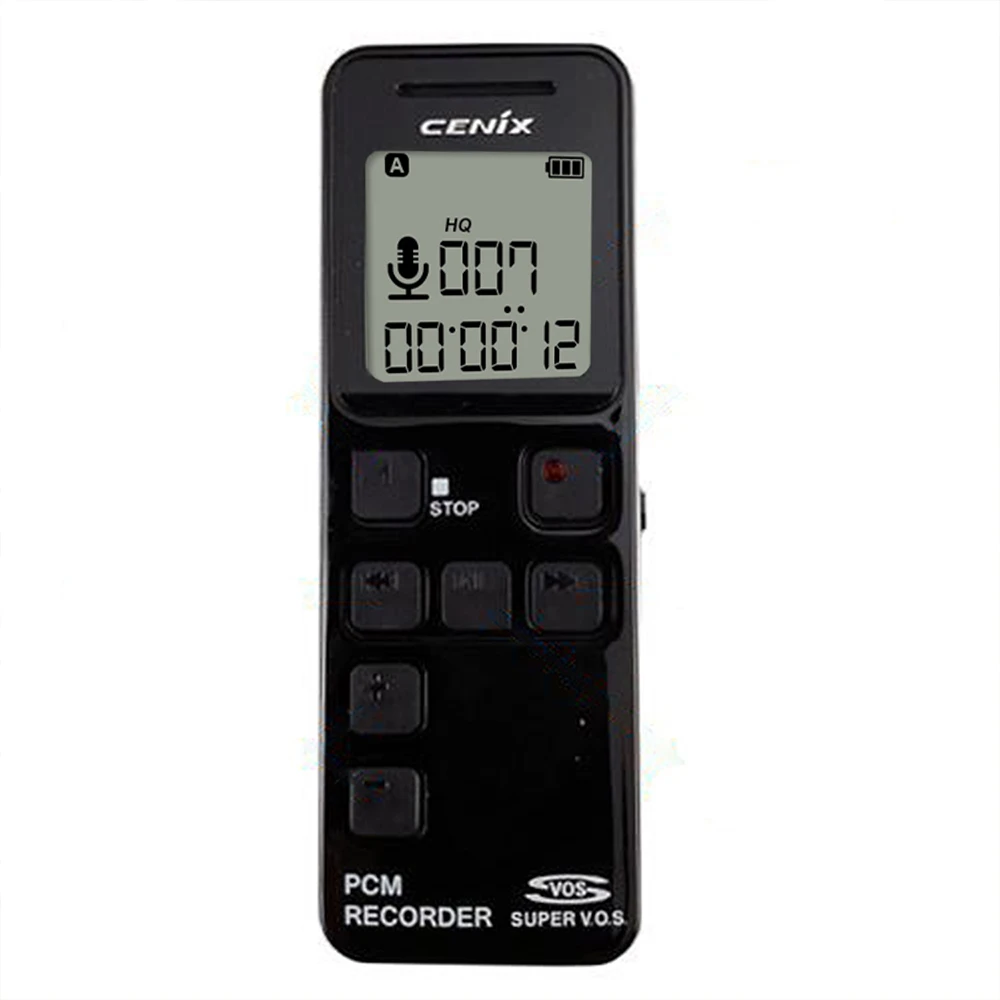
The K-PASS Secure PCM Audio Recorder combines high-quality audio recording with password protection, multiple recording modes, time and date stamping, voice activation, onboard playback and professional recording accessories.
Unlike a basic voice recorder designed primarily for casual note-taking, K-PASS is structured around a broader professional workflow:
Record → Secure → Store → Review → Transfer → Document
With 8GB internal storage, up to 1,040 hours of manufacturer-stated recording capacity depending on recording mode, PCM recording, four recording modes, password protection, VOX sound activation, continuous recording, time and date stamping, adjustable microphone sensitivity and direct USB file transfer, K-PASS is designed for professional users handling sensitive audio documentation.
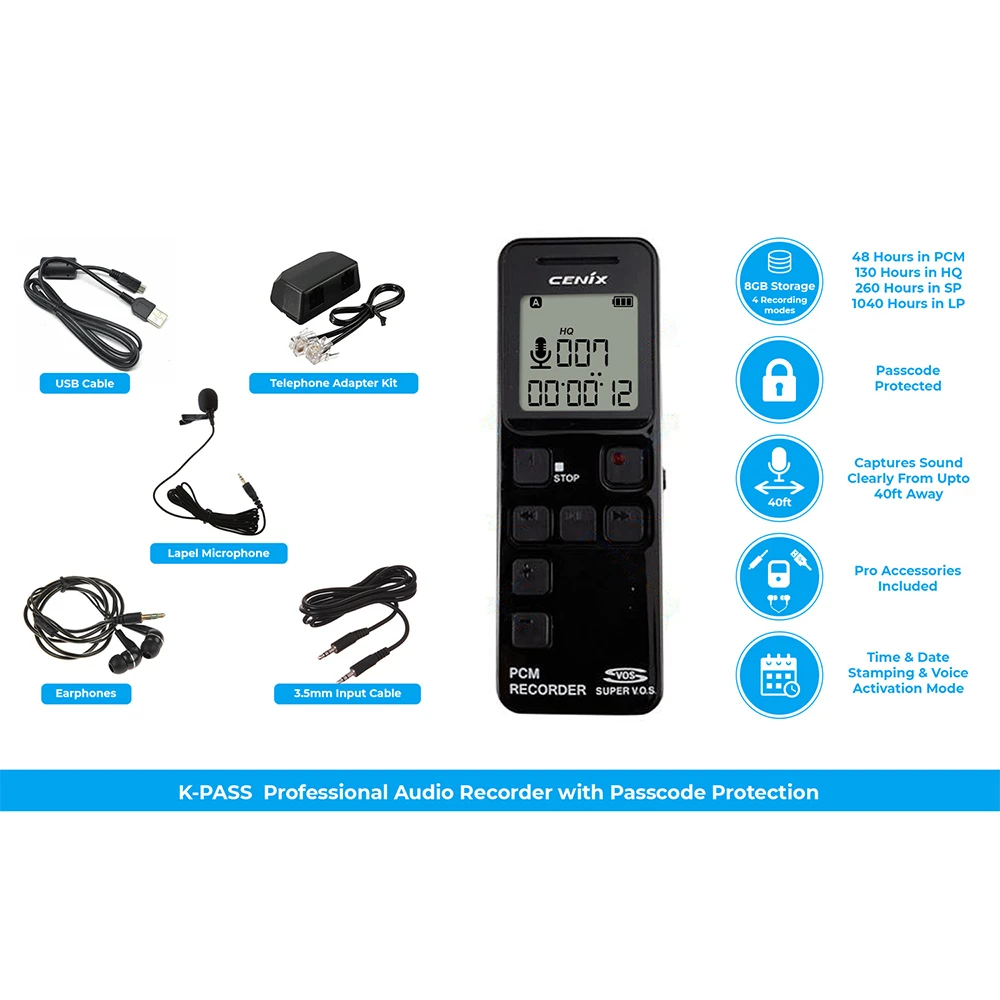
The included accessory ecosystem—including a lavalier microphone, telephone recording adapter, earphones, USB cable and OTG connectivity—extends the device beyond a standalone recorder into a flexible professional audio documentation platform.
What Problem Does K-PASS Solve?
Recording audio is relatively simple.
Managing sensitive recordings is more complicated.
Professional users may need to consider:
- Audio quality
- File organization
- Access control
- Recording duration
- Voice activation
- Playback
- Transfer
- Documentation
- Review
- Transcription
K-PASS brings these functions into one portable device.
Its architecture is particularly relevant when the requirement is not simply:
“Can this device record audio?”
but rather:
“Can this recording workflow support secure capture, controlled access and practical professional review?”
The workflow becomes:
Capture → Secure → Store → Retrieve → Review → Transfer → Document
Core Capabilities
Password Protection for Sensitive Recordings
The defining capability of K-PASS is its password protection function.
Users can configure a passcode to help restrict unauthorized access to recordings stored on the device.
This can be particularly useful when recordings contain:
- Confidential conversations
- Interview material
- Sensitive business information
- Investigation notes
- Professional documentation
- Personal information
Password protection supports the access-control layer of a recording workflow.
However, password protection alone does not prove that a file is authentic, unaltered or legally admissible.
It is a technical protection feature—not a legal determination.
PCM Recording and Multiple Audio Quality Modes
K-PASS supports multiple recording modes, including PCM.
The manufacturer specifies four recording-quality options:
- PCM
- HQ
- SP
- LP
Different recording modes allow users to balance audio quality against available storage capacity.
According to manufacturer specifications, the stated 8GB recording capacity varies by mode:
- PCM: up to 48 hours
- HQ: up to 130 hours
- SP: up to 260 hours
- LP: up to 1,040 hours
This gives professional users greater flexibility than a recorder limited to one fixed recording configuration.
Voice-Activated Recording (VOX)
K-PASS supports voice-activated recording.
When enabled, the device records when sound is detected rather than continuously recording silent periods.
This can help:
- Reduce unnecessary silent audio
- Conserve storage
- Reduce battery consumption
- Simplify review of extended recordings
K-PASS can also operate in continuous recording mode.
The appropriate mode depends on the recording requirement and whether continuous context or intermittent sound capture is more important.
Time & Date Stamping
The recorder supports time and date information for recordings.
This provides a chronological reference that can help users organize recordings within a broader documentation workflow.
Time and date information may help with:
- File organization
- Chronological review
- Incident documentation
- Recording identification
- Timeline reconstruction
A timestamp provides contextual metadata.
It does not independently prove authenticity, integrity or court admissibility.
Up to 1,040 Hours of Stated Audio Storage
K-PASS includes 8GB internal memory.
The manufacturer specifies up to 1,040 hours of recording capacity, depending on the selected recording mode.
This gives users flexibility to prioritize:
Higher Audio Quality
or
Longer Recording Duration
rather than requiring every recording to use the same storage configuration.
Up to 15 Hours of Continuous Recording
The manufacturer specifies up to 15 hours of continuous recording on a single charge.
For voice-activated standby operation, manufacturer information specifies extended standby performance of up to approximately 31 days, depending on configuration and operating conditions.
Actual battery performance can vary according to:
- Recording mode
- Voice activation settings
- Environmental conditions
- Battery condition
- Frequency of activation
- Playback and device use
Adjustable Microphone Sensitivity
Microphone sensitivity can be adjusted through the onboard software.
This allows users to adapt the recording configuration to different acoustic environments.
Potential factors include:
- Distance from speakers
- Room size
- Background noise
- Speaker volume
- Recording environment
The manufacturer specifies microphone capture of up to 40 feet under optimal conditions.
Actual speech intelligibility depends on environmental and acoustic conditions.
Auto Level Control and Audio Configuration
K-PASS includes audio-management functionality designed to support recording across different sound conditions.
The product documentation also identifies microphone sensitivity adjustment as part of the recorder’s software configuration.
These controls help users configure the device according to the operational environment rather than relying entirely on one fixed microphone setting.
Advanced LCD Display
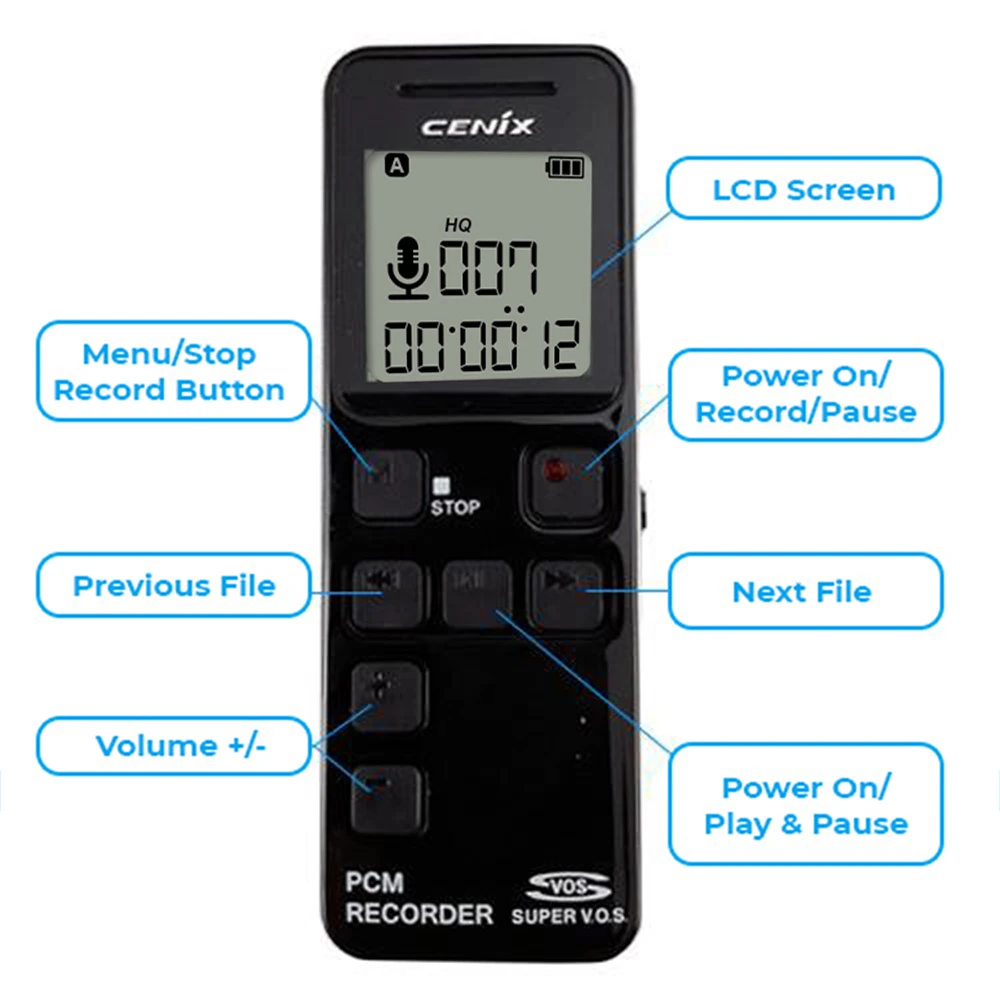
The recorder includes an LCD display for device operation and configuration.
This supports direct access to recording settings and device information without requiring every adjustment to be made through a computer.
The display helps make K-PASS suitable for users who require more operational control than a single-button recorder provides.
Flexible Recording Modes
K-PASS supports two primary recording approaches:
Continuous Recording
Records continuously while activated.
This may be appropriate when preserving the complete authorized recording context is operationally important.
Voice-Activated Recording
Records when sound is detected.
This may help reduce silent recordings and conserve available storage and battery capacity.
The choice should depend on the documentation requirement.
Continuous Recording → Complete Timeline
Voice Activation → Reduced Silence
Professional Accessory Ecosystem
K-PASS is supplied with accessories that expand its recording applications.
Lavalier Microphone
The included lavalier microphone supports wearable and hands-free recording configurations.
This may be useful for authorized:
- Interviews
- Field documentation
- Presentations
- Professional conversations
Telephone Recording Adapter
The included adapter supports connection to compatible landline telephone systems.
Any telephone recording must comply with applicable recording, consent and telecommunications laws.
The availability of a technical recording adapter does not itself create legal authority to record a conversation.
Earphones
Earphones allow users to review recordings directly.
This can support preliminary field review without immediately transferring files to another device.
USB Cable
The USB connection supports:
- Charging
- File transfer
- Device connectivity
OTG Connectivity
With compatible OTG connectivity, recordings can be accessed through supported:
- Smartphones
- Tablets
- iPhone and iPad configurations
- Android devices
This can provide additional flexibility for professional workflows requiring mobile file review.
Onboard Playback and File Review
K-PASS supports direct playback functionality.
Users can review recordings:
- Through the device
- Using compatible earphones
- After transfer to a computer
- Through compatible mobile workflows
This creates a practical workflow:
Record → Playback → Review → Transfer → Archive
For recordings requiring formal preservation, the original file should be retained separately from any working, converted, enhanced or transcribed version.
AI-Compatible Voice-to-Text Transcription
K-PASS recordings can be used with compatible AI-powered transcription services.
The recorder itself does not perform AI transcription.
Instead, the workflow is:
Record → Transfer Audio → Upload to Compatible Transcription Service → Generate Text → Review
This can help professional users process longer recordings more efficiently.
Potential applications include:
- Interview transcription
- Meeting notes
- Statement documentation
- Investigation review
- Audio search workflows
- Report preparation
AI-generated transcripts should still be reviewed for accuracy, particularly where names, technical terminology, accents or legally significant statements are involved.
Direct USB File Transfer
K-PASS supports direct file transfer through USB connectivity.
This allows recordings to be moved into compatible:
- Windows workflows
- Mac workflows
- File storage systems
- Review environments
The device is designed for practical file retrieval rather than requiring proprietary cloud infrastructure.
For sensitive recordings, organizations should consider their own controlled storage and access procedures after transfer.
Mobile Access Through Compatible OTG Workflows
The manufacturer states that the device can connect to compatible smartphones and tablets using an OTG adapter.
This supports more flexible file access for users working outside a conventional desktop environment.
Potential workflow:
Record → Connect → Access → Review → Securely Store
Device and adapter compatibility should be confirmed for the intended mobile hardware.
Magnetic and Wearable Capability
Manufacturer information identifies K-PASS as:
- Magnetic
- Suitable for wearable audio recording
This provides additional deployment flexibility depending on the authorized professional requirement.
The form factor can therefore support both:
Portable Handheld Recording
and
Wearable Recording Configurations
From Audio Capture to Secure Documentation
K-PASS is best understood as a recording and file-management workflow.
01 — Capture
Record through continuous or voice-activated operation.
02 — Configure
Select an appropriate recording mode and microphone sensitivity.
03 — Reference
Use time and date information to organize recordings chronologically.
04 — Protect
Use password protection to help control access to stored recordings.
05 — Review
Listen through onboard playback, earphones or compatible devices.
06 — Transfer
Move recordings through USB or compatible OTG workflows.
07 — Transcribe
Use compatible AI transcription services where text conversion is required.
08 — Preserve
Store original recordings separately from working copies where appropriate.
Capture → Secure → Review → Transfer → Transcribe → Preserve
That is the core K-PASS workflow.
Designed for Professional Audio Documentation
K-PASS may be suitable for authorized professional applications including:
- Interviews
- Statements
- Meeting documentation
- Corporate investigations
- Internal investigations
- Journalism
- Research
- Professional field documentation
- Private investigation
- Security operations
- Evidence-oriented documentation workflows
The manufacturer positions the device particularly toward professional investigators and users requiring secure audio storage.
However, suitability for a particular legal, investigative or organizational purpose depends on the applicable authorization, policies and laws.
Why Password Protection Matters
Not every recording requires the same level of access control.
A casual voice memo and a confidential interview may have very different handling requirements.
Password protection can help create an additional barrier against unauthorized access when recordings contain:
- Confidential information
- Sensitive conversations
- Investigation material
- Business information
- Personal data
The benefit is practical:
Audio Capture + Controlled Device Access
However, password protection should not be confused with complete evidence authentication or legal admissibility.
Those are separate questions.
K-PASS vs a Basic Audio Recorder
A basic recorder may focus primarily on:
Record → Save
K-PASS adds a broader workflow:
Record → Configure → Protect → Review → Transfer → Transcribe → Preserve
Its differentiation comes from the combination of:
- Password protection
- PCM recording
- Multiple recording modes
- Voice activation
- Continuous recording
- Time and date information
- Adjustable microphone sensitivity
- Onboard playback
- Professional accessories
- USB transfer
- OTG-compatible mobile access
- AI-compatible transcription workflow
What K-PASS Provides
The K-PASS Secure PCM Audio Recorder combines:
- Password-protected file access
- 8GB internal storage
- Up to 1,040 hours of stated storage capacity depending on recording mode
- PCM recording
- HQ, SP and LP recording modes
- Continuous recording
- Voice-activated recording
- Up to 15 hours of stated continuous operation
- Extended VOX standby
- Time and date stamping
- Adjustable microphone sensitivity
- Up to 40-foot manufacturer-stated microphone capture under optimal conditions
- Advanced LCD display
- Onboard playback
- USB file transfer
- Windows and Mac compatibility
- Compatible OTG/mobile access workflows
- AI-compatible transcription workflow
- Lavalier microphone
- Telephone recording adapter
- Earphones
- Magnetic capability
- Wearable recording capability
Specifications and operational claims are based on manufacturer information and should be confirmed before procurement where a particular capability is critical.
Technical Specifications
| Specification | K-PASS |
|---|---|
| Product Type | Password-Protected Professional Audio Recorder |
| Model / SKU | K-PASS |
| Internal Memory | 8GB |
| Maximum Stated Recording Capacity | Up to 1,040 hours depending on recording mode |
| PCM Capacity | Up to 48 hours |
| HQ Capacity | Up to 130 hours |
| SP Capacity | Up to 260 hours |
| LP Capacity | Up to 1,040 hours |
| Recording Modes | PCM, HQ, SP, LP |
| Recording Activation | Continuous and Voice Activated |
| Recording Formats | MP3, WAV |
| Continuous Recording | Up to 15 hours |
| VOX Standby | Up to approximately 31 days |
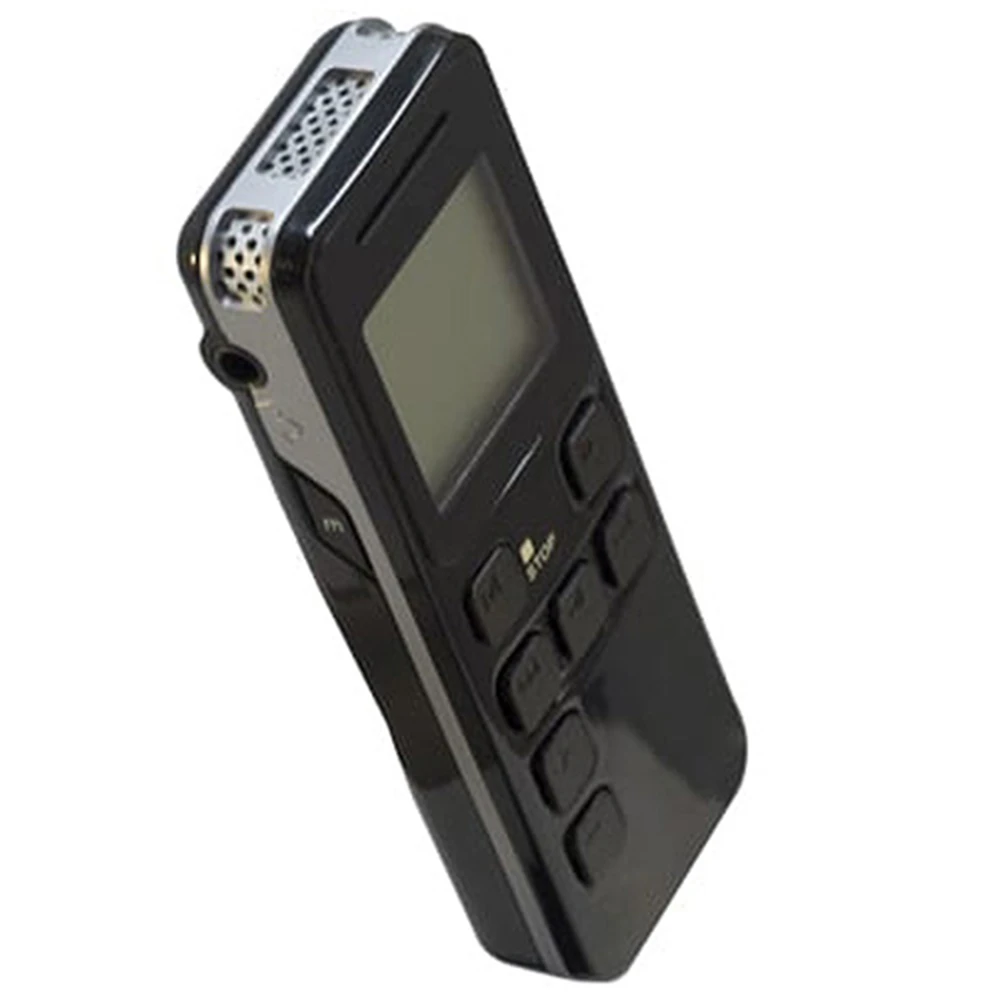
| Microphone | Built-in stereo microphone |
| Stated Microphone Range | Up to 40 feet under optimal conditions |
| Microphone Sensitivity | Adjustable |
| Time & Date Stamping | Yes |
| Password Protection | Yes |
| Onboard Playback | Yes |
| Player Compatibility | MP3, WAV, WMA |
| USB Interface | Mini USB 2.0 |
| Battery | Rechargeable lithium-polymer |
| OTG Compatibility | Supported with compatible adapter |
| Computer Compatibility | Windows and Mac |
| Mobile Compatibility | Compatible OTG workflows for supported devices |
| Lavalier Microphone | Included |
| Telephone Recording Adapter | Included |
| Earphones | Included |
| USB Cable | Included |
| Magnetic | Yes, according to manufacturer FAQ |
| Wearable Capability | Yes, according to manufacturer FAQ |
| Dimensions | Approximately 3.7 × 1.4 × 0.6 inches |
| Weight | Approximately 57–60 grams |
Specifications are based on current manufacturer documentation. Battery duration, microphone performance and storage capacity vary according to settings and operating conditions.
What K-PASS Does Not Automatically Establish
K-PASS does not independently establish:
- That a recording was lawfully obtained
- That consent or authorization was sufficient
- That a recording is authentic
- That metadata has not been altered
- That a speaker has been conclusively identified
- That a recording is admissible in court
- That password protection proves evidential integrity
- That an AI-generated transcript is perfectly accurate
- That a recording proves the underlying allegation
The recorder supports the technical documentation workflow. Legal, forensic and evidentiary questions require separate assessment.
Choosing K-PASS for the Right Requirement
K-PASS may be particularly relevant when the recording requirement prioritizes:
Secure File Access
Multiple Audio Quality Options
PCM Recording
Voice Activation
Professional Accessories
Time & Date Organization
Onboard Review
Mobile & Computer File Access
AI-Assisted Transcription Workflows
Rather than selecting a recorder based only on size or battery life, K-PASS is designed around a broader professional workflow.
Record → Secure → Review → Transfer → Document
Frequently Asked Questions
What is the K-PASS Password Protected Audio Recorder?
K-PASS is a professional audio recorder designed around secure file access, multiple recording modes and flexible documentation workflows. It combines password protection, PCM recording, voice activation, time and date information, onboard playback and professional accessories.
Does K-PASS have password protection?
Yes. K-PASS includes a passcode protection function designed to help restrict unauthorized access to recordings stored on the device.
Password protection supports access control but does not independently prove authenticity, integrity or legal admissibility.
How much audio can K-PASS store?
The manufacturer specifies 8GB of internal memory with recording capacity varying by selected mode.
Stated capacity ranges from approximately:
- 48 hours in PCM
- 130 hours in HQ
- 260 hours in SP
- Up to 1,040 hours in LP
Does K-PASS support PCM recording?
Yes. PCM is one of the available recording modes.
PCM may be useful when higher-quality audio capture is preferred, although it uses more storage than lower-quality recording modes.
Does K-PASS support voice-activated recording?
Yes. K-PASS supports voice or sound activation.
When enabled, recording begins when sound is detected rather than continuously recording silent periods.
Can K-PASS record continuously?
Yes. The device supports both continuous and voice-activated recording modes.
The appropriate choice depends on whether complete recording continuity or reduced silent recording is more important for the authorized application.
How long can K-PASS record continuously?
The manufacturer specifies up to approximately 15 hours of continuous recording on a single charge.
Actual operating time can vary depending on settings and conditions.
Does K-PASS timestamp recordings?
Yes. Manufacturer information specifies time and date stamping.
This can help organize recordings chronologically but does not independently prove that a recording is authentic or admissible.
Can microphone sensitivity be adjusted?
Yes. Manufacturer information states that microphone sensitivity can be adjusted through the onboard software.
This allows users to configure the device according to different acoustic environments.
What is the microphone range?
The manufacturer specifies audio capture of up to 40 feet under optimal conditions.
Actual audio clarity depends on distance, speaker volume, background noise, room acoustics and microphone positioning.
Can I listen to recordings directly on K-PASS?
Yes. K-PASS supports onboard playback.
Recordings can also be reviewed using included earphones or after transfer to compatible devices.
Can recordings be transferred to a computer?
Yes. The device supports USB file transfer and manufacturer documentation identifies compatibility with Windows and Mac workflows.
Can K-PASS connect to a smartphone?
The manufacturer states that the device can connect to compatible phones and tablets through an OTG adapter.
Compatibility should be confirmed for the specific mobile device and adapter.
Does K-PASS support AI voice-to-text transcription?
K-PASS recordings can be uploaded to compatible AI transcription services.
The recorder itself does not generate AI transcripts.
The workflow is:
Record → Transfer → Upload → Transcribe → Review
What accessories are included with K-PASS?
Manufacturer information lists accessories including:
- Lavalier microphone
- Telephone recording adapter
- Earphones
- USB cable
- Connection accessories for supported workflows
Included accessories should be confirmed with the supplier before purchase because package configurations can change.
Can K-PASS record telephone calls?
The manufacturer supplies a landline telephone recording adapter for compatible systems.
However, telephone recording is subject to applicable privacy, consent and telecommunications laws.
Technical capability does not itself provide legal authority to record a call.
Is K-PASS suitable for interviews?
K-PASS may be suitable for authorized interview documentation because it combines configurable recording quality, voice activation, a lavalier microphone, time/date information, onboard playback and file transfer.
The suitability depends on the recording environment and operational requirement.
Is K-PASS suitable for professional investigations?
The manufacturer positions K-PASS toward professional investigators and documentation workflows.
Its password protection, recording modes, accessories and file-management capabilities may be useful in professional operations.
The device should be used only within applicable laws and authorization.
Can K-PASS be used as evidence?
A K-PASS recorder can create an audio file that may become relevant to a professional or legal matter.
However, no recorder guarantees:
- Lawful acquisition
- Authenticity
- Speaker identification
- Evidential integrity
- Admissibility
- Court acceptance
Those questions depend on the circumstances, applicable law and evidence-handling process.
Why is password protection useful for professional recordings?
Password protection can help reduce unauthorized access to sensitive recordings stored on the device.
This may be useful for confidential interviews, investigation material or sensitive business information.
It is an access-control feature—not an automatic proof of evidential integrity.
What makes K-PASS different from a basic voice recorder?
The main difference is the combination of secure access, configurable recording modes and professional accessories.
K-PASS is designed around:
Capture → Secure → Review → Transfer → Document
rather than simply recording and saving an audio file.
Important Legal Notice
A password-protected recorder does not create legal authority to record.
Before recording, users should consider:
- Applicable law
- Consent or authorization requirements
- Privacy obligations
- Confidentiality
- Location and circumstances
- Storage and access controls
- Transfer procedures
- Disclosure requirements
Where recording may have significant legal or professional consequences, qualified legal advice should be obtained where appropriate.
Technology supports lawful documentation. It does not replace the legal or evidentiary process.

Reviews
There are no reviews yet.