





Description
Z-Box — Multi-Phone White Noise Microphone Suppression Enclosure
Controlled Audio Privacy for Smartphones
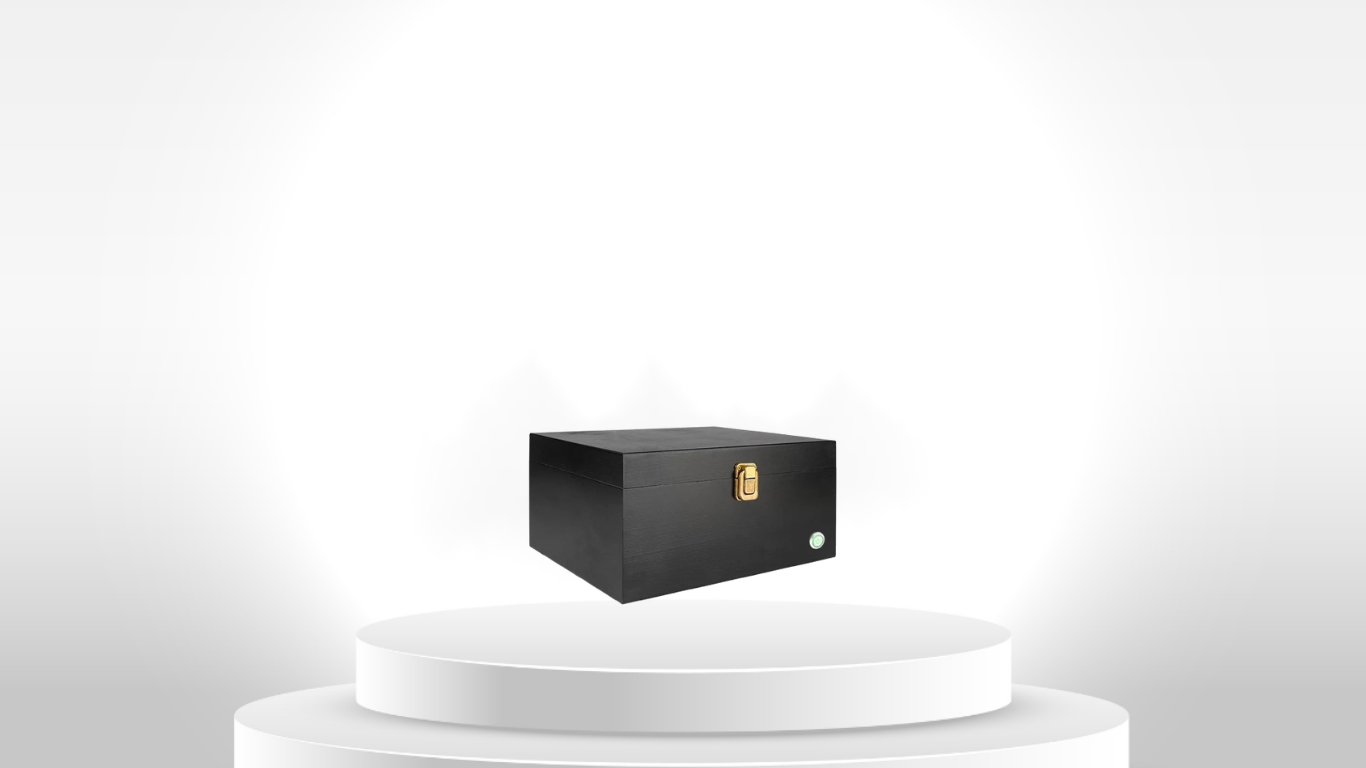
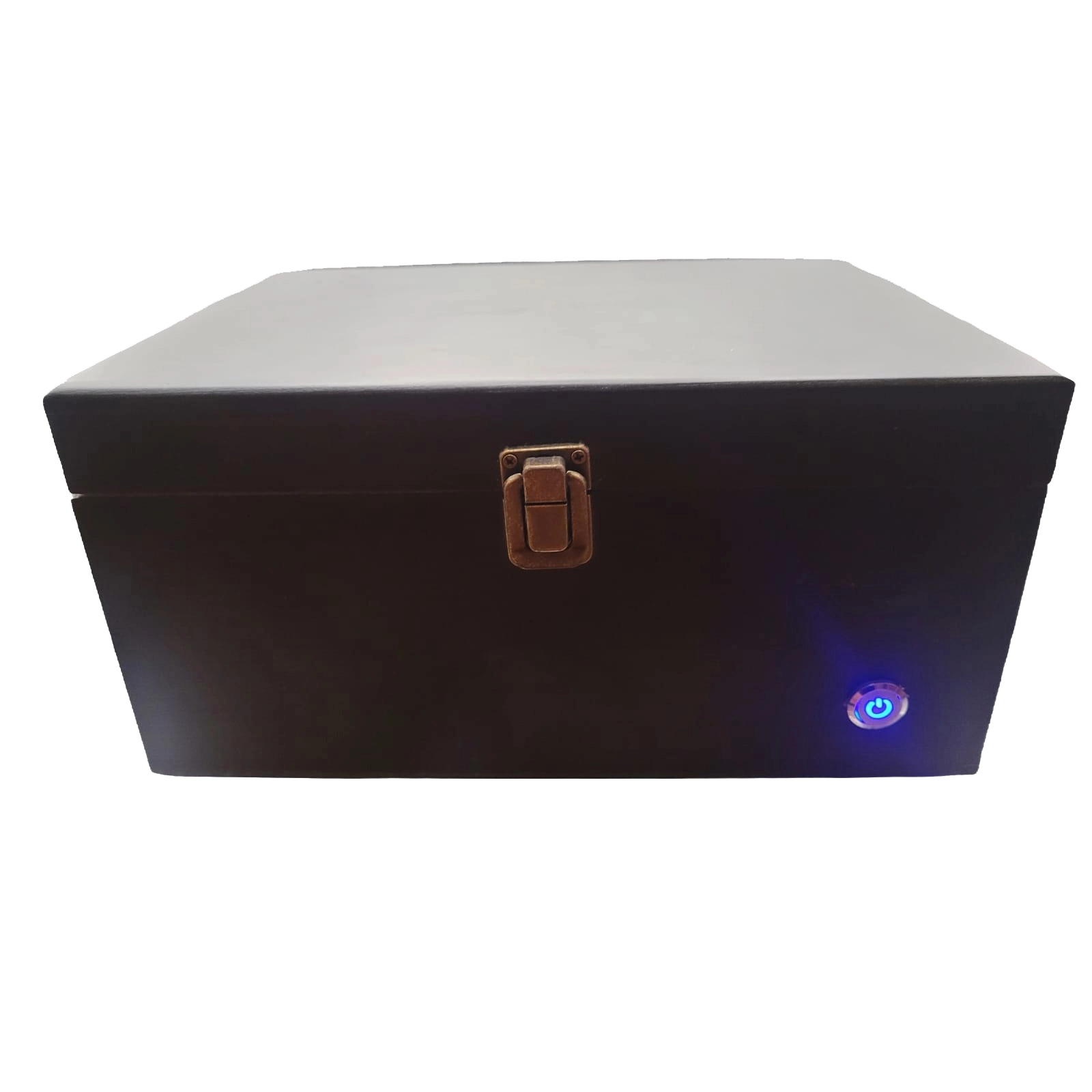
The PBN Z-Box is a dedicated microphone suppression enclosure designed to reduce the risk of smartphone-based audio recording during confidential conversations.
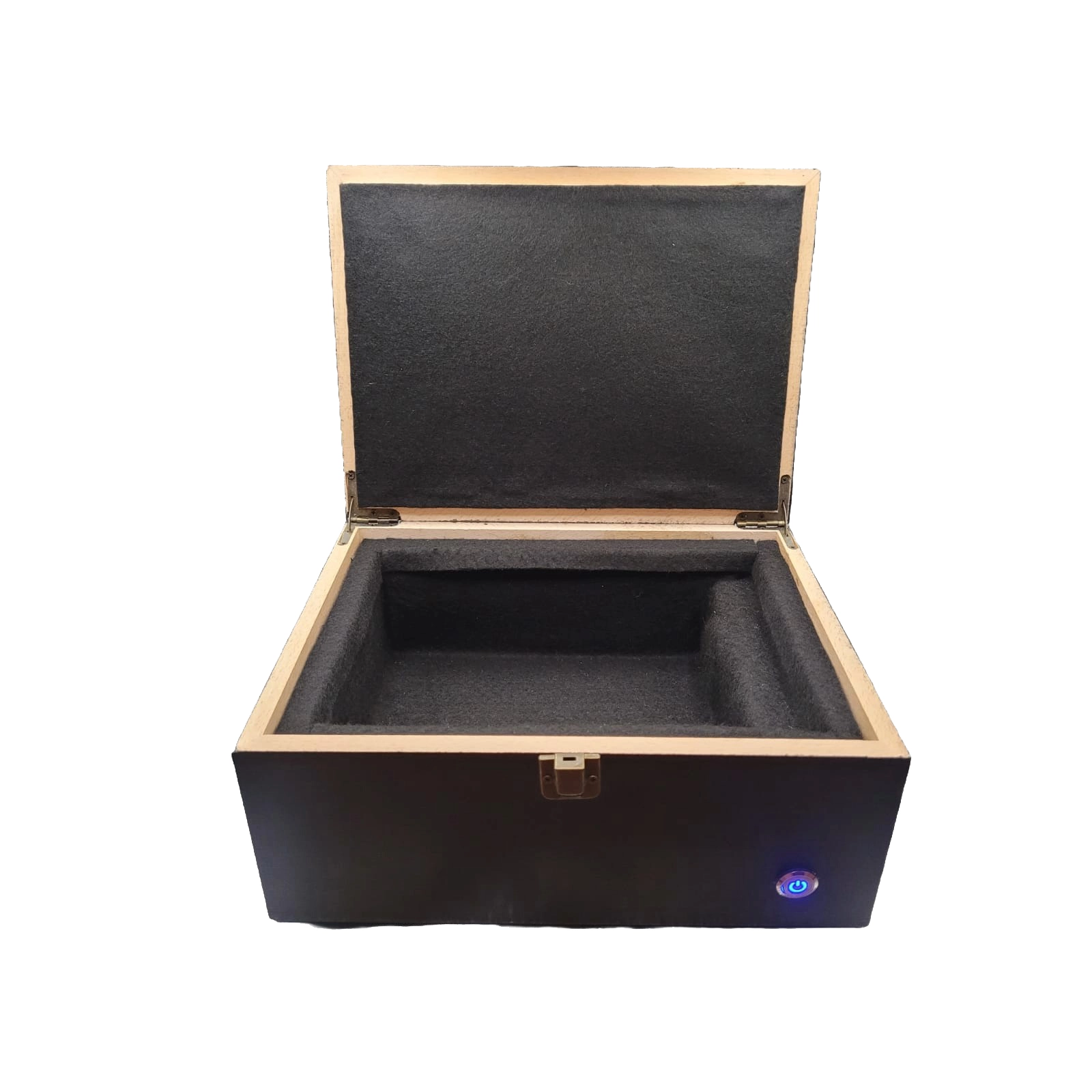
Up to six smartphones can be placed inside the enclosure. Once activated, Z-Box creates a controlled acoustic environment using white-noise suppression to interfere with microphone-based voice capture.
The goal is simple: reduce the clarity and usefulness of recorded speech while allowing the phones to remain connected and operational.
This makes Z-Box different from an RF jammer or Faraday enclosure. It does not aim to disconnect phones from cellular, Wi-Fi or other wireless services. Its primary function is to address the microphone and audio-capture layer.
How Z-Box Works
1. Place the Phones Inside
Z-Box is designed to hold up to six smartphones at the same time.
During a confidential meeting, participating phones can be placed inside the enclosure to establish a centralized protection point.
2. Create a Controlled Acoustic Environment
The system generates white noise inside the enclosure.
This creates an acoustic environment designed to interfere with the microphones of the phones placed inside.
3. Reduce Voice Capture
When the microphone attempts to record speech inside the enclosure, the acoustic interference is intended to reduce the clarity and usefulness of the captured audio.
The objective is not to disable the phone. It is to make microphone-based voice recording less effective.
4. Keep the Phones Connected
Z-Box is not designed to block cellular communication.
The manufacturer states that phones can continue to handle calls, texts and data while inside the system.
This allows organizations to maintain normal phone connectivity while applying an additional layer of audio privacy.
What Z-Box Is Designed to Protect Against
Z-Box is designed to address recording risks associated with:
- Smartphone voice-recording applications
- Smartphone video recording with audio
- Microphone-based voice capture
- AI-assisted voice-to-text processing
- Confidential conversations recorded through mobile devices
- Multiple smartphones present during sensitive meetings
The manufacturer also describes adaptive noise-generation capabilities intended to make software-based noise filtering and AI voice-to-text processing more difficult.
These capabilities are presented as part of the manufacturer’s technology positioning; detailed algorithm specifications and independent performance benchmarks are not publicly established.
What Z-Box Does Not Do
Z-Box should not be confused with wireless signal-blocking technology.
It is:
- Not an RF jammer
- Not a cellular jammer
- Not a Wi-Fi jammer
- Not a Bluetooth jammer
- Not a Faraday enclosure
- Not an RF detection system
- Not a TSCM detection instrument
- Not a room-wide microphone suppression system
Its protection concept is based on the phones being physically placed inside the enclosure.
A smartphone located elsewhere in the room should therefore not be considered protected by Z-Box.
Multi-Phone Protection
One of the main advantages of Z-Box is centralized device control.
Instead of placing individual phones around a meeting room, up to six smartphones can be placed together inside one dedicated enclosure.
This creates a simple operational model:
Collect → Contain → Suppress → Continue the Meeting
For organizations with established confidential-meeting procedures, this can provide a practical physical and technical control over participating mobile devices.
Protection Layer
Z-Box operates at the acoustic and microphone-capture layer.
This is different from technologies that operate at the radio layer.
| Technology | Primary Function |
|---|---|
| RF Detector | Detect radio-frequency activity |
| Spectrum Analyzer | Analyze RF signals |
| RF Jammer | Disrupt wireless communications |
| Faraday Enclosure | Isolate wireless signals |
| Room Audio Masking | Mask speech within a room |
| Smartphone Microphone Suppressor | Reduce smartphone microphone capture |
| PBN Z-Box | Suppress microphone capture from phones inside the enclosure |
Typical Applications
Executive & Board Meetings
Provide an additional audio-privacy control for confidential strategy, financial, corporate and management discussions.
Legal & Professional Consultations
Help reduce smartphone recording risk during sensitive consultations, interviews and advisory sessions.
Government & Security Environments
Support controlled mobile-device procedures during sensitive meetings and discussions.
R&D & Commercial Negotiations
Add a technical privacy layer when discussing intellectual property, product development, commercial strategy or confidential negotiations.
TSCM & Counter-Surveillance Programs
Z-Box can be used as a preventive counter-surveillance measure alongside broader TSCM procedures.
It does not replace physical inspection, technical surveillance detection or other security controls.
Operating Concept
Identify smartphones requiring protection
↓
Place up to six phones inside Z-Box
↓
Activate the suppression system
↓
White noise creates a controlled acoustic environment
↓
Microphone-based voice capture is suppressed
↓
Phones remain operational and connected
↓
Confidential discussion continues
Z-Box and Smartphone Connectivity
A key design distinction is that Z-Box focuses on audio capture rather than wireless connectivity.
The phone can remain a functioning communication device while its microphone operates within the controlled acoustic environment.
This makes Z-Box suitable for situations where completely disconnecting or isolating phones would be impractical.
Technical Boundaries
Z-Box should be understood as a contained microphone-suppression solution, not a universal guarantee against every form of audio recording.
Its effectiveness depends on factors such as:
- The device being inside the enclosure
- The microphone and recording method being used
- The acoustic environment
- Device positioning
- The recording application’s processing
- The effectiveness of any subsequent audio filtering or processing
For high-security environments, Z-Box should therefore be treated as one layer of a broader confidential-communications and TSCM strategy.
Technical FAQ
What is the PBN Z-Box?
PBN Z-Box is a multi-phone acoustic suppression enclosure designed to reduce microphone-based voice capture from smartphones placed inside the enclosure.
How many phones can Z-Box hold?
The system is designed to accommodate up to six smartphones simultaneously.
Do phones need to be inside the Z-Box?
Yes. The protection concept is based on creating a controlled acoustic environment inside the enclosure. It should not be treated as a room-wide microphone suppression system.
Does Z-Box block cellular signals?
No. It is not designed as a cellular jammer or wireless signal blocker.
Can phones still receive calls and messages?
The manufacturer states that calls, texts and data remain operational while phones are inside the system.
Is Z-Box an RF jammer?
No. Z-Box uses acoustic suppression rather than RF interference.
Does Z-Box block Wi-Fi or Bluetooth?
It is not designed to block Wi-Fi or Bluetooth. Its primary function is microphone and audio-capture suppression.
Does Z-Box use white noise?
Yes. White-noise generation is a core part of its acoustic suppression approach.
Does Z-Box protect phones outside the enclosure?
No. The system is designed around phones being physically placed inside the enclosure.
Does Z-Box prevent every type of recording?
It should not be described as an absolute guarantee. Its purpose is to reduce the effectiveness of microphone-based voice capture within the controlled environment.
Does Z-Box protect against AI voice-to-text systems?
The manufacturer describes adaptive noise-generation capabilities intended to address AI-assisted voice-to-text and software-based audio filtering. However, specific algorithms, models and independent performance benchmarks are not publicly established.
Is Z-Box a TSCM detector?
No. Z-Box is a countermeasure, not a detection instrument.
Does Z-Box replace a TSCM sweep?
No. It addresses a specific smartphone audio-recording risk and should be used as part of a broader security and TSCM program.

Reviews
There are no reviews yet.