


Description
X-Case — Portable Microphone Suppression Kit
Portable professional protection for sensitive conversations and high-risk meetings.
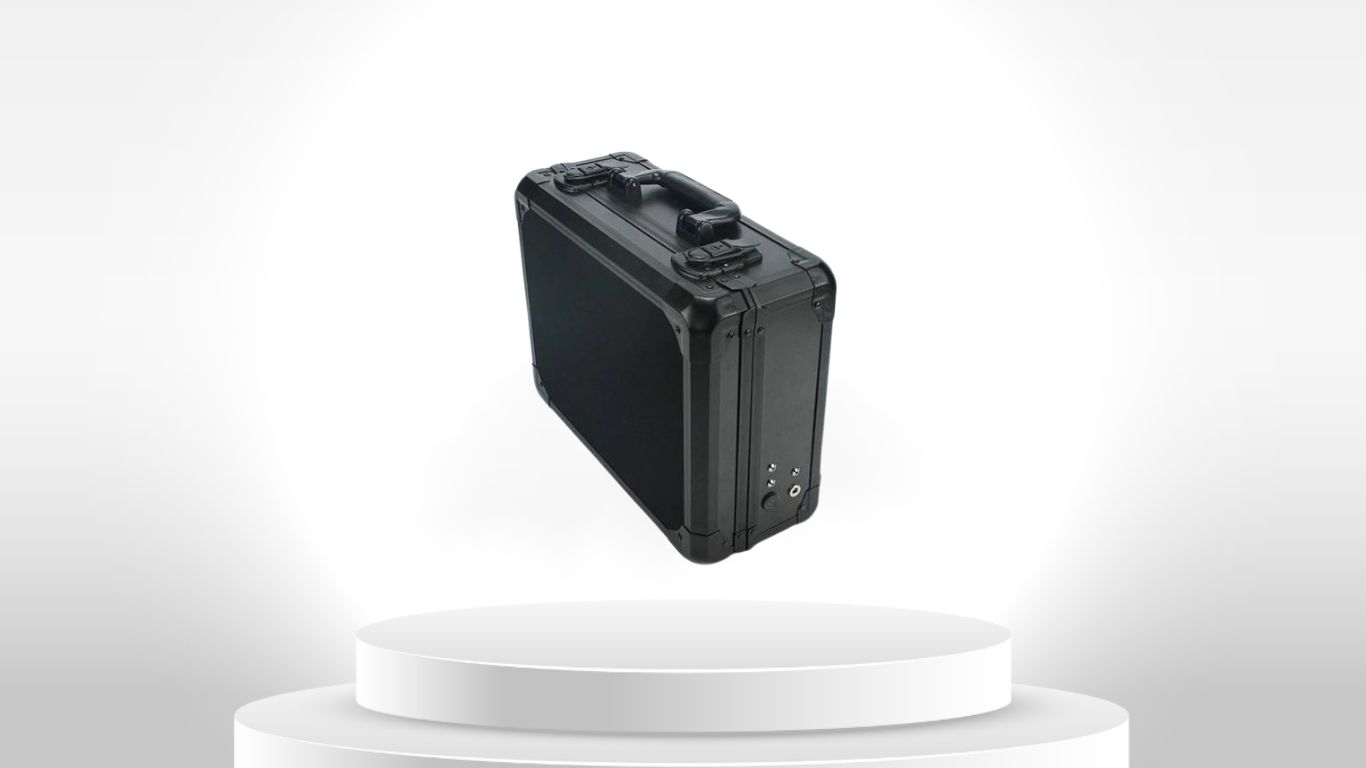
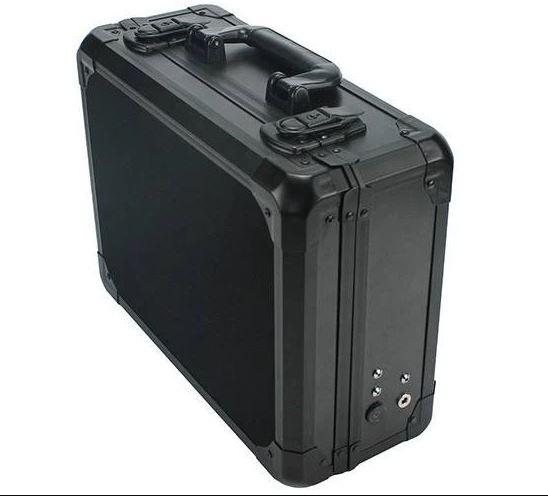
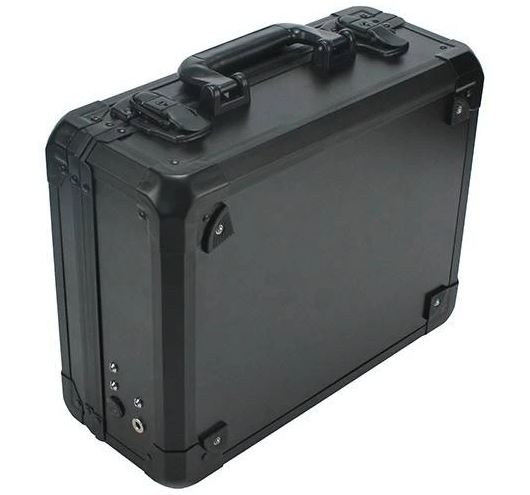
X-Case is a professional portable microphone suppression system designed to reduce unauthorized audio recording by smartphones, voice recorders and other microphone-based devices.
It combines ultrasonic microphone suppression, targeted mono-directional coverage, portable case protection and battery or mains operation in one system.
The result is a privacy solution that can be moved between meeting rooms, executive spaces, interviews and other sensitive environments instead of relying only on permanent room infrastructure.
The current product specification identifies 48 ultrasonic transducers, modern smartphone compatibility, mono-directional suppression and executive-level protection.
What Is X-Case?
X-Case is a portable microphone suppression kit for organizations that need to protect sensitive conversations from unauthorized audio recording.
Unlike an RF jammer, X-Case is designed to address the microphone and audio-capture layer.
It does not need to block:
- Cellular communication
- Wi-Fi
- Bluetooth
- Internet access
- Normal phone communication
The objective is different:
Protect the conversation without disabling the surrounding communications infrastructure.
What Problem Does X-Case Solve?
A confidential conversation can become a security incident if someone records it without authorization.
Modern smartphones make this problem more difficult because one device may contain:
- Multiple microphones
- Noise cancellation
- Digital audio processing
- Automatic gain control
- Voice enhancement
- AI-assisted transcription
The recording device does not need to transmit anything for the conversation to become a data-leak risk.
X-Case provides a protective layer against microphone-based recording during the conversation itself.
This is especially relevant when the organization cannot assume that every personal device has been removed from the room.
Why Microphone Suppression Matters
Traditional TSCM focuses heavily on detection.
Microphone suppression addresses protection.
These are different security functions.
TSCM Detection
Is there a suspicious device, signal or electronic component?
Microphone Suppression
Can we reduce the ability of nearby microphones to capture useful audio?
A mature privacy strategy may therefore use:
Detect → Assess → Protect → Verify
X-Case belongs primarily to the Protect layer.
How Does Ultrasonic Microphone Suppression Work?
Ultrasonic microphone suppression uses high-frequency acoustic interference to affect microphone capture.
Research has shown that ultrasonic signals can exploit nonlinear behavior in microphone hardware and introduce interference into the audio capture path. Independent research has also shown that performance varies with microphone design, direction, distance and system architecture.
This is why X-Case should be understood as a microphone suppression system, not as a universal guarantee that every recording device will stop recording.
The practical goal is to reduce the ability of susceptible microphones to capture clear or intelligible speech.
48 Ultrasonic Transducers
The current product page identifies X-Case as an overt microphone suppression system with 48 ultrasonic transducers.
A larger transducer architecture can provide a more controlled suppression field than a single small ultrasonic emitter.
The important point for buyers is not simply the number “48”.
It is the relationship between:
Transducer Array → Directional Coverage → Microphone Exposure → Suppression Performance
The actual result still depends on the target device, microphone design, distance, orientation and environment.
Mono-Directional Microphone Suppression
X-Case is designed around targeted mono-directional suppression.
This makes it different from products designed primarily for 360° room coverage.
The system can therefore be considered when the security requirement is focused on a defined conversation area, executive position, interview environment or meeting zone.
Independent product documentation describes X-Case as a mono-directional system, with some sources specifying a controlled suppression zone rather than a universal room-wide field.
Protection for Modern Smartphones
Smartphones are now one of the most common devices capable of recording conversations.
The current X-Case product page specifically identifies compatibility with modern smartphones, including examples such as:
- iPhone 16 Pro
- Samsung Galaxy S24 Ultra
These are manufacturer-stated compatibility claims and should not be interpreted as proof that every smartphone model will respond identically.
Different smartphones use different:
- Microphone arrays
- Noise-reduction systems
- Digital signal processing
- Automatic gain control
- Audio algorithms
Therefore, professional buyers should evaluate performance against the devices relevant to their own threat environment.
Protection Against Voice Recorders
X-Case is also intended for microphone-based recording devices such as digital voice recorders.
This is important because a dedicated voice recorder may have a different microphone design from a smartphone.
The system therefore belongs in a broader privacy architecture covering:
Smartphones → Voice Recorders → Wearables → Microphone-Equipped Devices
It should not be treated as a device-specific “recorder blocker” with identical performance against every model.
AI Recording and Real-Time Transcription
The privacy problem has changed.
A smartphone or wearable device can now capture speech and convert it into text almost immediately.
The risk chain can be:
Conversation → Microphone → Recording → Transcription → AI Analysis → Information Leakage
X-Case operates at the first critical stage:
Microphone Capture
If usable speech cannot be captured reliably, downstream transcription and AI analysis may also be affected.
However, X-Case does not detect AI, identify AI software or guarantee that every AI-enabled recording device will be suppressed.
The correct description is:
X-Case is designed to reduce unauthorized microphone capture, including from modern devices that may feed audio into automated transcription or AI systems.
The current product materials specifically discuss AI-powered transcription and modern microphone technology as part of the threat landscape.
Dual-Mode Protection
Current product information describes two operating modes:
Covert Mode
Designed for very low audible operation while providing ultrasonic microphone suppression.
Overt Mode
Designed to provide higher suppression output and can include speech-like acoustic interference.
This gives organizations a choice between a lower-audibility operating approach and a stronger overt protection mode, depending on the environment and security requirement.
Does X-Case Use RF Jamming?
No.
X-Case is positioned as non-jamming microphone suppression technology.
It targets audio capture rather than radio communication.
This means it should not be described as a:
- Cellular jammer
- Wi-Fi jammer
- Bluetooth jammer
- GPS jammer
- RF communication blocker
The distinction is important for both technical evaluation and operational planning.
Does X-Case Affect Phone Communication?
The intended architecture is to suppress microphone recording rather than disable communications.
A smartphone may still have:
- Cellular connectivity
- Wi-Fi
- Bluetooth
- Internet access
- Messaging
- Applications
The privacy technology operates at the microphone/audio layer rather than the communications layer.
Portable and Rapid Deployment
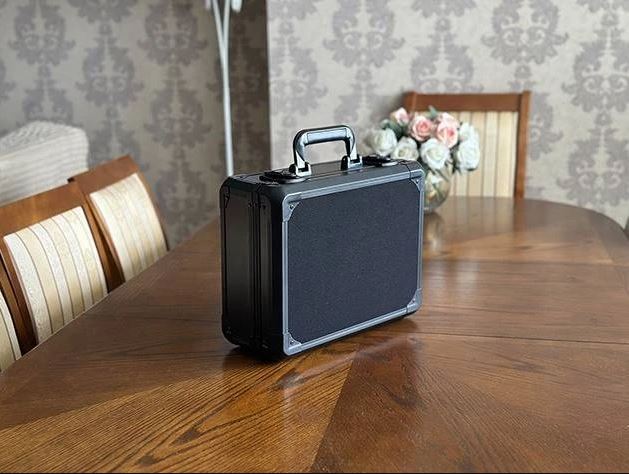
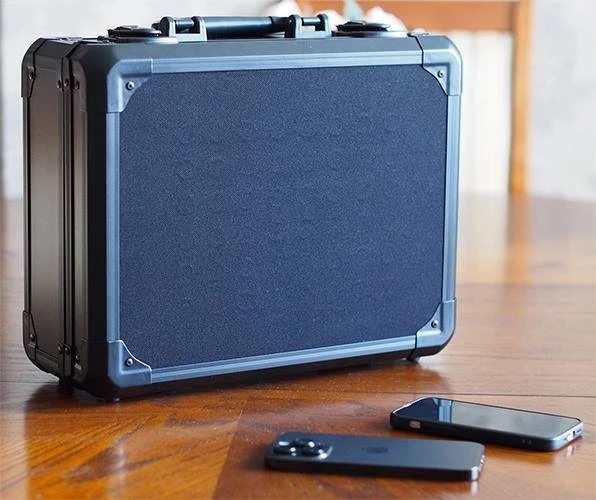
One of X-Case’s strongest differentiators is its portable protective case design.
Instead of installing permanent equipment in one room, the system can be transported between locations.
This makes it relevant to:
- Executive briefings
- Temporary meeting rooms
- Business negotiations
- HR investigations
- Legal meetings
- Sensitive interviews
- Government meetings
- Corporate security operations
- Executive protection
The current product information specifically positions the system for corporate, investigative, executive-protection and high-security environments.
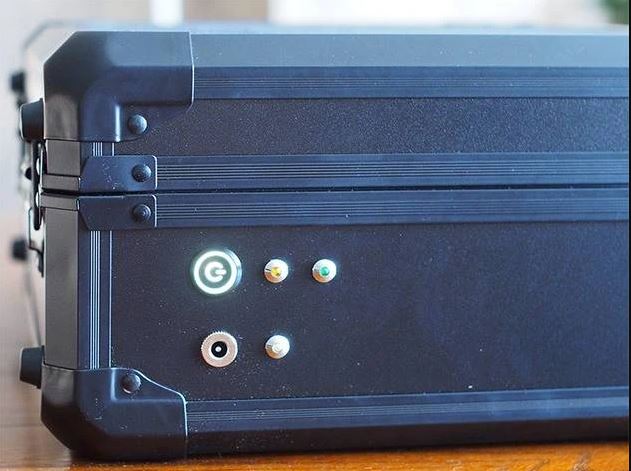
Battery and Mains Operation
X-Case supports both portable and stationary operation.
Current product information identifies:
- Battery-powered operation
- Mains-powered operation
- Portable deployment
- Continuous mains use for extended meetings
However, published sources currently contain different battery-runtime specifications.
One current product section states approximately 6 hours, while the requirements section specifies transportable use of up to 2 hours with a battery configuration that is not supplied. Another specialist reseller lists different figures again.
For that reason, the safest procurement statement is:
Battery runtime depends on the supplied/configured battery and operating mode. Confirm the final battery configuration and runtime before purchase.
This is preferable to publishing a single runtime as guaranteed.
Scalable Protection
X-Case can be considered where a single suppression zone is not enough.
Multiple units may be used as part of a broader privacy architecture for larger environments.
This is particularly relevant to:
- Large boardrooms
- Conference areas
- Government facilities
- Secure meeting environments
- Temporary protected spaces
The objective is to build protection around the required conversation area rather than assuming one device provides identical coverage everywhere.
X-Case vs Room-Level Microphone Suppression
| Requirement | X-Case | Room-Level System |
|---|---|---|
| Portability | High | Lower |
| Deployment | Temporary / mobile | Usually fixed or tabletop |
| Protection architecture | Mono-directional | Model-dependent |
| Case-based transport | Yes | Usually no |
| Executive protection | Strong fit | Strong fit |
| Temporary meetings | Strong fit | Less flexible |
| Larger room coverage | Multiple units may be used | Model-dependent |
| Permanent installation | Possible via mains | Better suited |
X-Case is particularly attractive when privacy protection needs to move with the meeting.
X-Case vs Catenaccio BRMSK
Both are professional microphone suppression technologies, but they address different operational requirements.
X-Case
- Portable
- Rugged case format
- Mono-directional suppression
- 48 ultrasonic transducers stated
- Battery or mains operation
- Temporary and mobile protection
Catenaccio BRMSK
- Boardroom-oriented
- Directional audio masking
- Designed for executive and meeting-room environments
- Better suited to a dedicated boardroom privacy architecture
The decision is therefore less about which product is “better” and more about:
Do you need portable protection or dedicated boardroom protection?
X-Case vs SEL OMNI TOWER
SEL OMNI TOWER is designed around broad omnidirectional room protection.
X-Case is designed around portable, targeted protection.
| Requirement | X-Case | SEL OMNI TOWER |
|---|---|---|
| Portability | High | Lower |
| Directionality | Mono-directional | Omnidirectional |
| Main use | Mobile / temporary protection | Room-level protection |
| Case-based system | Yes | No |
| Executive travel | Strong fit | Less suitable |
| Boardroom | Yes | Strong fit |
| Targeted privacy zone | Strong fit | Less targeted |
X-Case vs Portable Microphone Suppression Devices
Smaller portable microphone suppressors are useful when mobility is the primary requirement.
X-Case moves toward a more professional protection architecture:
Portable Case → Larger Transducer Array → Targeted Suppression → Battery/Mains Operation → Scalable Protection
This makes it more suitable for organizations that need a deployable professional system rather than a personal-size microphone suppressor.
Professional Applications
Executive Protection
Protect sensitive executive conversations during meetings, travel and temporary secure environments.
Corporate Security
Add technical protection against unauthorized audio recording during high-value discussions.
Boardroom Meetings
Support confidential strategy, M&A, financial and leadership discussions.
HR Investigations
Add privacy protection during sensitive internal investigations and disciplinary discussions.
Legal Meetings
Provide an additional technical layer during confidential professional discussions.
Government and Institutional Security
Support sensitive meetings where unauthorized audio capture represents a meaningful security concern.
Commercial Negotiations
Protect discussions involving:
- Pricing
- Contracts
- Intellectual property
- M&A
- Partnerships
- Strategic plans
X-Case and TSCM
X-Case does not replace a TSCM inspection.
A TSCM inspection attempts to identify and assess threats.
X-Case provides a protective microphone-suppression layer.
A professional architecture can therefore combine:
TSCM Detection → Threat Assessment → Microphone Suppression → Verification
This layered approach is stronger than treating any single technology as a complete security solution.
Performance Limitations
Ultrasonic microphone suppression is affected by real-world conditions.
Relevant factors include:
- Microphone design
- Number of microphones
- Microphone orientation
- Distance
- Device position
- Noise cancellation
- Automatic gain control
- Digital signal processing
- Room acoustics
- Physical obstructions
- Interference-field geometry
Academic research has specifically found that ultrasonic microphone jammers can have limitations in angular coverage and that range has historically been a significant engineering challenge. More recent research has demonstrated improved range using advanced signal processing, but that research does not validate the performance of any particular commercial product.
Therefore, manufacturer claims should be evaluated against the actual threat devices and environment.
What X-Case Does Not Guarantee
X-Case does not automatically guarantee:
- That every microphone will stop recording
- That every recording will become unusable
- That every smartphone will respond identically
- That every wearable microphone will be affected
- That every AI-enabled device will be suppressed
- That a room is completely free from surveillance
- That optical video recording will stop
- That another recording method cannot be used
Its purpose is to provide a technical audio-privacy protection layer.
Technical Specifications
| Specification | X-Case |
|---|---|
| Product Type | Portable Microphone Suppression Kit |
| Product Architecture | Portable Case-Based System |
| Suppression Technology | Ultrasonic Microphone Suppression |
| Transducers | 48 ultrasonic transducers |
| Suppression Direction | Mono-directional |
| Operating Modes | Covert / Overt |
| Smartphone Compatibility | Current product information includes iPhone 16 Pro and Samsung Galaxy S24 Ultra |
| Power | Battery / Mains |
| Mains | 110/220 V |
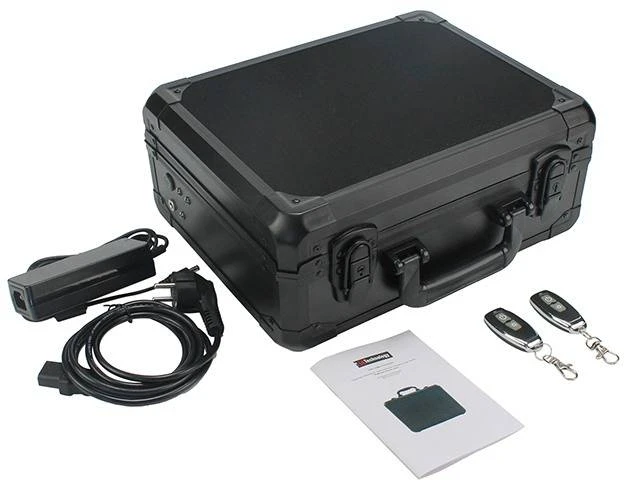
| Remote Control | Yes |
| Remote Control | Published specialist source: up to 30 m |
| Portable Operation | Battery configuration dependent |
| Form Factor | Rugged portable case |
| Weight | Published requirement: approx. 3.89 kg without specified external battery; approx. 5.90 kg with GP1272F2 |
| SKU | PBN-X-Case |
| UPC | 614703765304 |
Published documentation contains conflicting runtime and range figures across versions and resellers. Final configuration, battery, suppression range and included accessories should therefore be confirmed before procurement.
Frequently Asked Questions
What is X-Case?
X-Case is a portable professional microphone suppression system designed to reduce unauthorized audio recording from smartphones, voice recorders and other microphone-based devices.
What is a portable microphone suppression system?
It is a security system designed to reduce the ability of nearby microphones to capture usable speech, allowing organizations to add audio privacy protection without permanently installing equipment.
How does X-Case protect a conversation?
X-Case uses ultrasonic microphone suppression to interfere with the audio-capture process of susceptible microphones.
Is X-Case an RF jammer?
No.
X-Case is designed to target microphone recording rather than cellular, Wi-Fi or Bluetooth communications.
Does X-Case block Wi-Fi?
It is not designed as a Wi-Fi jammer.
Does X-Case block cellular communication?
It is not designed as a cellular jammer.
Does X-Case block Bluetooth?
It is not designed as a Bluetooth jammer.
What is the difference between microphone suppression and RF jamming?
Microphone suppression targets audio capture.
RF jamming targets radio communication.
They address different security problems.
How many ultrasonic transducers does X-Case have?
The current product information specifies 48 ultrasonic transducers.
Is X-Case directional?
Yes.
The current product architecture describes X-Case as mono-directional, meaning its suppression is focused toward a defined area rather than designed as a universal 360° field.
Can X-Case protect against modern smartphones?
The current product information specifically identifies modern smartphones including the iPhone 16 Pro and Samsung Galaxy S24 Ultra.
This should be treated as manufacturer-stated compatibility, not a guarantee that every current or future smartphone will perform identically.
Can X-Case protect against AI transcription?
It does not block AI software directly.
Its role is earlier in the chain: reducing the ability of a microphone to capture usable speech can reduce the audio available to downstream recording, transcription or AI analysis.
Can X-Case stop every AI listening device?
No universal guarantee should be made.
Performance depends on the microphone system, device architecture, distance, orientation and environmental conditions.
Does X-Case stop video recording?
Not directly.
Its primary target is the microphone/audio capture layer.
A device can potentially continue recording optical video even if its audio capture is affected.
Can X-Case replace a TSCM sweep?
No.
TSCM detection and microphone suppression solve different problems.
TSCM identifies and assesses potential threats.
X-Case adds a protective layer against microphone recording.
Is X-Case suitable for a boardroom?
Yes.
It is designed for professional environments including boardrooms, executive meetings, negotiations, HR meetings and other sensitive discussions.
Is X-Case suitable for temporary meetings?
Yes.
Portability is one of its main advantages because the system can be transported and used in different locations.
Can X-Case be used in government environments?
The current product materials position X-Case for government and other high-security environments.
Can multiple X-Case systems be used together?
Published product information describes scalable deployment using multiple units for larger spaces.
How long does the battery last?
Published sources currently disagree.
The current product page gives approximately 6 hours in one specification section, while its requirements section states up to 2 hours for transportable use with a battery that is not supplied. Other reseller documentation gives different figures.
For procurement, confirm the exact battery configuration and expected runtime for the ordered unit.
Can X-Case run continuously?
The system supports mains-powered operation for extended or stationary use.
Is X-Case portable?
Yes.
It is supplied as a portable case-based system designed for transport and rapid deployment.
What should a buyer evaluate before choosing X-Case?
A professional buyer should evaluate:
- Required protection area
- Direction of the protected conversation
- Smartphone models in the threat environment
- Voice recorders and wearable devices involved
- Battery requirements
- Mains availability
- Operating mode
- Portability
- Need for multiple units
- TSCM integration
- Verification and testing requirements
Who is X-Case best suited for?
X-Case is particularly relevant to:
- Corporate security teams
- Executive protection professionals
- TSCM specialists
- Government security teams
- Security consultants
- Legal organizations
- Organizations handling sensitive commercial information
Why Choose X-Case?
X-Case is designed for organizations that need more than a small personal microphone suppressor but do not want to rely entirely on permanent room infrastructure.
Its key advantages are:
Portable
Professional
Mono-directional
48 ultrasonic transducers
Battery + mains operation
Modern smartphone compatibility
Rapid deployment
Scalable protection
The strongest use case is:
A sensitive conversation that needs professional audio privacy protection wherever the meeting takes place.
Final Takeaway
X-Case is a portable professional microphone suppression system designed to reduce unauthorized audio capture from modern smartphones, voice recorders and other microphone-based devices.
Its architecture combines:
48 Ultrasonic Transducers → Mono-Directional Suppression → Portable Case → Battery/Mains Operation → Professional Privacy Protection
It is not an RF jammer.
It does not replace TSCM detection.
It does not guarantee that every recording device will be suppressed.
Its value is more specific:
When a conversation is too important to leave audio privacy to chance, X-Case provides a deployable technical protection layer that can move with the security requirement.

Reviews
There are no reviews yet.