
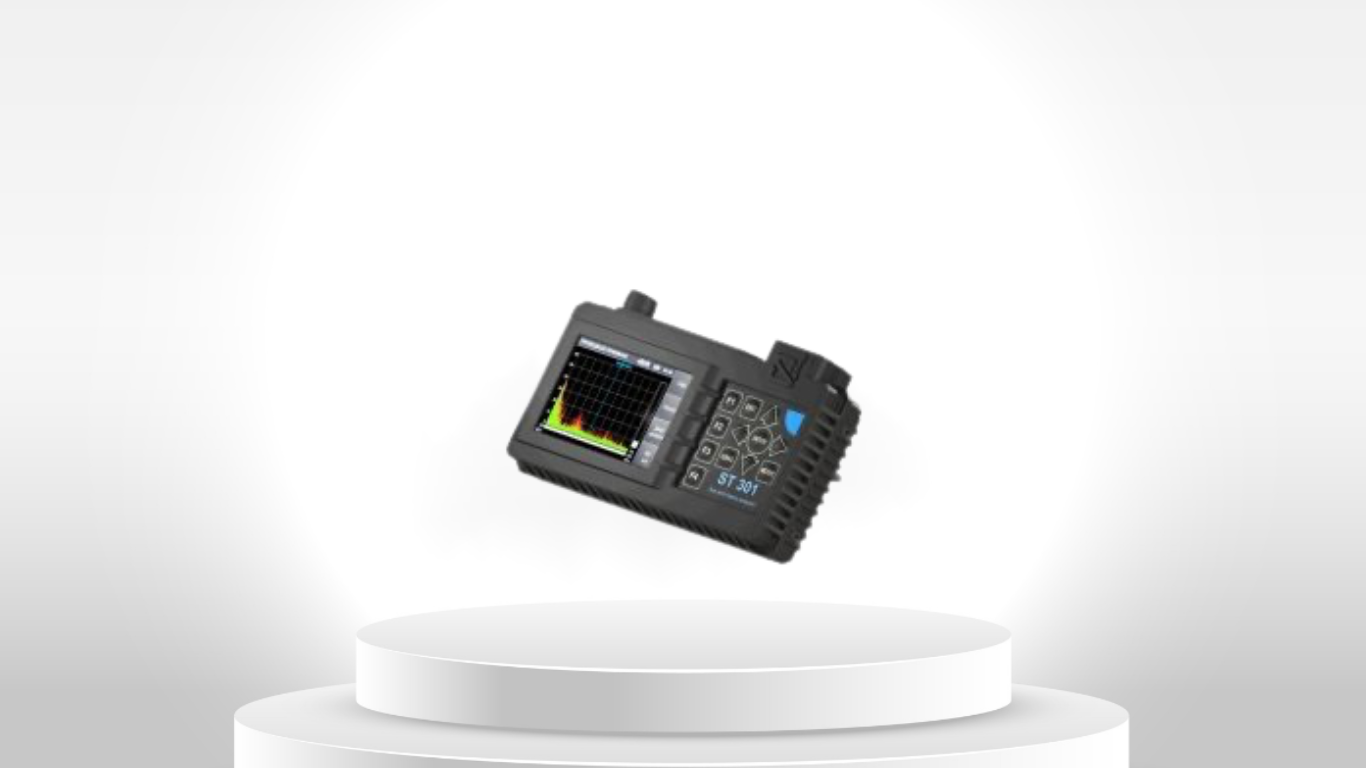
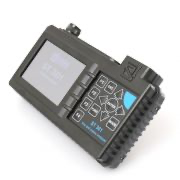
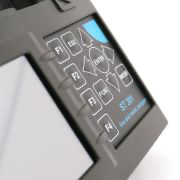
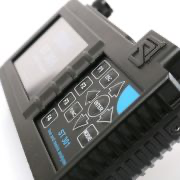
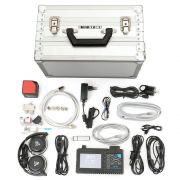


Description
ST-301 Spider Wireline Analyzer
Detect What an RF Sweep May Never See: Eavesdropping Threats Connected to the Wire
Not every surveillance threat transmits through the air. Some use the infrastructure already inside the building.
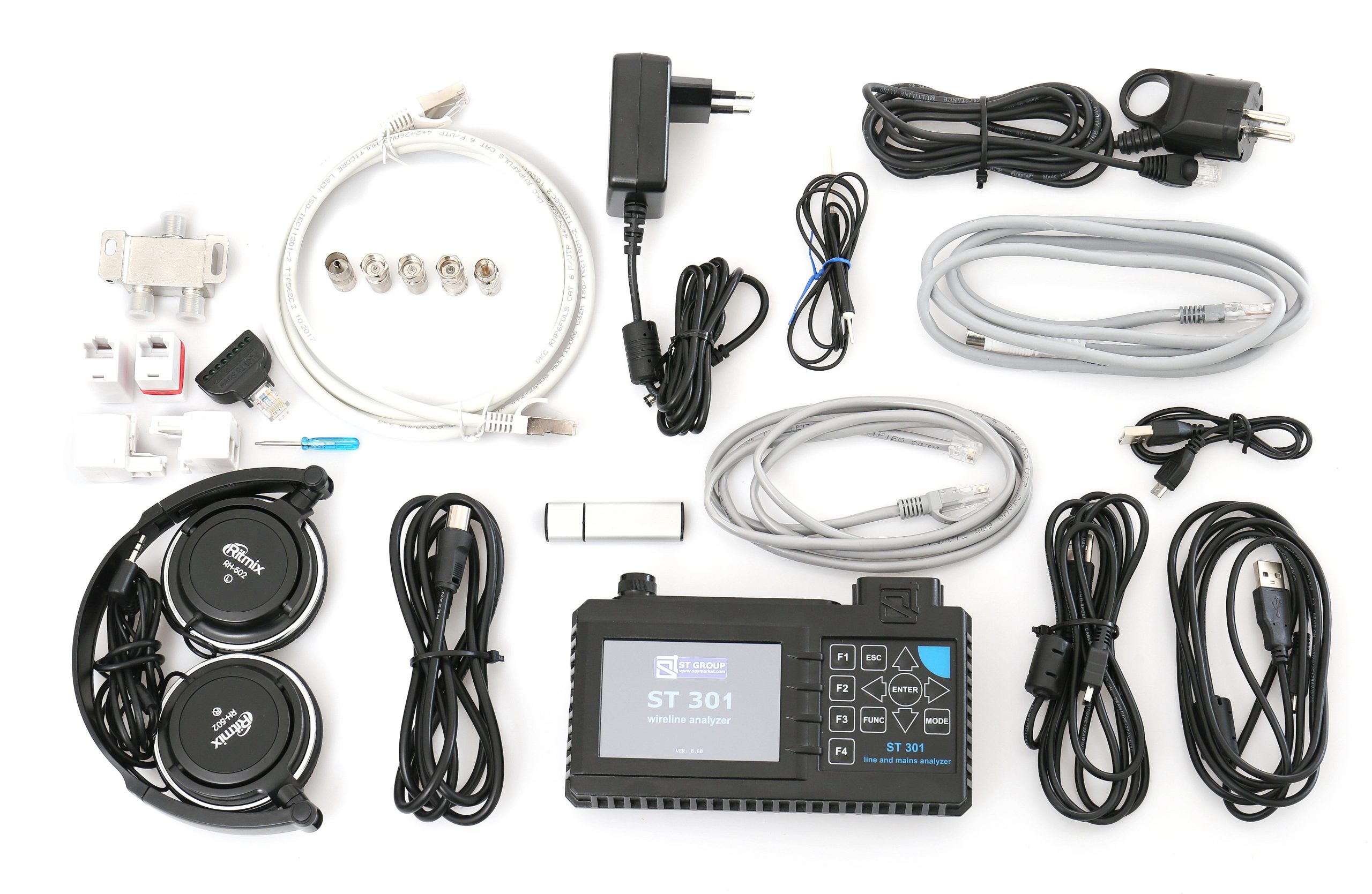
The ST-301 Spider Wireline Analyzer is a professional TSCM instrument designed to detect and investigate potential eavesdropping devices and unauthorized connections associated with power lines and low-current cables.
While conventional RF detection focuses on signals radiating through space, wireline analysis examines another potential surveillance path:
The cable itself.
The ST-301 combines four complementary analysis functions:
- Low Frequency Amplifier
- Wire Receiver
- Wired Non-Linear Junction Detector
- Reflectometer
This allows qualified TSCM professionals to investigate low-frequency and high-frequency signals on cables, examine potential microphone activity, apply bias voltage for suitable wired microphone detection workflows, identify abnormal galvanic connections and assess cable integrity.
For professionals searching for a wireline analyzer, TSCM cable analyzer, wired bug detector, power line eavesdropping detector or cable surveillance detection equipment, the ST-301 addresses a specific inspection question:
Is the wire itself carrying, connecting to or concealing something that requires further investigation?
What Is the ST-301 Spider Wireline Analyzer?
The ST-301 Spider is a specialized wireline counter-surveillance analyzer.
It is designed to investigate cables within an inspected environment for potential eavesdropping-related signals, electronic connections and cable anomalies.
The product is particularly relevant where a technical surveillance threat could use existing infrastructure such as:
- Power lines
- Low-current cables
- Telephone wiring
- Alarm wiring
- Signal cables
- Other accessible conductive infrastructure
The ST-301 should not be understood as a conventional RF detector attached to a cable.
Its purpose is broader.
It combines different detection principles to help answer different questions about the inspected line.
Is there a signal?
Is there low-frequency activity?
Is something electronically connected to the cable?
Is there a cable discontinuity or anomaly worth locating?
Why Wireline Analysis Matters in TSCM
A professional TSCM inspection should not assume that every surveillance threat communicates through an antenna.
Information can potentially be transmitted, coupled or conducted through physical infrastructure.
That creates a different inspection problem.
An RF detector asks:
“What is transmitting into the surrounding environment?”
A wireline analyzer asks:
“What activity or connection exists on this physical line?”
These are complementary—not interchangeable—inspection methods.
A complete technical inspection may involve multiple layers:
Physical Inspection → RF Analysis → Wireless Detection → NLJD → Wireline Analysis → Verification
The ST-301 is designed specifically for the wireline analysis layer.
4 Detection and Analysis Functions in One Platform
The ST-301 combines four specialized operating modes.
| Function | Primary Inspection Role |
|---|---|
| Low Frequency Amplifier | Analyze low-frequency signals and suitable microphone-related activity on cables |
| Wire Receiver | Detect high-frequency signals conducted through power and low-current lines |
| Wired NLJD | Investigate nonlinear electronic connections associated with unauthorized components |
| Reflectometer | Assess cable integrity and estimate the distance to a cable discontinuity or anomaly |
Each mode addresses a different part of the inspection problem.
The value is not simply having four functions.
It is the ability to investigate the same wireline environment from multiple technical perspectives.
1. Low Frequency Amplifier
Listen to What Is Happening on the Line
The Low Frequency Amplifier (LFA) covers 20 Hz to 25 kHz.
It is designed for investigating low-frequency signals present on suitable cables.
The system supports:
- Signal amplification
- Gain adjustment
- Oscillogram display
- Spectrogram display
- DC measurement
- Adjustable bias voltage
This can support the examination of cable activity that requires closer technical assessment.
Key LFA Capabilities
- Frequency range: 20–25,000 Hz
- Input resistance: 200 kOhm
- Gain adjustment: 0–60 dB
- Maximum input signal amplitude: 10 V
- DC measurement range: ±80 V
- Signal display: Oscillogram / Spectrogram
- Bias voltage: 0, ±5, ±10, ±15, ±20, ±26 V
The purpose is not to automatically classify every signal as a threat.
The purpose is to provide the operator with more information about what is present on the inspected line.
Bias Voltage for Suitable Wired Microphone Detection
Some microphone circuits require an electrical bias to operate.
The ST-301 provides selectable bias voltage values that can support professional testing procedures for suitable microphone-related circuits connected to inspected lines.
This creates an active inspection capability.
Instead of only listening passively to a cable, the operator can introduce controlled bias voltage as part of an appropriate detection workflow.
The result still requires interpretation.
A response does not automatically prove that an eavesdropping microphone is present.
Professional assessment should consider:
- Cable type
- Known infrastructure
- Connected equipment
- Electrical characteristics
- Site documentation
- Legitimate electronic systems
Detection is the beginning of the investigation—not the conclusion.
2. Wire Receiver
Investigate High-Frequency Signals Conducted Through Cables
The Wire Receiver (WR) is designed to investigate high-frequency signals transmitted through inspected wire lines.
Its specified operating range is:
0.1–180 MHz
This function can support investigation of signals conducted through:
- Power infrastructure
- Low-current wiring
- Signal cables
- Other suitable conductive lines
Key Wire Receiver Specifications
- Frequency range: 0.1–180 MHz
- Full-range scanning time: 0.3–1 second
- Minimum detected signal level in automated mode: −60 dBm
- Dynamic range: 50 dB
- Input resistance: 50 Ohm
- Demodulation: AM / FM
- Filter bandwidth: 180 kHz
- Signal display:
- Spectrogram
- Oscillogram
- Table
The Wire Receiver is designed to help identify signals requiring further analysis.
A detected signal is not automatically an unauthorized transmission.
Modern buildings contain legitimate electronic infrastructure.
The operator must distinguish between:
Expected activity → Unknown activity → Suspicious activity → Verified finding
Why Conducted Signal Detection Is Different from RF Detection
An airborne RF detector analyzes electromagnetic energy received through an antenna.
A wireline receiver analyzes signals associated with the inspected conductor.
This distinction matters.
A signal may be easier to investigate through the cable path when the technical question concerns activity conducted through existing infrastructure.
The ST-301 therefore complements—not replaces—conventional RF detection equipment.
Airborne RF analysis and wireline signal analysis investigate different potential paths.
3. Wired Non-Linear Junction Detection
Investigate Electronic Components Connected to the Cable
The ST-301 includes a wired Non-Linear Junction Detector (NLJD) function.
Unlike a conventional free-space NLJD that investigates nonlinear electronic components within physical structures, the wired NLJD function is designed to investigate nonlinear characteristics associated with electronic components connected to the inspected cable.
The system uses:
- Probing signal amplitude: ±14 V
- Probing frequency: 60 Hz
- Separate harmonic indication
- Minimum detectable nonlinear distortion: 0.1%
This can support investigation of potential unauthorized galvanic connections.
The key question is:
Is there an electronic nonlinear characteristic associated with something connected to this line?
That does not automatically establish what the connected component is.
Legitimate electronic equipment can also create nonlinear responses.
Results should therefore be correlated with:
- Known cable architecture
- Connected devices
- Physical inspection
- Other ST-301 modes
- Additional TSCM equipment
- Professional verification
4. Reflectometer
Measure the Cable Before You Start Opening the Building
The ST-301 Reflectometer supports cable inspection across a distance range of:
3–150 metres
with a specified measurement error of:
±0.6 metres
The function is intended to help assess cable integrity and estimate the distance to a discontinuity or relevant cable anomaly.
This can help reduce unnecessary physical inspection.
Instead of treating an entire cable run as one unknown path, the operator may be able to narrow the area requiring further examination.
A practical workflow can be:
Inspect Cable → Identify Anomaly → Estimate Distance → Physically Investigate Area → Verify
The Reflectometer cannot be used on cables under voltage.
Appropriate electrical safety procedures must always be followed before connecting test equipment.
Passive and Active Detection
Two Ways to Investigate the Same Line
The ST-301 supports both passive and active operating modes.
Passive Investigation
The operator examines activity already present on the cable.
This can include:
- Low-frequency signals
- High-frequency signals
- Existing electrical characteristics
Active Investigation
The system applies controlled test signals or bias as part of suitable inspection procedures.
This can help investigate devices that may not produce an obvious passive indication at the time of the inspection.
The practical value of combining passive and active techniques is that the inspection is not limited to:
“What is transmitting right now?”
It can also investigate:
“What electronic characteristic or connection exists on this line?”
Results still require verification.
Automated Multi-Wire Testing
Less Time Repeating the Same Cable Test
Complex environments can contain multiple cable types and numerous individual lines.
Testing each conductor manually can consume significant inspection time.
The ST-301 includes automated testing capabilities designed to improve workflow efficiency when examining multiple suitable wires.
This can support:
- Faster inspection sequences
- More systematic cable testing
- Reduced repetitive manual switching
- Better inspection consistency
The benefit is operational.
Professional TSCM inspections are often constrained by time, building complexity and the number of possible technical paths.
Automation can help the operator spend more time interpreting meaningful findings rather than repeating basic measurement procedures.
From Detection to Verification
The ST-301 is not designed to automatically declare:
“This is an eavesdropping device.”
Professional wireline analysis is a staged process.
1. Identify the Line
Determine the cable type and known purpose.
2. Establish Expected Activity
Understand legitimate electrical and signal characteristics.
3. Scan
Use the appropriate ST-301 mode.
4. Identify Anomalies
Record signals, nonlinear responses or cable characteristics requiring further attention.
5. Narrow the Search
Use available measurement and localization functions.
6. Cross-Check
Compare results using another detection principle or inspection method.
7. Physically Verify
Identify the actual source or condition.
8. Document
Separate instrument observations from verified findings.
Detect → Analyze → Locate → Cross-Check → Verify → Report
That is the professional value of a multi-mode wireline analyzer.
What Types of Threats Can Wireline Analysis Help Investigate?
Depending on the inspected infrastructure and operating conditions, wireline analysis may support investigation of:
- Wired microphones
- Electret microphone circuits
- Dynamic microphone-related signals
- Unauthorized electronic connections
- Galvanically connected devices
- Signals conducted through low-current cables
- Signals transmitted through suitable power lines
- Unknown cable activity
- Cable discontinuities
- Suspicious infrastructure modifications
The ST-301 does not automatically confirm hostile intent.
A legitimate device may generate signals or nonlinear responses.
Every finding requires contextual assessment and appropriate verification.
ST-301 Spider Wireline Analyzervs Conventional RF Detection
| Inspection Requirement | Conventional RF Detector | ST-301 Spider |
|---|---|---|
| Detect airborne RF energy | Primary function | Not primary purpose |
| Investigate conducted signals on cables | Limited | Primary function |
| Analyze low-frequency cable signals | Model-dependent | Yes |
| Investigate wired microphone-related activity | Limited | Yes |
| Apply bias voltage for suitable active testing | Usually unavailable | Yes |
| Investigate galvanic cable connections | No | Yes |
| Wired nonlinear junction testing | No | Yes |
| Cable distance measurement | No | Yes |
| Reflectometry | No | Yes |
The technologies are complementary.
An RF detector investigates the electromagnetic environment.
The ST-301 investigates the conductive infrastructure.
ST-301 Spider Wireline Analyzer vs Conventional NLJD
| Requirement | Conventional Free-Space NLJD | ST-301 Wired NLJD |
|---|---|---|
| Investigate concealed electronics in structures | Primary function | Not primary purpose |
| Scan walls and furniture | Yes | No |
| Investigate components connected to a cable | Limited | Yes |
| Detect nonlinear characteristics through a wire | No | Yes |
| Investigate galvanic connections | Limited | Designed for this task |
| Cable-focused inspection | No | Yes |
| Reflectometry | No | Yes |
The ST-301 should not replace a conventional NLJD.
It addresses a different inspection path.
ST-301 Spider Wireline Analyzer vs Conventional Cable Tester
A conventional cable tester may determine:
- Continuity
- Open circuits
- Basic electrical faults
- Cable condition
The ST-301 adds specialized TSCM-oriented functions.
| Requirement | Conventional Cable Tester | ST-301 Spider |
|---|---|---|
| Basic cable continuity | Yes | Cable analysis capability |
| Distance to anomaly | Model-dependent | Reflectometer |
| Low-frequency signal analysis | Usually no | Yes |
| High-frequency wireline scanning | Usually no | 0.1–180 MHz |
| AM/FM demodulation | No | Yes |
| Bias voltage testing | Usually no | Yes |
| Wired NLJD | No | Yes |
| Eavesdropping-focused workflow | No | Yes |
The difference is the inspection objective.
A conventional tester evaluates the cable.
The ST-301 evaluates the cable as a potential technical surveillance path.
Professional Applications
Executive Offices and Boardrooms
Sensitive offices contain extensive power and communications infrastructure.
Wireline analysis can support investigation of accessible cables where an electronic surveillance concern requires examination beyond airborne RF detection.
Government and Institutional Facilities
Sensitive facilities may contain complex low-current and power infrastructure.
The ST-301 can form part of a broader professional TSCM inspection methodology.
Corporate Security
Organizations protecting confidential discussions, intellectual property and strategic information may require inspection methods that consider both wireless and wired surveillance paths.
Secure Meeting Environments
Meeting rooms can contain:
- Power lines
- Telephone infrastructure
- Network cables
- Control wiring
- Audio systems
- Other conductive paths
The ST-301 provides a specialized inspection layer for suitable accessible infrastructure.
High-Risk Temporary Locations
Temporary offices, hotels and unfamiliar meeting environments may contain infrastructure that has not been fully documented.
Wireline analysis can help qualified professionals investigate relevant accessible cable paths.
Counterintelligence and Technical Security
Professional technical-security teams can use wireline analysis alongside RF detection, physical inspection and other TSCM technologies when assessing potential surveillance paths.
A More Complete TSCM Inspection Architecture
No single instrument can investigate every technical surveillance threat.
The ST-301 should be considered as one specialized layer within a broader methodology.
A professional inspection may combine:
Physical Inspection
↓
RF Spectrum Analysis
↓
Wireless Device Detection
↓
Non-Linear Junction Detection
↓
Wireline Analysis
↓
Cable Localization
↓
Physical Verification
Each technology answers a different question.
The ST-301 contributes:
“What is happening inside the accessible conductive infrastructure?”
Technical Specifications
Low Frequency Amplifier
| Parameter | Specification |
|---|---|
| Frequency Range | 20–25,000 Hz |
| Input Resistance | 200 kOhm |
| Gain Adjustment Range | 0–60 dB |
| Maximum Signal Amplitude | 10 V |
| Spectral Density of Noise Voltage | 6 nV/Hz |
| Bias Voltage Values | 0, ±5, ±10, ±15, ±20, ±26 V |
| Signal Representation | Oscillogram, Spectrogram |
| DC Measurement Range | ±80 V |
Wire Receiver
| Parameter | Specification |
|---|---|
| Frequency Range | 0.1–180 MHz |
| Full Range Scanning Time | 0.3–1 sec |
| Minimum Detected Signal Level | −60 dBm in automated mode |
| Dynamic Range | 50 dB |
| Input Resistance | 50 Ohm |
| Demodulation | AM, FM |
| Filter Bandwidth | 180 kHz |
| Data Representation | Spectrogram, Oscillogram, Table |
| Maximum Allowed Cable Voltage | 250 V AC / 80 V DC |
Wired Non-Linear Junction Detector
| Parameter | Specification |
|---|---|
| Probing Signal Amplitude | ±14 V |
| Probing Signal Frequency | 60 Hz |
| Separate Harmonic Indication | Yes |
| Minimum Detectable Nonlinear Distortion | 0.1% |
Reflectometer
| Parameter | Specification |
|---|---|
| Distance Range | 3–150 m |
| Measurement Error | ±0.6 m |
| Use on Energized Cables | No |
Power
| Parameter | Specification |
|---|---|
| Battery Type | Built-in Lithium-Polymer |
| Battery Voltage | 3.7 V |
| Maximum Power Consumption | <1 W |
| Operating Time | >3 hours at maximum power |
| Charging Time | Approximately 5 hours |
Physical Specifications
| Parameter | Specification |
|---|---|
| Main Unit Dimensions | 165 × 98 × 40 mm |
| Main Unit Weight | 0.47 kg |
| Packaging Dimensions | 390 × 310 × 170 mm |
| Packaged Weight | 4.4 kg |
Specifications should be interpreted within the manufacturer’s stated test conditions and product documentation.
What ST-301 Can and Cannot Tell You
What It Can Help Investigate
The ST-301 can help qualified operators:
- Analyze low-frequency cable signals
- Detect suitable high-frequency signals conducted through cables
- Investigate microphone-related electrical activity
- Apply bias voltage for suitable active testing
- Examine nonlinear characteristics on inspected lines
- Investigate abnormal galvanic connections
- Assess cable integrity
- Estimate distance to suitable cable discontinuities
- Compare signal representations
- Analyze data using different operating modes
- Improve efficiency when testing multiple suitable wire lines
What It Cannot Automatically Do
The ST-301 does not automatically:
- Prove hostile intent
- Identify every signal as an eavesdropping transmission
- Identify every nonlinear response as a surveillance device
- Distinguish every legitimate connection from an unauthorized one without context
- Determine who installed a device
- Establish legal attribution
- Replace physical verification
- Replace electrical safety procedures
- Replace RF spectrum analysis
- Replace a conventional free-space NLJD
The correct methodology remains:
Detect → Analyze → Assess → Locate → Verify
Using ST-301 in Complex Electrical Environments
Modern facilities contain significant amounts of legitimate electronic infrastructure.
This may include:
- Computers
- Power supplies
- Network equipment
- Building-management systems
- Alarm systems
- Audio equipment
- Lighting controls
- Communication infrastructure
As a result, the presence of a signal or nonlinear response is not automatically suspicious.
Professional interpretation requires an understanding of:
- Expected infrastructure
- Cable purpose
- Signal characteristics
- Site documentation
- Connected equipment
- Electrical safety
- Threat context
The ST-301 provides measurement and analysis capabilities.
The operator determines what requires further investigation.
Who Is ST-301 Spider Wireline Analyzer Designed For?
The ST-301 is primarily designed for qualified professional users, including:
- TSCM specialists
- Counter-surveillance professionals
- Technical security teams
- Counterintelligence professionals
- Government security organizations
- Corporate technical-security teams
- Specialized investigative professionals
- Security integrators with appropriate technical expertise
This is not a consumer-level “bug detector.”
Effective wireline analysis requires an understanding of electrical infrastructure, signal behavior, cable topology and professional TSCM methodology.
Frequently Asked Questions
What is a wireline analyzer?
A wireline analyzer is a specialized instrument used to examine signals, electrical characteristics and other anomalies associated with physical cables and conductive infrastructure.
In TSCM applications, it can help investigate whether wire lines may be carrying signals or contain electronic connections requiring further examination.
What is wireline eavesdropping detection?
Wireline eavesdropping detection is the process of investigating physical cables and conductive infrastructure for potential surveillance-related signals, unauthorized connections or electronic devices.
What is the ST-301 Spider?
The ST-301 Spider is a professional wireline analyzer combining low-frequency analysis, high-frequency wireline reception, wired nonlinear junction detection and reflectometry.
What does ST-301 detect?
Depending on the selected operating mode, it can help investigate low-frequency signals, high-frequency conducted signals, nonlinear electronic characteristics and cable discontinuities.
Can ST-301 detect wired microphones?
It is designed to support investigation of suitable microphone-related signals and circuits connected to inspected low-current cables.
Results require professional interpretation and verification.
Can ST-301 detect a microphone that is not actively transmitting?
Active and passive inspection functions can support investigation of certain electronic characteristics even when a device is not producing an obvious RF transmission.
The actual result depends on the device architecture, cable connection and inspection conditions.
Can ST-301 detect signals on power lines?
The Wire Receiver is designed to investigate suitable high-frequency signals conducted through power and low-current wire lines within its specified operating range.
What frequency range does ST-301 cover?
The Wire Receiver covers 0.1–180 MHz.
The Low Frequency Amplifier covers 20 Hz–25 kHz.
What is a wired NLJD?
A wired Non-Linear Junction Detector investigates nonlinear electronic characteristics associated with components connected to an inspected cable.
It differs from a conventional free-space NLJD designed to scan physical structures.
Can ST-301 replace a conventional NLJD?
No.
A conventional NLJD is designed primarily to investigate concealed electronic components within physical objects and structures.
The ST-301 wired NLJD is designed specifically for cable-focused inspection.
What is a reflectometer used for in TSCM?
A reflectometer can help assess cable integrity and estimate the distance to a discontinuity or anomaly requiring further investigation.
How far can the ST-301 Reflectometer measure?
The specified measurement range is 3–150 metres, with a stated measurement error of ±0.6 metres.
Can the Reflectometer be used on live cables?
No.
The Reflectometer function is not designed for cables under voltage.
Appropriate electrical safety procedures must be followed.
What is the difference between ST-301 and an RF detector?
An RF detector primarily investigates electromagnetic signals received through the air.
ST-301 investigates electrical signals and electronic characteristics associated with inspected wire lines.
They address different potential surveillance paths.
Does ST-301 automatically identify an eavesdropping device?
No.
The instrument can identify signals or characteristics requiring further investigation.
Professional assessment and physical verification are required before confirming a finding.
Is ST-301 suitable for professional TSCM?
Yes.
Its multi-mode wireline analysis architecture is designed for professional counter-surveillance and technical-security applications involving accessible power and low-current infrastructure.
Why is wireline analysis important in a TSCM inspection?
Not every technical surveillance concern involves an airborne RF transmission.
Wireline analysis adds another inspection layer by examining physical conductive paths that may require specialized investigation.
What should professionals evaluate before buying a wireline analyzer?
Consider:
- Inspection environment
- Types of accessible cables
- Low-frequency analysis requirements
- High-frequency conducted-signal requirements
- Wired microphone detection requirements
- Need for active bias testing
- Nonlinear junction detection
- Cable localization requirements
- Automation
- Data visualization
- Operator training
- Electrical safety procedures
- Integration with broader TSCM equipment
The key question is:
Does your TSCM methodology inspect the wire—or only what radiates from it?
Focused Conclusion
The ST-301 Spider Wireline Analyzer is designed for a specialized part of professional counter-surveillance work:
Investigating the physical wireline infrastructure that conventional airborne RF detection does not directly analyze.
By combining:
Low-Frequency Analysis → Wireline Signal Detection → Wired NLJD → Reflectometry
the platform provides multiple ways to investigate suspicious cable activity and connections.
It does not automatically identify every anomaly as an eavesdropping device.
Its value lies in giving qualified TSCM professionals more information about a potential surveillance path before deciding where to investigate next.
Inspect the signal. Examine the connection. Measure the cable. Verify the finding.
ST-301 Spider — Professional Wireline Analysis for Modern TSCM Operations.


Reviews
There are no reviews yet.