


Description
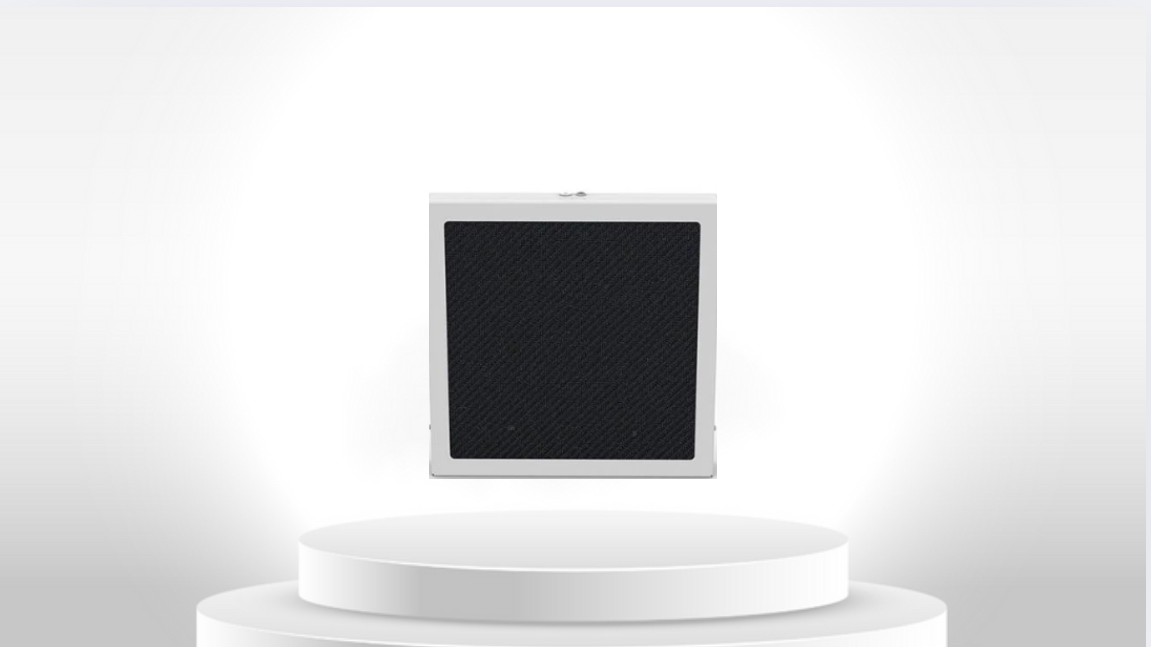
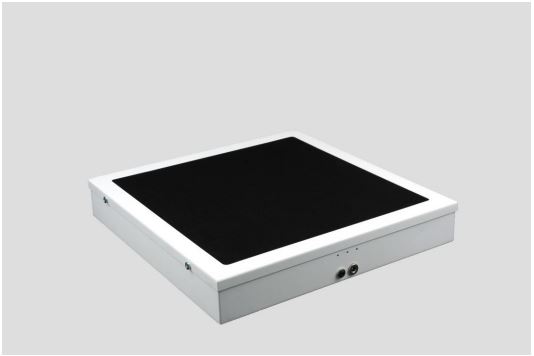
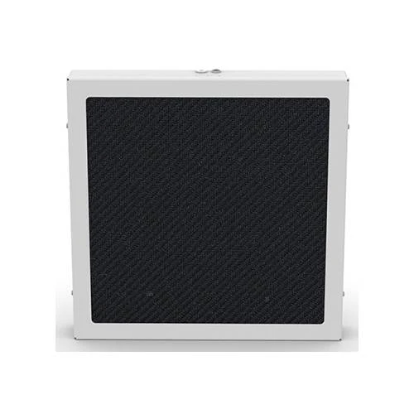
WP100 — Wall Plate Boardroom Suppressor with Mounting Kit
Fixed-installation microphone suppression for boardrooms, executive offices and high-sensitivity meeting spaces.
What Is WP100?
WP100 is a stationary ultrasonic microphone and audio-recording suppression system designed for professional conversation privacy.
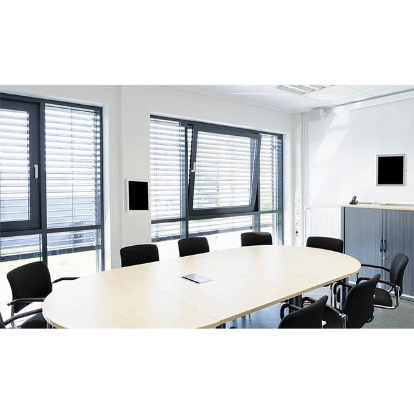
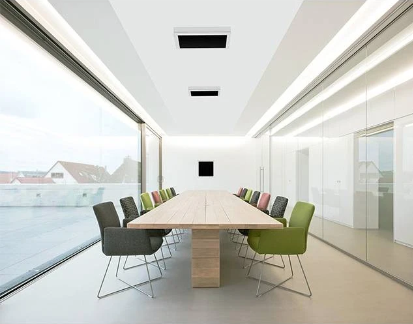
Instead of placing a portable suppressor on a table, the system is designed to become part of the room itself through wall, ceiling or flat-surface mounting.
The system uses high-frequency ultrasonic interference to disrupt microphone-based audio recording and can also support an additional speech-like acoustic interference layer through connected external speakers.
The underlying BDA-5 platform uses 100 ultrasonic transducers, two ultrasonic interference patterns and adjustable interference power. The supplied mounting architecture supports wall, ceiling and VESA-compatible installation.
The result is a different approach to meeting privacy:
Instead of bringing a jammer to the meeting, integrate the protection into the meeting environment.
Why a Fixed Boardroom Suppressor?
Portable microphone suppression is useful when protection must move with the user.
But some environments have a different requirement.
The same room may host:
- Board meetings
- Executive briefings
- Confidential negotiations
- Legal discussions
- Financial meetings
- Sensitive strategy sessions
- Government or institutional meetings
- Research and development discussions
In these environments, microphone protection may need to be available repeatedly without setting up a portable device for every meeting.
PBN-WP100 addresses this requirement through a permanent or semi-permanent installation architecture.
How Ultrasonic Microphone Suppression Works
Ultrasonic microphone suppression uses high-frequency acoustic energy to interfere with microphone capture.
Research has demonstrated that microphone hardware can exhibit nonlinear behaviour. Strong ultrasonic signals can therefore induce interference within the microphone signal path and reduce the intelligibility of recorded speech.
The technology is fundamentally different from RF jamming.
It does not attempt to disable cellular networks, WiFi or Bluetooth.
Instead, the objective is:
Disrupt microphone-based audio capture while leaving the communication network itself outside the suppression mechanism.
100 Ultrasonic Transducers
One of the defining technical characteristics of the underlying BDA-5 architecture is its 100 ultrasonic transducers.
The transducer array generates high-frequency interference according to software-controlled patterns.
The system specifies:
- 100 ultrasonic transducers
- 2 ultrasonic interference modes
- 3 interference power levels
- Software-controlled emission patterns
- Adjustable interference output
This architecture is intended to provide substantially more acoustic interference capability than a small portable microphone suppressor.
180° Ultrasonic Coverage
The underlying BDA-5 specification identifies an ultrasonic interference angle of 180°.
This is important because the system is not positioned as a 360° tabletop protection device.
Its installation architecture allows the suppression field to be directed toward the relevant conversation area.
The manufacturer specifies:
Optimal range: up to 4 m
Maximum stated range: up to 10 m
These figures should be treated as manufacturer specifications rather than universal performance guarantees.
Independent research shows that ultrasonic microphone suppression can experience angular limitations and blind spots depending on transducer geometry and microphone position.
Designed for Boardroom Integration
The physical architecture is particularly relevant to professional meeting spaces.
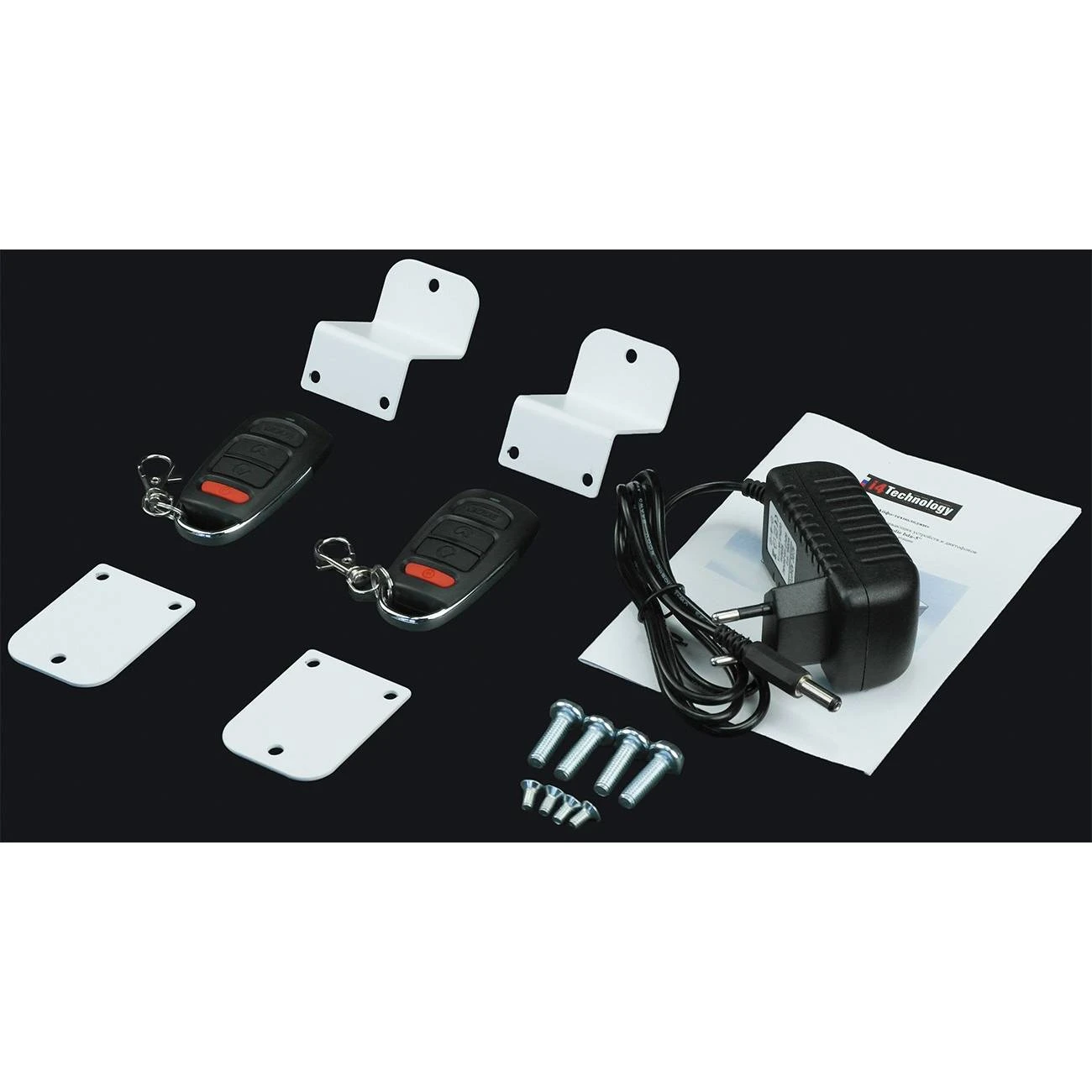
The device can be mounted using:
- Wall mounting slots
- Wall/ceiling mounting brackets
- VESA 200 × 200 mounting configuration
This allows the system to be incorporated into different room designs rather than requiring a temporary tabletop setup.
Potential installation environments include:
- Boardrooms
- Executive offices
- Conference rooms
- Negotiation rooms
- Government meeting rooms
- Legal consultation rooms
- Financial meeting spaces
- Sensitive project rooms
Speech-Like Acoustic Interference
The system provides an additional audio-interference option through an external speaker connection.
This allows speech-like acoustic interference to be introduced through external speakers.
The manual specifically identifies this mode as an additional method that may help address recording systems that are not effectively suppressed by ultrasonic interference alone, including certain remote or specialized microphone configurations.
This creates two distinct protection layers:
Ultrasonic interference → microphone-level disruption
Speech-like acoustic interference → acoustic masking/interference
They should not be treated as the same technology.
Why the Two Layers Matter
Different recording technologies can respond differently to interference.
Ultrasonic suppression targets the microphone’s physical/electronic response.
Acoustic interference adds sound energy into the recording environment.
The combination therefore gives the system more than one mechanism for addressing audio capture.
However, the manual explicitly states that the manufacturer cannot guarantee that all recording devices will be suppressed using ultrasonic interference alone.
That limitation is important.
The correct positioning is:
Multi-layer microphone suppression
—not—
Guaranteed protection against every recording device.
Two Ultrasonic Modes
PBN-WP100 provides two ultrasonic emission modes.
The different patterns are intended to provide different suppression characteristics against recording devices.
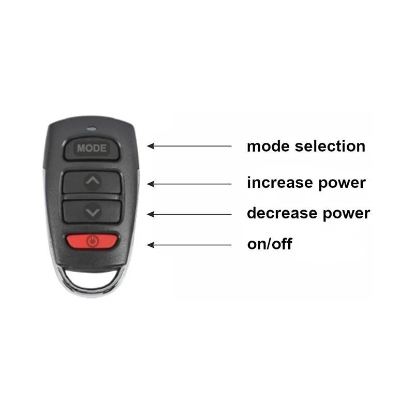
The user can select the operating mode through the remote control.
This allows the system to be adapted to different inspection and protection requirements without changing the physical installation.
Three Interference Power Levels
The system provides three adjustable interference power levels.
This gives the operator control over the ultrasonic output rather than forcing the system to operate at one fixed level.
The manual notes an important trade-off:
Higher interference power can improve suppression performance, but it can also make the system less discreet because of its acoustic characteristics and operating conditions.
This makes power adjustment part of the system’s operating architecture rather than simply a convenience feature.
Remote-Controlled Operation
The system includes remote-control operation for:
- Power on/off
- Ultrasonic mode selection
- Interference power adjustment
The BDA-5 platform is specified with remote operation up to approximately 30 m.
The device also uses temporary LED indication to show operating selections.
The manual states that the indicators are displayed only briefly so that the settings do not remain visually prominent to visitors or clients.
External Speaker Connectivity
A dedicated external speaker connection allows the system to work with external acoustic speakers.
This is particularly relevant when the security requirement extends beyond microphone suppression and requires an additional acoustic interference layer.
The system therefore has two fundamentally different outputs:
Ultrasonic output
and
External acoustic interference
The second layer should be evaluated separately because it introduces audible sound into the protected environment.
Fixed Power Architecture
PBN-WP100 is designed as a stationary system.
The supplied architecture uses:
- External power supply
- 12 V device input
- 110/220 V AC external supply
- Less than 2.5 A specified current consumption
Unlike battery-powered portable suppressors, this architecture is designed for continuous access to mains power within a controlled installation.
Built for Permanent or Semi-Permanent Protection
The major difference between PBN-WP100 and portable microphone suppressors is the installation model.
A portable device asks:
“Where do we need protection today?”
A fixed system asks:
“Which room should always have a protection capability available?”
That makes PBN-WP100 particularly relevant to organizations with designated sensitive meeting environments.
PBN-WP100 vs. Portable Microphone Suppression
Portable Suppression
Best when:
- Protection moves between locations
- Meetings happen in temporary spaces
- Deployment flexibility is important
- The security team needs a mobile solution
PBN-WP100
Best when:
- One or more rooms require recurring protection
- A fixed installation is acceptable
- The room has a defined conversation area
- Permanent power is available
- The organization wants less setup before each meeting
The product therefore competes less on portability and more on room integration.
WP100 vs. SEL OMNI TOWER MINI
The two systems represent different architectures.
SEL OMNI TOWER MINI
Compact tabletop ultrasonic microphone suppression.
WP100
Fixed wall/ceiling-mounted suppression with a larger transducer array and optional external acoustic interference.
The MINI is better aligned with compact tabletop protection.
PBN-WP100 is better aligned with a designated meeting space where a fixed installation is acceptable.
WP100 vs. SEL OMNI TOWER
The larger SEL OMNI TOWER is designed as an omnidirectional protection platform.
PBN-WP100 uses a different architecture:
Fixed installation + 180° ultrasonic interference + 100 transducers + external acoustic interference capability.
This makes the PBN-WP100 more suitable where the protection field can be designed around a defined meeting area rather than requiring 360° tabletop coverage.
TSCM Detection vs. Microphone Suppression
PBN-WP100 is not a TSCM detection system.
Detection asks:
“What surveillance technology may be present?”
Suppression asks:
“How can we reduce the ability of microphones to capture this conversation?”
A professional security program may therefore use both.
Detect → Assess → Protect → Verify
TSCM equipment can investigate suspicious electronics.
Microphone suppression can add a protective layer during sensitive conversations.
Applications
Boardrooms
Add a dedicated microphone-protection layer to recurring board meetings.
Executive Offices
Protect sensitive executive discussions without deploying a portable unit for every meeting.
Negotiation Rooms
Add audio privacy during high-value commercial or strategic negotiations.
Legal and Professional Rooms
Support confidential consultations where unauthorized recording presents a material risk.
Government and Institutional Facilities
Support controlled meeting environments where information sensitivity requires additional technical protection.
Corporate Security Rooms
Create designated spaces where microphone suppression forms part of the organization’s broader information-protection architecture.
What WP100 Can Do
The system is designed to:
- Suppress microphone-based recording
- Address radio and wired microphones
- Address professional digital voice recorders
- Address smartphone voice-recording functions
- Address microphone-equipped cameras
- Generate ultrasonic interference
- Provide two ultrasonic emission modes
- Provide three interference power levels
- Support external speech-like acoustic interference
- Operate from mains power
- Support wall mounting
- Support ceiling mounting
- Support VESA 200 × 200 mounting
- Provide remote control
These capabilities are based on the supplied product manual and published BDA-5 information.
What It Does Not Guarantee
WP100 should not be described as:
- A universal microphone blocker
- A guaranteed anti-recording system
- An RF jammer
- A cellular jammer
- A WiFi jammer
- A Bluetooth jammer
- A surveillance detection system
- A complete TSCM system
- Guaranteed protection against every microphone
- Guaranteed protection throughout every room
The manual itself states that not all recording devices are guaranteed to be suppressed by ultrasonic interference alone.
Actual effectiveness depends on factors including microphone design, position, distance, room geometry, acoustic conditions and the specific recording technology.
Safety and Operating Restrictions
This product requires more explicit safety treatment than a typical consumer audio-privacy product.
The manual warns that ultrasonic pressure at 1 metre or less may exceed maximum safety emission levels and may cause health discomfort.
It specifically warns about possible headache and temporary hearing loss and advises against remaining close to an operating device.
The manual also identifies potential negative effects on pets.
Therefore:
The device should be installed and operated according to the supplied safety instructions.
The system should not be marketed as “completely harmless” simply because the ultrasonic component is intended to be inaudible.
Technical Specifications
| Parameter | Specification |
|---|---|
| Product type | Wall/ceiling-mounted microphone and audio-recording suppressor |
| Underlying platform | BugHunter DAudio BDA-5 |
| Ultrasonic transducers | 100 |
| Ultrasonic interference modes | 2 |
| Interference power levels | 3 |
| Ultrasonic interference angle | 180° |
| Optimal stated range | Up to 4 m |
| Maximum stated range | Up to 10 m |
| Sound pressure level | >124 dB at 1 m |
| External acoustic interference | Supported through external speakers |
| Device power input | 12 V |
| External supply | 110/220 V AC |
| Current consumption | <2.5 A |
| Dimensions | <310 × 310 × 50 mm |
| Weight | <2 kg |
| Remote control | Included |
| Remote-control range | Up to 30 m |
| Wall mounting | Supported |
| Ceiling mounting | Supported |
| VESA mounting | 200 × 200 |
| Operating temperature | +5°C to +55°C |
| Relative humidity | Up to 98% at 25°C |
Specifications are based on the supplied PBN-WP100 manual and cross-checked against published BDA-5 information.
Frequently Asked Questions
What is WP100?
WP100 is a fixed-installation ultrasonic microphone and audio-recording suppression system designed for boardrooms, executive offices and other sensitive conversation areas.
Is WP100 a microphone detector?
No.
It is a microphone suppression/protection system, not a detection instrument.
Is WP100 an RF jammer?
No.
Its primary suppression mechanism is ultrasonic acoustic interference rather than RF interference.
Does it block cellular, WiFi or Bluetooth?
It is not designed as a cellular, WiFi or Bluetooth jammer.
Its intended function is to interfere with microphone-based audio recording.
How far does WP100 work?
The supplied specification identifies an optimal range up to 4 metres and a maximum stated range up to 10 metres. These are manufacturer specifications, not universal guarantees.
Why are there two different range figures?
The 4 m figure represents the stated optimal operating range, while 10 m represents the maximum stated range under applicable conditions.
Professional buyers should evaluate the actual room, microphone types and protection requirements rather than designing around the maximum number alone.
How many ultrasonic transducers does it use?
The underlying BDA-5 platform uses 100 ultrasonic transducers.
What is the 180° interference angle?
The BDA-5 specification identifies a 180° ultrasonic interference angle.
This differentiates the system from 360° omnidirectional tabletop systems.
Can it be mounted on a wall?
Yes.
The supplied mounting architecture supports wall installation.
Can it be mounted on a ceiling?
Yes.
The manual specifies ceiling mounting through the supplied bracket system.
Does it support VESA mounting?
Yes.
The manual specifies threaded mounting points compatible with VESA 200 × 200 brackets.
Can it suppress smartphone microphones?
The published BDA-5 information identifies smartphone voice recorders among its intended targets.
Actual performance varies by device and environment, so this should not be interpreted as guaranteed suppression of every smartphone model.
Can it suppress hidden microphones?
The manufacturer information identifies concealed eavesdropping devices among intended targets.
However, ultrasonic suppression performance depends on microphone location, orientation, distance and environmental conditions.
What is speech-like interference?
It is an additional acoustic interference method that can be delivered through external speakers.
Unlike ultrasonic interference, it introduces audible sound into the environment.
Why would external speakers be useful?
The manual identifies speech-like interference as an additional method for recording systems that may not be effectively suppressed by ultrasonic interference alone, including certain microphones positioned outside the protected room.
Can ultrasonic suppression guarantee that every recording device stops working?
No.
The manual explicitly states that the manufacturer cannot guarantee that all recording devices will be suppressed using ultrasonic interference alone.
Does ultrasonic microphone jamming have technical limitations?
Yes.
Independent research has demonstrated that ultrasonic microphone jamming can have angular limitations and blind spots depending on transducer geometry and microphone position.
Is WP100 suitable for a boardroom?
It is particularly suited to designated meeting environments where fixed installation is acceptable and a recurring microphone-protection capability is required.
Does it replace TSCM?
No.
It provides a protection layer rather than a detection and verification process.
What is the biggest advantage over a portable jammer?
The primary advantage is integration.
Once installed, the protection capability becomes part of the room rather than requiring a portable device to be brought in for each meeting.
What should buyers evaluate before choosing it?
The most important considerations are:
- Required protection area
- Room geometry
- Installation location
- Microphone types
- Distance from potential recording devices
- Need for ultrasonic versus acoustic interference
- Power availability
- Safety requirements
- Whether the room needs detection as well as suppression
- Whether the protection requirement is permanent or portable
Why Choose WP100?
PBN-WP100 is best understood as a room-integrated microphone suppression platform.
Its differentiation comes from the combination of:
**100 Ultrasonic Transducers
+ 180° Interference Field
- Two Ultrasonic Modes
- Three Power Levels
- External Acoustic Interference
- Wall/Ceiling/VESA Installation**
This makes it fundamentally different from compact tabletop microphone suppressors.
Final Takeaway
WP100 is designed for organizations that want microphone suppression to become part of the meeting-room infrastructure, rather than another portable device carried into the room.
With a 100-transducer ultrasonic array, adjustable interference, external acoustic interference capability and flexible wall/ceiling/VESA mounting, it provides a more integrated approach to protecting sensitive conversations.
The manufacturer states an optimal range of up to 4 metres and a maximum stated range of up to 10 metres, but these figures should be treated as specifications rather than universal guarantees. Independent research confirms that ultrasonic microphone suppression remains sensitive to geometry, directionality and microphone placement.
The right positioning is therefore not:
“Block every recording device in the room.”
It is:
“Build a dedicated microphone-protection layer into a sensitive meeting environment.”
Detect the risk.
Protect the conversation.
Verify when necessary.

Reviews
There are no reviews yet.