
An audio recording can potentially be relevant evidence in UK legal proceedings, but having a recording does not automatically make it admissible, reliable, or decisive.
The court may need to consider issues such as:
- how the recording was obtained;
- whether the recording is relevant to an issue in the case;
- whether its authenticity can be supported;
- whether it is complete or selectively edited;
- whether its contents can be accurately understood;
- whether there are privacy, data protection, interception, or other legal issues;
- how the evidence should be introduced under the procedure applicable to the case; and
- what weight the court should give it.
The practical principle is simple:
A technically authentic recording is not automatically proof that everything said in the recording is true.
This distinction is important. Authenticity concerns whether the recording is what it is claimed to be. The truth or reliability of the statements within it is a separate evidential question.
The legal position also depends on where in the UK the proceedings take place and what type of case is involved. This page focuses primarily on England and Wales, while noting important differences for Scotland and Northern Ireland.
Important Legal Notice
This page provides general legal and technical information about audio recordings and evidence. It is not legal advice and does not determine whether a particular recording is lawful, admissible, or sufficient for a particular case.
The treatment of an audio recording can depend on the facts, the type of proceedings, the jurisdiction, how the recording was obtained, and the court’s directions.
For a specific dispute or planned recording, obtain advice from a qualified UK legal professional.
Voice Recording Laws and Legal Rules in the UK
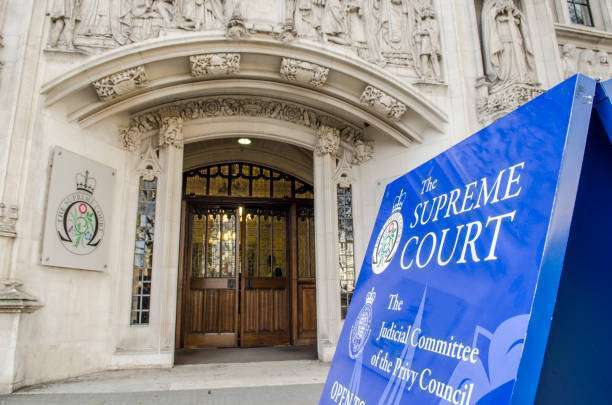
| What UK Users Want to Know | Practical Answer | Legal / Official Source |
|---|---|---|
| Is there one UK law that tells me whether my recording can be used in court? |
No. There is no single UK rule that answers every recording-and-evidence question.
The answer can depend on how the recording was made, who made it, what was recorded, where it happened, what type of case is involved, and which UK jurisdiction applies. Different rules may become relevant, including privacy and data protection, interception, civil procedure, criminal procedure, family proceedings and court-specific restrictions. |
UK Legal Framework The applicable rules depend on the circumstances and the type of proceedings. |
| So, what is the first question I should ask? |
Do not start with:
"Is this audio file automatically admissible?" Start with: 1. What is the recording? 2. How was it obtained? 3. Who made it? 4. Is it complete? 5. Is it relevant to the case? 6. Can its history and source be explained? 7. What procedure applies to the case? |
CPR Part 32.1 The court controls the evidence required, its nature and how it is presented. Justice UK — CPR Part 32 |
| Does having the audio file mean the court must accept it? |
No.
Simply having an MP3, WAV, M4A or another audio file does not automatically make it admissible. In England and Wales, CPR 32.1 gives the court power to control the evidence it requires, the nature of that evidence and how it is presented. The rule also allows the court to exclude evidence that would otherwise be admissible. |
Civil Procedure Rules — CPR 32.1 Official Justice UK source. CPR 32.1(1)–(2). Read CPR Part 32 |
| What does the court actually need to understand about my recording? |
The court may need enough information to understand what the recording is and why it matters to the case.
In practical terms, this can include: • What was recorded? • Who made the recording? • When and where was it made? • What device was used? • Is the recording complete? • Has it been edited or converted? • Where is the original? • What happened to the file afterwards? • Why is it relevant to an issue in the case? |
Evidence Control & Procedure CPR Part 32 places evidence within the court's control and directions. Justice UK |
| What if I secretly recorded the conversation? |
"Secret" does not by itself answer whether the recording can or cannot be used.
A covert recording can raise additional questions about privacy, lawfulness, authenticity, completeness and evidential weight. The circumstances matter. For example, a recording made by someone participating in a conversation raises different questions from an interception of communications while they are being transmitted. |
Family Justice Council The 2025 guidance on covert recordings in family proceedings specifically discusses authenticity, completeness, relevance, probative value, privacy and selective editing. Judiciary Guidance |
| Does "secret recording" automatically mean "illegal recording"? |
No simple yes-or-no rule applies to every situation.
The legal analysis can depend on the circumstances, including the people involved, the purpose, the method used, the location and whether other legal rules apply. This is why a simple statement such as "UK law allows one-party recording" can be misleading if presented as a complete answer to every recording situation. |
Circumstances Matter Recording, privacy, data protection and interception can involve different legal questions. |
| What if I was actually part of the conversation? |
That fact can be important, but it should not be treated as a universal legal permission.
A person recording a conversation in which they participate is legally different from someone acquiring a communication while it is being transmitted without being a participant. Other issues can still arise depending on the circumstances. |
Interception of Communications The Investigatory Powers Act 2016 framework concerns interception of communications in transmission in specified circumstances. GOV.UK — Interception Code |
| Does GDPR decide whether my recording is evidence? |
No. Data protection law and evidence law answer different questions.
Where the UK GDPR and Data Protection Act 2018 apply, they can regulate how personal information is collected, stored, used and shared. But data protection compliance does not automatically make a recording admissible, and a recording's evidential treatment is a separate question. |
Information Commissioner's Office ICO guidance explains the data protection requirements that can apply to recording and processing personal information. ICO — UK GDPR Guidance |
| What about telephone calls or electronic communications? |
Telephone and electronic communications can raise interception issues that are different from an ordinary audio recording of a conversation.
Do not automatically treat every audio recording as an interception case. Equally, do not assume that a telephone or electronic communication involves only ordinary recording rules. The method by which the communication was acquired matters. |
Investigatory Powers Act Framework The Home Office Code explains the interception framework under Part 2 of the Investigatory Powers Act 2016. GOV.UK — Interception Code |
| Is my recording relevant to the case? |
A technically genuine recording is not necessarily useful evidence.
Ask: What issue in the case does this recording help prove or clarify? The recording should be connected to an issue that the court actually needs to decide. |
CPR Part 32.1 CPR 32.1 allows the court to identify the issues on which evidence is required and control the nature and presentation of that evidence. Justice UK — CPR Part 32 |
| Does an authentic recording prove that everything said in it is true? |
No.
Authenticity and truth are different questions. Authenticity asks whether the recording is genuinely the recording it is claimed to be. Truth asks whether the statements or events recorded are actually true. A genuine recording can contain a statement that is false, mistaken, incomplete or disputed. |
Evidence Principle The distinction is particularly relevant to the assessment of authenticity, completeness, relevance and probative value in covert-recording guidance. Judiciary Guidance |
| What if the recording is edited? |
Editing does not automatically answer the legal question one way or another, but it can create important questions about completeness and context.
If you create an edited or enhanced version, keep the original recording and clearly distinguish: Original → Working Copy → Edited / Enhanced Version This makes it easier to explain what was changed and what was not. |
Family Justice Council — 2025 The guidance discusses selective editing and recommends preservation of original recordings in their entirety. View Guidance PDF |
| What should I preserve if I may need the recording later? |
Preserve the original and document its history.
At minimum, consider keeping: • Original audio file • Recording device • Date and time information • Location • People involved • Original storage location • Transfer history • Working copies • Processing / editing history • Transcript versions |
Family Justice Council The 2025 guidance places particular importance on preserving original recordings and considering authenticity, completeness and technical characteristics. Judiciary Guidance |
| Does the court care how the recording was handled after I made it? |
It can matter.
If a recording has been copied, converted, edited, enhanced or transferred many times, you should be able to explain what happened to the file. A clear handling history makes the recording easier to understand and examine. |
Evidence Preservation Provenance, completeness and technical examination are specifically addressed in the Family Justice Council guidance. Judiciary Guidance PDF |
| What does CPR 32.1 actually mean for me? |
In simple English:
The court decides what evidence it needs, what form that evidence should take, and how it should be presented. The court can also exclude evidence that would otherwise be admissible. So, for an audio recording, the practical goal is not to claim that a particular file is automatically "court approved". The goal is to make its source, relevance, authenticity, completeness and handling history clear enough to be properly considered. |
CPR 32.1 — Official Rule Rule 32.1(1)–(2), Justice UK. Read the Rule |
| So what are the key questions I should ask about my recording? |
Think about these seven questions:
1. What is this recording? 2. How was it obtained? 3. Who made it? 4. Is it complete? 5. Can its history be explained? 6. Why is it relevant to the case? 7. What rules and procedures apply to this particular case? That is a much better starting point than simply asking whether an audio file is "court admissible." |
Practical Evidence Framework Based on the court's evidence-control powers under CPR Part 32 and UK judicial guidance concerning authenticity, completeness, relevance and probative value. Justice UK — CPR Part 32 |
Important: This information primarily addresses England and Wales. Scotland and Northern Ireland have separate legal and procedural frameworks. This table provides general information and is not legal advice.
Is It Legal to Record a Conversation?
| Question | What the UK Legal Framework Shows | Trusted Legal / Official Source |
|---|---|---|
| Is there one UK rule that makes every recording either legal or illegal? |
No single rule answers every recording situation.
The legal position can depend on how the recording was obtained, who made it, what was recorded, the circumstances in which it was made, whether personal information is being processed, and what type of communication or proceeding is involved. Different legal frameworks can therefore become relevant to the same recording. |
Family Justice Council Guidance — 2025 The Family Justice Council specifically identifies different legal and procedural issues arising from covert recordings, including legality of obtaining recordings, data protection, interception, Article 8 considerations, admissibility and evidential value. Judiciary — FJC Guidance |
| Is recording a conversation I am participating in the same as intercepting a communication? |
Not necessarily.
The legal concept of interception under the Investigatory Powers Act 2016 concerns the interception of communications in the course of their transmission through a public or private telecommunications system or public postal service. That is a different legal question from simply recording a conversation in which you are participating. However, this distinction should not be turned into a blanket statement that every participant recording is automatically lawful. Other legal issues may still arise depending on the circumstances. |
Investigatory Powers Act 2016 The Home Office's current Interception of Communications Code explains the scope of interception and the circumstances in which interception may be lawful. GOV.UK — Interception Code |
| Why does the purpose and environment of the recording matter? |
Because recording audio can involve privacy and data-protection considerations, particularly where identifiable people are recorded.
The ICO states that audio recording can be more privacy-intrusive than visual recording and, in surveillance contexts, should normally only be used where there is a specific, justified need and less intrusive alternatives are inadequate. This demonstrates why the purpose, circumstances, people involved and method of recording can matter to the legal analysis. |
Information Commissioner's Office ICO guidance specifically addresses audio recording, privacy intrusion, purpose, necessity and justification. ICO — Audio Recording Guidance |
| Does "UK law allows one-party recording" give me the complete answer? |
No. That phrase can oversimplify several different legal questions.
Whether a person may lawfully make a recording is one question. Whether the recording can be relied upon in particular proceedings, and what weight the court gives it, are separate questions. The Family Justice Council's guidance on covert recordings expressly discusses the distinction between the circumstances in which recordings are obtained and their authenticity, completeness, relevance, probative value and evidential use. |
Family Justice Council — Covert Recordings The 2025 guidance specifically analyses both the legality of obtaining recordings and their admissibility/evidential value in family proceedings. Judiciary — Covert Recording Guidance |
| Is the legality of obtaining a recording the same question as whether a court will use it? |
No. These should be treated as separate questions.
For example: Question 1 — Lawfulness: Was the recording obtained or processed lawfully in the circumstances? Question 2 — Evidence: Is the recording relevant, authentic, sufficiently complete and capable of being properly considered within the applicable procedural framework? These questions can interact, but they are not the same legal question. |
Two Different Legal Frameworks The FJC guidance discusses legality of obtaining recordings separately from admissibility and evidential value. CPR 32.1 separately gives the civil court control over evidence. Justice UK — CPR Part 32 |
| What does this mean if I want to rely on a recording in court? |
Do not rely only on the fact that "I recorded the conversation."
Be prepared to explain: • What was recorded? • How was it obtained? • Who made it? • When and where was it made? • Is the recording complete? • Has it been edited, enhanced or converted? • Where is the original? • Why is it relevant to the issue before the court? Technical authenticity does not by itself establish the truth of every statement in the recording. |
CPR Part 32 + FJC Guidance CPR 32.1 gives the civil court control over evidence. FJC guidance identifies authenticity, completeness, relevance and probative value as considerations for covert recordings in family proceedings. Justice UK — CPR 32 |
| Section | What to Include | UK Civil Appeal Context | Trusted Legal Source |
|---|---|---|---|
| I. Introduction |
Briefly identify the appeal and explain why the audio recording matters.
State:
|
An appeal is generally a review of the lower court's decision,
rather than a completely new trial.
Unless the appeal court orders otherwise, the appeal court will not normally receive evidence that was not before the lower court. Therefore, the application should explain why the recording is relevant to the appeal and what procedural basis exists for asking the appeal court to consider it. |
CPR Part 52 — Appeals |
| II. Background |
Give a clear factual description of the recording:
|
Avoid simply saying that the recording is “genuine.”
Explain its provenance: what it is, where it came from, who made it, and how it has been handled. Where the recording is covert, the circumstances in which it was made may also become relevant. The Family Justice Council's 2025 guidance, which specifically concerns family proceedings involving children, identifies authenticity, completeness, relevance and probative value among the matters that may need consideration when covert recordings are relied upon. |
Family Justice Council Guidance on Covert Recordings |
| III. Legal Basis |
Identify the procedural and legal framework that actually applies.
For an England and Wales civil appeal, this may include:
|
Do not describe “consent” as the universal legal basis for using
an audio recording.
The legal questions are separate: Was the recording lawfully obtained or processed? Is it relevant and potentially admissible? What procedural permission or direction is required? What evidential weight should it receive? These questions should not be collapsed into one general “consent rule.” |
CPR Part 32 — Evidence
CPR Part 52 — Appeals |
| IV. Purpose of Using the Audio Recording |
Explain precisely
what the recording is being relied upon to establish.
For example:
|
Relevance should be explained rather than assumed.
The important question is not simply: “I have an audio recording.” It is: “What issue does this recording help the appeal court decide?” The Family Justice Council guidance distinguishes relevance from probative value and considers the evidential significance of covert recordings within the context of the proceedings. |
Family Justice Council Guidance — Covert Recordings |
| V. Consent of Parties |
If consent was obtained, document it accurately:
If consent was not obtained, do not state or imply that it was. |
Important:
consent from every participant is
not a universal prerequisite that determines whether an audio recording
can be considered by an England and Wales civil court.
The legality of obtaining a recording and its treatment as evidence are separate questions. Depending on the circumstances, privacy, data protection, interception or other legal issues may also arise. Therefore, the application should present the facts accurately rather than asserting a blanket requirement that all parties must have consented. |
Family Justice Council Guidance |
| VI. Request for Permission / Direction |
State exactly what you are asking the court to do.
Depending on the procedural circumstances, this might be a request for permission or a direction concerning:
|
Do not simply ask:
“Please allow my recording as evidence.”
First identify the procedural issue. Under CPR 52.21, an appeal court will generally not receive evidence that was not before the lower court unless the court orders otherwise. CPR 32.1 separately gives the court control over the nature and manner in which evidence is presented and permits the court to exclude evidence that would otherwise be admissible. The request should therefore explain what permission or direction is actually required. |
CPR Part 52.21 — Appeals
CPR Part 32.1 — Court's Control of Evidence |
| VII. Supporting Material |
Where appropriate, identify or provide:
|
A transcript should normally be treated as
supporting material, not automatically as a replacement for
the underlying audio.
If authenticity, completeness or accuracy is challenged, the original material and its provenance may become important. Avoid editing the only surviving copy. Preserve the original separately from working copies. Where processing, enhancement or conversion has occurred, document what was done and retain the underlying original. |
Family Justice Council Guidance
CPR Part 32 |
| VIII. Conclusion |
Summarise:
|
Keep the conclusion factual and procedural.
Avoid stating that the recording is automatically “admissible,” “conclusive,” or “court-approved.” Technical authenticity does not by itself establish that every statement in the recording is true. The evidential significance of the recording remains a matter for the court within the applicable procedural framework. |
CPR Part 32
Family Justice Council Guidance |
| IX. Signature and Date |
Include the appropriate:
|
The precise filing requirements depend on the court,
appeal route, applicable Practice Direction and any existing
case-management order.
Use the court's required form or filing procedure where one applies. This outline is therefore a general informational structure, not a substitute for the specific procedural requirements of the court handling the appeal. |
CPR Part 52 |
Here’s a concise step-by-step guide for submitting your formal application to use audio recordings as evidence in civil appeals court :
-
Prepare Your Application: Use the outlined format provided earlier to draft your application, ensuring to include all necessary information and supporting documentation.
-
Check Court’s Requirements: Review the specific procedures and requirements for filing applications with the civil appeals court where your case is being heard. You can typically find this information on the court’s website or by contacting the clerk’s office.
-
Complete Necessary Forms: Fill out any required forms or paperwork as specified by the court. Make sure to provide accurate and complete information.
-
Gather Supporting Documents: Collect any documentation or statements confirming consent for the audio recordings, if available. Ensure you have all necessary materials to support your application.
-
File Your Application: Submit your completed application, along with any supporting documents, to the clerk of the civil appeals court. Follow the court’s instructions for filing, including any requirements for filing fees or delivery methods.
-
Wait for Court Response: Once your application is submitted, wait for the court to review and respond to your request. This process may take some time, so be patient.
-
Provide Further Information: If the court requests additional information or clarification regarding your application, be prepared to provide it promptly.
-
Await Decision: After review, the court will make a decision regarding your application. If approved, you will be granted permission to use the audio recordings as evidence in your civil appeals case.
-
Follow Court’s Instructions: Adhere to any instructions or guidelines provided by the court regarding the use of the audio recordings as evidence during the appeals process.
-
Attend Hearings or Proceedings: Attend any scheduled hearings or proceedings as required by the court, and present the audio recordings as evidence in accordance with the court’s instructions.
By following these steps, you can effectively submit your application for permission to use audio recordings as evidence in civil appeals court and navigate the process efficiently.
What About Covert or Secret Recordings?
| Question / Issue | Practical Answer | Legal / Evidential Context |
|---|---|---|
| What About Covert or Secret Recordings? |
A covert recording is not automatically worthless as evidence
simply because it was made secretly.
However, the fact that a recording was made covertly can create additional legal, privacy and evidential questions. The important point is to distinguish between: How the recording was obtained and What evidential value the recording may have. |
The Family Justice Council's
2025 Guidance on Covert Recordings in Family Law Proceedings
concerning Children specifically examines covert recordings
relied upon in family proceedings involving children.
The guidance discusses issues including authenticity, completeness, relevance, probative value, privacy and accuracy. It also recognises that some covert recordings may have evidential value, while their secret nature can raise privacy and accuracy concerns.
Scope:
This is Family Justice Council guidance for family proceedings
concerning children. It should not be presented as a universal
statutory rule governing every recording in every UK court.
|
| Does “Secret” Mean the Recording Cannot Be Used? |
No automatic rule should be stated in those terms.
The fact that a recording was made secretly does not, by itself, answer whether the recording has evidential value. The court may need to consider the recording together with the circumstances in which it was created and the issues in the case. |
The Family Justice Council guidance specifically considers
the legality of obtaining covert recordings
separately from questions concerning their
admissibility and evidential value.
It also discusses authenticity, completeness, relevance and probative value. Therefore: Covert does not automatically mean worthless. Covert does not automatically mean admissible. The circumstances still matter. |
| What May the Court Need to Examine? |
Depending on the circumstances, the recording may need to be considered
alongside information about:
|
The purpose is not simply to determine whether
an audio file exists.
Questions can arise concerning the recording's authenticity, completeness, accuracy, relevance and probative value. The Family Justice Council guidance also discusses circumstances in which questions about the recording may require further examination, including potential forensic examination. |
| If You Made the Recording Yourself |
You should be able to explain, as accurately as possible:
|
These details can help explain the
provenance and history of the recording.
They can become particularly important if another party challenges its authenticity, completeness or accuracy. A clear explanation of what happened to the file after recording can also help distinguish the original recording from later working copies, conversions, transcripts or enhancements. |
| Should the Original Be Preserved? |
Yes.
Where the recording may become relevant to a dispute or court proceeding, preserve the original recording and avoid unnecessarily altering it. If a working copy is needed for transcription, enhancement or conversion, keep that working copy separate from the original. |
The Family Justice Council guidance places importance on the
original recording and discusses concerns arising where
recordings are incomplete, selectively edited or otherwise altered.
This supports a practical evidence-preservation principle: preserve the original and document subsequent processing. |
| What If the Recording Was Edited or Converted? |
Do not hide the fact that processing occurred.
Record:
|
Editing can raise completeness and authenticity questions.
The Family Justice Council guidance specifically identifies selective editing and completeness as issues that may affect the court's assessment of a covert recording. A processed copy should therefore not be confused with the original recording. |
| What About Pauses, Gaps or Deleted Material? |
Document them honestly.
If recording stopped or paused, note the circumstances if known. If material was deleted, identify that fact rather than presenting the remaining file as though it were necessarily a continuous recording. |
Completeness can be an important evidential issue.
A recording that captures only part of an event may be assessed differently from a recording that demonstrably captures the relevant event in full. The Family Justice Council guidance specifically discusses completeness and concerns that can arise from selective recording or editing. |
| Why Does This Matter? |
The central evidential principle is:
The fact that a recording was covert does not answer the separate question of what evidential value the recording has. The court may need to consider both the recording itself and the circumstances surrounding its creation. |
This distinction is consistent with the structure of the
Family Justice Council guidance, which addresses:
Practical takeaway:
do not rely on “it was secretly recorded” as either a reason
that a recording must be rejected or a reason that it must be accepted.
The recording and its circumstances need to be considered within
the applicable legal and procedural framework.
|
The Regulation of Investigatory Powers Act 2000 (RIPA) states that recording conversations without consent in the UK is legal if it is done for personal use.
Data Protection and Privacy
| Question | What It Means for an Audio Recording | What You Should Consider |
|---|---|---|
| Data Protection and Privacy | ||
| Does Data Protection Law Apply to an Audio Recording? |
An audio recording can contain personal information if people can be identified from the recording or from information connected with it.
For organisations, businesses and other professional activities, the UK GDPR and Data Protection Act 2018 can therefore become relevant when personal information is recorded, stored, reviewed, transferred, disclosed or otherwise processed. The ICO explains that the UK GDPR applies to controllers and processors handling personal data, including organisations operating in the UK and certain organisations outside the UK. ICO — Who does the UK GDPR apply to? |
First ask:
|
| What If I Made the Recording Personally? |
The UK GDPR does not automatically apply to every recording made by a private individual.
The ICO states that processing carried out by an individual in the course of a purely personal or household activity is outside the UK GDPR's scope. However, the position can change where the recording is used for professional, commercial or other purposes outside a purely personal or household activity. ICO — Data Protection Exemptions |
Do not assume:
"I made the recording myself" = "data protection law does not apply." The purpose and subsequent use of the recording matter. |
| What If a Business or Organisation Made the Recording? |
A different analysis may apply when an employer, business, investigator, service provider or other organisation records identifiable individuals.
The organisation may be acting as a data controller or, depending on the circumstances, a processor. The organisation must identify the applicable data protection requirements for its processing. This can include the lawful basis for processing and the relevant data protection principles. |
Organisations should consider:
|
| Does Recording Personal Information Automatically Make the Recording Unlawful? |
No.
The fact that an audio recording contains personal information does not by itself answer whether the processing is lawful. Where the UK GDPR applies, the organisation must identify an appropriate lawful basis for the processing. The ICO identifies several possible lawful bases, and the appropriate basis depends on the circumstances and purpose of the processing. ICO — Lawful Basis for Processing |
Do not reduce the question to consent.
Consent is only one possible lawful basis. The correct basis depends on the particular processing activity. |
| Can an Organisation Rely on Legitimate Interests? |
Sometimes.
The ICO identifies legitimate interests as one of the lawful bases under the UK GDPR. It is not an automatic permission to record or process personal information. Where an organisation relies on legitimate interests, the ICO explains that it should identify a legitimate interest, show that the processing is necessary for that purpose, and balance the interest against the individual's interests, rights and freedoms. ICO — Legitimate Interests |
The key questions include:
|
| Is Legitimate Interest the Same as "I Have a Legal Right to Record"? |
No.
A lawful basis under data protection law concerns the processing of personal information. It should not be treated as a blanket legal permission covering every aspect of making a recording. Other legal issues may separately arise, including privacy, confidentiality, interception, employment rules, contractual obligations or the circumstances in which the recording was obtained. |
Keep the questions separate:
Was the recording lawfully made? Was personal information lawfully processed? Can the recording be relied upon in the proceedings? These are not necessarily the same question. |
| What Does Data Protection Law Look At? |
Depending on the circumstances, data protection compliance can involve questions about how personal information is collected, used, stored, shared and protected.
The ICO's lawful-basis guidance also emphasises that organisations must consider the particular purpose and circumstances rather than simply selecting a convenient lawful basis. |
For an organisation, consider:
|
| What About a Recording That Is Going to Court? |
Data protection law can still be relevant when personal information is handled in connection with legal proceedings.
However, the ICO also identifies specific data protection provisions concerning information disclosed for, or in connection with, legal proceedings, including circumstances involving establishing, exercising or defending legal rights. These provisions are not a general exemption from data protection law. Their application depends on the circumstances and the particular processing involved. ICO — Exemptions and Legal Proceedings |
If the recording is relevant to a dispute, ask:
|
| Does Data Protection Compliance Mean the Recording Is Admissible? |
No.
Data protection compliance is not the same thing as evidential admissibility or evidential weight. Data protection law asks questions about the lawful and appropriate processing of personal information. Evidence law and procedural rules address different questions concerning matters such as relevance, authenticity, provenance, completeness, hearsay, procedure and the significance the court may attach to the evidence. |
A recording can therefore raise two separate legal questions:
1. Data protection: Was the personal information lawfully processed? 2. Evidence: How should the recording be treated within the relevant proceedings? One answer does not automatically determine the other. |
| What Questions Does Evidence Law Ask? |
Depending on the type of proceedings and applicable procedure, questions about an audio recording can include:
|
These questions should be assessed separately from the data protection analysis.
Technical authenticity does not establish that every statement captured by the recording is factually true. |
| Why Does This Distinction Matter? |
Imagine an organisation records a meeting containing identifiable employees.
The organisation may need to consider whether its processing of the personal information was lawful and proportionate. Separately, if the recording later becomes evidence, the court may need to consider matters such as its relevance, authenticity, completeness, provenance and evidential significance. The same recording can therefore be subject to more than one legal framework. |
Do not use one legal question to answer another.
"The recording was lawful" does not automatically mean "the recording proves the allegation." "The recording is authentic" does not automatically mean "everything said in it is true." |
| What Should UK Users Do Before Relying on a Recording? |
If the recording may become important in a dispute or court proceeding, keep the data protection analysis and evidence-preservation analysis separate.
For organisational users, document why the recording was made, the purpose of processing, the applicable lawful basis, who had access to it, and how it was stored or transferred. At the same time, preserve the original recording and document its provenance and any subsequent handling. |
A practical checklist:
|
| What Is the Main Point? |
Data protection law and evidence law solve different problems.
The UK GDPR and Data Protection Act 2018 may regulate the processing of personal information. Evidence and procedural rules determine how material is handled within the relevant proceedings. |
Remember the distinction:
Privacy / data protection → Can the personal information be processed? Evidence → How can the recording be used and assessed in the proceedings? Truth → What does the recording actually establish? |
Audio Recording Can Be Particularly Intrusive
| Question | What the UK Rules Say | What This Means in Practice |
|---|---|---|
| Audio Recording, Privacy and Surveillance | ||
| Is Audio Recording More Privacy Intrusive Than Video? |
In surveillance settings, the ICO says it can be.
The Information Commissioner's Office (ICO) states that audio recording, particularly when it is continuous, is generally more privacy intrusive than purely visual recording. Audio can capture the actual content of conversations, including conversations that people may reasonably expect to be private. Because of this, the ICO says using audio requires much greater justification. ICO — Surveillance Systems and Data Protection Principles |
A device having a microphone does not, by itself, mean that an organisation should record audio.
The organisation should first ask whether recording sound is necessary for a specific purpose. |
| Can a Surveillance System Record Conversations Between Members of the Public? |
The ICO states that organisations should not normally use surveillance systems to directly record conversations between members of the public.
It describes this as highly intrusive and unlikely to be justifiable in most circumstances. This is guidance about the use of audio within surveillance systems. It is not a general rule that every recording of a conversation is unlawful. |
If an organisation wants to record conversations, it should be able to explain:
|
| What Does the ICO Expect Before an Organisation Uses Audio? |
The ICO says an organisation should only use audio recording where it has:
The ICO also says organisations should take additional steps to make people aware that audio recording is taking place. |
The practical question is not simply:
"Can our system record audio?" It is: "Why is audio recording necessary for this particular purpose?" |
| Should Audio Recording Be On by Default? |
The ICO says organisations should generally switch off audio recording by default where a surveillance system has an audio capability.
It says audio should only be used in exceptional circumstances, for example through a trigger mechanism, where the organisation can clearly justify and evidence its use. ICO — Audio Recording Guidance |
If audio is not needed, disabling the microphone may be the appropriate approach.
If audio is needed only during particular incidents, an event-triggered approach may reduce unnecessary recording. |
| What About Employers Recording Employees? |
Workplace monitoring receives particular attention from the ICO.
The ICO states that using audio recording, especially continuous audio recording, is more privacy intrusive than purely visual monitoring and therefore requires much greater justification. It also states that continuous audio and video monitoring of workers is highly intrusive and is unlikely to be justified in most circumstances. ICO — Monitoring Workers: Audio and Video |
Employers should consider:
|
| Does Continuous Audio Monitoring Need Stronger Justification? |
Yes.
The ICO specifically says continuous audio recording is particularly privacy intrusive. For worker monitoring, the ICO states that continuous audio or video monitoring is likely to be justified only in rare circumstances. ICO — Specific Data Protection Considerations for Worker Monitoring |
An organisation should not treat continuous recording as the normal setting simply because the technology allows it.
The more intrusive the monitoring, the stronger the justification needs to be. |
| Does a Workplace Audio System Automatically Require a DPIA? |
The ICO's worker-monitoring guidance says organisations considering video or audio monitoring must complete a Data Protection Impact Assessment (DPIA) as part of assessing the impact of the proposed monitoring.
The DPIA helps the organisation assess whether the benefits justify the adverse impact and whether the monitoring is necessary. The wider UK GDPR framework requires a DPIA where processing is likely to result in a high risk to individuals' rights and freedoms. ICO — Worker Monitoring Guidance |
Do not turn this into a blanket statement that every audio recording everywhere requires a DPIA.
The DPIA requirement depends on the type, scale and risk of the processing, while the ICO has specific guidance for workplace monitoring. |
| What About Covert Monitoring of Employees? |
Covert monitoring is treated as a particularly sensitive situation.
The ICO says covert monitoring is unlikely to be justified in most ordinary circumstances, but exceptional circumstances can exist, such as investigating suspected criminal activity or gross misconduct. Where covert monitoring is considered, the ICO says it should be strictly targeted and limited to the shortest period necessary. ICO — Data Protection and Monitoring Workers |
Covert monitoring should not be treated as routine workplace surveillance.
The organisation should be able to document why covert monitoring is necessary, why less intrusive methods are insufficient, who authorised it and when it will stop. |
| What About Call Recording? |
Call recording should not simply be treated as identical to general workplace audio surveillance.
The ICO's workplace surveillance guidance specifically distinguishes recording face-to-face or private conversations from business telephone calls commonly recorded for purposes such as monitoring or training. ICO — Surveillance and Workplace Audio |
For call recording, the organisation should consider the:
|
| Can an Organisation Use Legitimate Interests? |
Sometimes.
Legitimate interests is one of the lawful bases under the UK GDPR. It is not automatic permission to record people. The ICO says an organisation relying on legitimate interests must:
The ICO also says that if the same result can reasonably be achieved in a less intrusive way, legitimate interests may not be appropriate. ICO — Legitimate Interests |
"It is in our legitimate interests" is not enough by itself.
The organisation should be able to show why the recording is necessary and why the impact on individuals is justified. |
| Does Legitimate Interest Mean the Recording Is Automatically Lawful? |
No.
The ICO states that legitimate interests is one of seven lawful bases and that no single lawful basis is automatically better or more appropriate than the others. The correct lawful basis depends on the purpose and circumstances of the processing. ICO — A Guide to Lawful Basis |
An organisation should identify the most appropriate lawful basis rather than automatically choosing legitimate interests. |
| Does Data Protection Compliance Decide Whether a Recording Can Be Used as Evidence? |
No.
Data protection law and evidence law deal with different questions. Data protection law concerns how personal information is collected, used, stored and disclosed. Evidence law and procedural rules address questions such as relevance, authenticity, provenance, completeness and how evidence is handled in the particular proceedings. |
Therefore:
Lawful processing ≠ automatic evidential acceptance. Authentic recording ≠ proof that every statement is true. These issues should be assessed separately. |
| What Is the Safest Practical Approach for an Organisation? |
Before enabling or using audio recording, an organisation should identify the specific purpose and assess whether audio is genuinely necessary.
It should also consider less intrusive alternatives and document the reasoning behind the decision. The ICO's guidance is especially clear that audio should not simply be enabled because a surveillance system happens to have that capability. |
A practical sequence is:
1. Identify the purpose. 2. Identify the lawful basis. 3. Ask whether audio is necessary. 4. Consider less intrusive alternatives. 5. Assess privacy impact and proportionality. 6. Inform people where required. 7. Protect and control access to recordings. 8. Keep appropriate records of the decision. |
| Important for Security, Investigations and High-Value Business Environments |
Audio recording can involve sensitive conversations, confidential business information, employee information or information about customers and members of the public.
In these environments, an organisation should not rely only on the technical ability of a device to record sound. The organisation should separately consider data protection, privacy, employment requirements, interception law where relevant, confidentiality and the evidential treatment of the recording. |
Technology answers "what can be recorded."
It does not, by itself, answer "what should be recorded" or "whether recording it is lawful." |
Telephone Calls and Interception
Telephone Calls and Interception of Communications
| Issue | What It Means in Practice | Trusted UK Source |
|---|---|---|
| What is interception? |
Under the Investigatory Powers Act 2016, interception can arise
where a person performs a relevant act in relation to a
telecommunications system and, as a result, the content of a
communication is made available to someone who is not the sender
or intended recipient.
The statutory framework therefore focuses on the interception of communications in the course of their transmission, subject to the detailed provisions of the Act. |
Home Office — Interception of Communications Code of Practice
GOV.UK: Interception of Communications Code |
| Is interception the same as recording a conversation? |
Not necessarily.
The interception regime and ordinary audio recording should not
automatically be treated as the same legal situation.
For example, recording a conversation in which you are a participant raises different questions from obtaining the content of a communication by intercepting it while it is being transmitted through a telecommunications system. Do not assume that rules governing one situation automatically determine the legal position in another. |
Investigatory Powers Act 2016 framework
GOV.UK — Current Code of Practice |
| When can interception be unlawful? |
The current Home Office Code explains that section 3(1) of the
Investigatory Powers Act 2016 makes it a criminal offence to
intentionally and without lawful authority intercept, in the UK,
a communication in the course of its transmission through a public
or private telecommunications system or public postal service.
The Act also provides for specific circumstances in which interception may be lawful. |
Home Office Code — Section 3
GOV.UK — Unlawful Interception |
| Are there circumstances where interception can be lawful? |
Yes. The legal framework provides for lawful interception in
specified circumstances, including interception carried out under
an appropriate warrant and certain circumstances where consent or
other statutory authority applies.
The exact requirements depend on the circumstances and the relevant provisions of the Investigatory Powers Act 2016. |
Home Office Code — Lawful Authority
GOV.UK — Lawful Interception |
| What about stored communications? |
The statutory framework can also treat access to the content of a
communication stored in or by a telecommunications system as
interception in specified circumstances.
Therefore, the fact that communication content is stored does not automatically remove it from the interception framework. |
Home Office Code — Stored Communications
GOV.UK — Stored Communications |
| What should I do if my recording involves a telephone call? |
Treat telephone and electronic communications as a separate legal
question from ordinary in-person recording.
Consider how the communication was obtained, whether it was intercepted during transmission, who participated in the communication, and what lawful authority or consent may apply. Do not assume that because you can technically record a call, the method of obtaining the communication is automatically lawful. |
Home Office — Interception of Communications Code
GOV.UK — Official Code of Practice |
| Does this determine whether my recording is admissible in court? |
No.
The question of whether a communication was lawfully obtained is
distinct from the separate questions of evidential relevance,
authenticity, reliability, provenance and applicable court
procedure.
A recording should therefore not be described as automatically "admissible" or "inadmissible" solely because interception law is relevant. |
Investigatory Powers Act framework
GOV.UK — Interception Code |
What Should I Do to Preserve an Audio Recording for Court?
| Step | What to Do | Why It Matters / Trusted Source |
|---|---|---|
| 1. Preserve the Original |
Keep the original recording in its original storage location
where practical, or transfer it carefully to secure evidence
storage.
Do not edit, trim, overwrite, or repeatedly convert the original recording. If you need to listen, enhance, convert, or transcribe the recording, create and use a separate working copy. |
SWGDE defines the original recording as the first manifestation
of sound in a recoverable stored format and recommends protecting
the original from modification where possible.
SWGDE also recommends that forensic audio examinations and processing be performed on a working copy rather than the evidentiary original. Trusted technical sources: SWGDE — Digital Audio Authentication SWGDE — Enhancement of Digital Audio |
| 2. Document Provenance |
Record information that helps establish where the recording came
from and how it was handled.
|
SWGDE identifies provenance as the history of the physical item
and recordings stored on or within it. Its digital audio
authentication guidance recommends documenting matters such as
the purported date and time, recording system, device, storage
media, location, parties present and chain of custody.
NIST likewise identifies documentation of the original source and how a digital file was created or transferred as an important evidence-preservation consideration. Trusted sources: SWGDE — Digital Audio Authentication NIST IR 8387 — Digital Evidence Preservation |
| 3. Preserve Metadata |
Where available, retain the original metadata associated with
the recording.
Metadata may contain useful technical information such as:
|
SWGDE identifies metadata and file characteristics as potentially
relevant to authentication analysis, while also emphasizing the
need to consider the complete file and other evidence.
Metadata can be altered or affected by processing, conversion or software. It should therefore be considered as part of the wider provenance and authenticity assessment rather than in isolation. Trusted source: SWGDE — Digital Audio Authentication |
| 4. Keep the Complete Recording |
Avoid retaining only a selected excerpt when the complete
recording is available.
The surrounding conversation may provide important context. If an excerpt is prepared for review or presentation, retain the complete original separately. A working excerpt should not replace the preserved original. |
The Family Justice Council's 2025 guidance on covert recordings
identifies issues including completeness, accuracy, selective
editing, metadata and the circumstances surrounding the recording.
In family proceedings concerning children, the guidance stresses that the court must consider the status and evidential value of covert recordings through case management. Trusted legal source: Family Justice Council — Covert Recordings Guidance (2025) |
| 5. Use a Hash Where Appropriate |
A cryptographic hash creates a digital fingerprint of a file.
If the file changes after the hash is created, the resulting hash will normally change. A hash can therefore help demonstrate file integrity after the hash was created. A hash does not, by itself, prove that the recording was originally genuine, that a timestamp is correct, or that the statements within the recording are true. |
NIST identifies hashing as a best practice for establishing a
baseline for digital evidence and recommends securely storing
resulting hash values.
SWGDE similarly describes acquisition and verification hashes as tools for maintaining and checking digital evidence integrity. Trusted sources: NIST IR 8387 — Digital Evidence Preservation SWGDE — Digital Evidence Collection |
| 6. Document Any Processing |
If you create another version of the recording, document what was
done.
|
SWGDE distinguishes the original recording from transcoded or
re-encoded versions and recommends documenting examination,
processing and results.
Its audio-enhancement guidance states that examinations should be conducted on a working copy of evidentiary material. Trusted source: SWGDE — Enhancement of Digital Audio |
What Information Should I Keep With the Recording?
| Evidence Record | Information to Preserve |
|---|---|
| Original File | Preserve the original/native recording and keep it identifiable as the source file. |
| Recording Device / System | Record the device or recording system used, including relevant model or identifying information where available. |
| Date & Time | Preserve available date and time information, while recognizing that timestamps should be assessed with other evidence. |
| File Format & Metadata | Retain the original format and available metadata rather than relying only on a later converted copy. |
| Circumstances | Record relevant information about where, how and under what circumstances the recording was made. |
| Transfer & Storage History | Document significant transfers, storage locations and handling of the recording. |
| Processing History | Record any conversion, enhancement, excerpting, transcription or other processing applied to a copy. |
Technical Questions About Audio Evidence
| Question | Practical Answer | Trusted Source |
|---|---|---|
| WAV vs MP3: Which Is Better for Court? |
There is no universal rule that says
WAV is automatically accepted while MP3 is rejected.
WAV and MP3 use different encoding approaches. For evidence preservation, the more important issue is generally the original recording, provenance and integrity, rather than simply choosing a particular file extension. If the original recording is available in its native format, preserve it rather than converting it unnecessarily. If an MP3 is the original recording, converting it to WAV does not restore information that may already have been lost through compression. |
Technical source: SWGDE — Digital Audio Authentication |
| Are Timestamps Reliable Evidence? |
A timestamp can provide useful supporting information, but it
should not automatically be treated as conclusive proof of when
an event occurred.
Device settings, file processing and system characteristics may affect date and time information. Where timing is important, consider the timestamp together with other available evidence and documentation. |
Technical source: SWGDE — Digital Audio Authentication |
| Does Password Protection Prove Authenticity? |
No.
Password protection can help restrict access to a file or device, but it does not by itself establish that the recording is authentic. Security controls and evidential authenticity are related but different issues. |
Technical context: SWGDE — Digital Audio Authentication |
| Can a Transcript Replace the Original Audio? |
A transcript should generally be treated as an
additional evidential aid rather than an automatic
replacement for the original recording.
A transcript can make audio easier to review, search and present, but the underlying audio may remain important where exact words, tone, pauses, background sounds, speaker identification or context are disputed. Keep the original audio alongside any transcript. |
The Family Justice Council's 2025 guidance discusses transcription
alongside issues of completeness, authenticity, accuracy and
evidential value in family proceedings concerning children.
Trusted legal source: Family Justice Council — Covert Recordings Guidance |
| Does Professional Recording Equipment Guarantee Admissibility? |
No.
Professional equipment can improve recording quality, reliability, storage, security or documentation. It does not create legal permission to make a recording and does not guarantee that a court will admit or rely upon the recording. Technology supports the evidence-handling process; it does not replace the legal and procedural requirements applicable to the case. |
CPR Part 32 confirms that, in civil proceedings, the court has
powers concerning the issues, nature and manner of evidence and
may exclude evidence that would otherwise be admissible.
Trusted legal source: Justice UK — Civil Procedure Rules Part 32 |
For example, CPR Part 32 gives the court powers over evidence in civil proceedings, while the Family Justice Council's 2025 guidance explains that covert recordings in family proceedings require focused case management before their admissibility and probative value can be established.
Preserve the evidence technically. Assess its legal status separately.
Legal sources: Justice UK — CPR Part 32 | Family Justice Council — Covert Recordings Guidance 2025 | ICO — Audio & Video Surveillance Guidance
What Can an Audio Recording Actually Prove?
The practical questions are usually about relevance, provenance, authenticity, completeness, lawfulness, reliability, and the procedural rules that apply to the case.
What Can an Audio Recording Actually Prove?
| The Recording May Help Establish | What It Does Not Automatically Establish | Key Point |
|---|---|---|
| What was captured on the recording. | That every statement made was true. | Audio captures words or sounds; it does not automatically prove their truth. |
| The sequence of statements and events contained in the recording. | That the recording is complete or has never been altered. | Provenance and integrity still matter. |
| Potentially relevant statements, conversations, or sounds. | That the recording is legally obtainable in every circumstance. | Lawfulness is a separate issue. |
| Evidence that may support or challenge another person's account. | That the court must accept the recording as decisive. | Admissible does not mean decisive. |
How Will a Court Assess Whether a Recording Is Genuine?
| Factor | What May Be Considered | Practical Preparation |
|---|---|---|
| AUTHENTICITY | Whether the recording is what it is claimed to be and whether its provenance can be explained. | Keep the original file and document how it was created and obtained. |
| COMPLETENESS | Whether there are unexplained gaps, cuts, edits, splices, or missing sections. | Preserve the complete original wherever possible. |
| METADATA | Available information about file creation, device, format, settings, and related technical information. | Preserve metadata rather than unnecessarily converting or overwriting the source file. |
| AUDIO QUALITY | Background noise, intelligibility, glitches, distortion, overlapping voices, or other technical issues. | Keep the original and document any enhancement performed on a working copy. |
| CONTEXT | What happened before and after the recorded section and whether the recording gives a misleadingly selective picture. | Do not rely only on a short extracted clip when the complete recording exists. |
| CORROBORATION | Other evidence that supports or contradicts what the recording appears to show. | Preserve related documents, messages, photographs, or other relevant evidence separately. |
Lawfulness, Admissibility, Authenticity and Truth Are Different Questions
| Question | What It Means | Why It Matters |
|---|---|---|
| Was the recording lawful? | Whether the recording or collection of the communication complied with applicable law. | This can involve privacy, data protection, interception, employment, or other rules depending on the circumstances. |
| Can the court receive it? | Whether the applicable procedural and evidential rules permit the material to be relied upon. | Different types of proceedings have different procedural frameworks. |
| Is it authentic? | Whether the recording is genuinely the recording claimed and has not been improperly altered. | Provenance and integrity are important when authenticity is disputed. |
| Is it accurate? | Whether the recording accurately captures the relevant speech or sound. | Noise, distortion, missing sections, or poor recording conditions may affect interpretation. |
| Is what was said true? | Whether the statements or claims contained in the recording are factually correct. | A genuine recording can still contain inaccurate or false statements. |
What If the Recording Was Secret?
| Situation | What to Understand | Practical Point |
|---|---|---|
| You secretly recorded a conversation you were part of. | Secrecy alone does not answer every question about legality or evidential use. | The circumstances and purpose of the recording matter. |
| You recorded communications while they were being transmitted. | Interception law can raise separate issues from ordinary recording. | Do not automatically treat recording and interception as the same thing. |
| You want to use the recording in proceedings. | The court may consider relevance, authenticity, completeness, privacy, reliability, and applicable procedure. | Prepare the underlying file and provenance, not just a transcript. |
What Should You Prepare for Court?
| Prepare | What to Keep | Why |
|---|---|---|
| Original recording | The earliest recoverable original file or source recording. | Protect the original from unnecessary alteration. |
| Provenance | Date, time, device/system, storage location, circumstances, and relevant participants. | Creates a documented history of the evidence. |
| Metadata | Available technical information associated with the original file. | May help explain the recording's origin and handling. |
| Working copy | A separate copy for listening, transcription, enhancement, or analysis. | Allows examination without modifying the original. |
| Processing record | Details of any conversion, enhancement, editing, or transcription. | Shows what was done to the working material. |
What Is a Hash and Is It Needed?
| Concept | What It Does | What It Does Not Do |
|---|---|---|
| Hash value | Creates a digital value that can be compared later to detect whether a file has changed after the hash was created. | It does not prove who created the recording, what happened during the recording, or that the statements are true. |
| Write protection / controlled storage | Helps reduce the risk of accidental modification. | It does not independently establish the truth of the recording. |
| Provenance documentation | Explains where the file came from and how it was handled. | It is not a substitute for the original evidence. |
How Reliable Is a Timestamp?
| Timestamp | Useful For | Limitation |
|---|---|---|
| Device timestamp | Providing contextual information about when a device recorded or stored a file. | The device clock may be incorrect or may have been changed. |
| File metadata timestamp | Supporting the documented history of a digital file. | Metadata can change depending on copying, conversion, software, or file handling. |
| Independent corroboration | Comparing the recording's timing with other evidence. | Requires reliable external evidence. |
Is WAV Better Than MP3 for Court?
| Format | Practical Consideration | Important Point |
|---|---|---|
| WAV | Often used where preserving uncompressed audio is desirable. | Useful for preservation and technical examination, depending on the recording workflow. |
| MP3 | Compressed and convenient for storage or distribution. | There is no general rule that an MP3 automatically becomes inadmissible simply because it is compressed. |
| Original format | Usually the most important file to preserve. | Preserve the original before creating alternate formats. |
Can a Transcript Replace the Audio?
| Material | Role | Limitation |
|---|---|---|
| Original audio | Primary source recording from which speech can be independently assessed. | May require technical equipment or specialist analysis where quality is poor. |
| Transcript | Makes spoken content easier to review, search, and reference. | It can contain transcription errors and does not preserve tone, pauses, background sounds, or other audio characteristics. |
| Audio + transcript | Provides both the underlying recording and a readable reference. | A transcript should generally be treated as an additional layer, not automatically as a replacement for the original. |
Does Professional Recording Equipment Guarantee Admissibility?
| Technical Quality | What It Can Help With | What It Cannot Guarantee |
|---|---|---|
| High-quality microphones | Clearer speech and improved capture conditions. | Legal permission to record. |
| Professional recording systems | Better control over recording settings and file preservation. | Automatic admissibility. |
| Technical authentication tools | Detection or documentation of certain file changes and technical characteristics. | Proof that every statement is truthful. |
Civil, Criminal and Family Proceedings Are Different
| Proceeding | Relevant Framework | Practical Consideration |
|---|---|---|
| Civil | The Civil Procedure Rules contain rules governing evidence and hearsay. | The court controls evidence and how it is presented, and hearsay has its own procedural framework. |
| Criminal | The Criminal Procedure Rules and relevant evidence legislation apply. | Hearsay and other evidence issues follow a different procedural framework from civil proceedings. |
| Family | Family procedure applies. Specific guidance exists concerning covert recordings in family proceedings involving children. | Issues can include authenticity, completeness, relevance, privacy, accuracy, editing, metadata, and context. |
What About GDPR and Privacy?
| Issue | What to Consider | Important Distinction |
|---|---|---|
| Personal recording | Some purely personal or household activities can fall outside UK GDPR. | The exact circumstances determine whether an exemption applies. |
| Business / workplace recording | Recording identifiable people can involve data protection obligations. | Audio monitoring is particularly intrusive and may require stronger justification. |
| Voice data | A voice recording is not automatically biometric special-category data. | It can become biometric data where specific technology is used to uniquely identify a person. |
| Evidential use | Data protection law and evidential rules address different questions. | GDPR compliance does not itself determine whether evidence is admissible. |
What About Telephone Calls and Interception?
| Scenario | Issue | Practical Point |
|---|---|---|
| Recording a conversation you are participating in | This is not automatically the same legal situation as intercepting a communication during transmission. | Consider the exact circumstances and applicable law. |
| Interception during transmission | The Investigatory Powers Act 2016 contains rules concerning interception of communications. | Do not treat ordinary recording and interception as interchangeable concepts. |
| Using the recording as evidence | Lawfulness and evidential use remain separate questions. | Preserve the recording and obtain case-specific legal advice where the circumstances are complex. |
Can I Record a Court Hearing Myself?
| Situation | England & Wales | Practical Rule |
|---|---|---|
| Official court recording | Court hearings are ordinarily officially recorded, subject to the applicable rules and directions. | The official recording system is the normal route. |
| Personal recording equipment | CPR 39.9 provides that unofficial recording equipment must not be used without permission. | Do not independently record a court hearing without permission. |
| Remote hearing | Recording a remote hearing without permission can also create legal or contempt issues. | Follow the court's directions and applicable rules. |
UK Jurisdiction Matters
| Jurisdiction | Important Point | Practical Approach |
|---|---|---|
| England & Wales | The main framework discussed on this page. | Check the applicable civil, criminal, or family procedure. |
| Scotland | Scotland has a separate legal system and court procedure. | Do not automatically apply England & Wales rules. |
| Northern Ireland | Northern Ireland has separate court procedures and legal rules. | Check Northern Ireland-specific guidance where applicable. |
The Practical Rule
| Do | Why | Remember |
|---|---|---|
| Keep the original. | Preserves the source material. | Do not unnecessarily overwrite or convert it. |
| Document provenance. | Explains where the recording came from and how it was handled. | Record relevant technical and contextual information. |
| Keep the complete recording. | Reduces questions about selective editing or missing context. | Use extracts only as working material where appropriate. |
| Use copies for processing. | Protects the original from alteration. | Document enhancement, conversion, or transcription. |
| Understand the applicable procedure. | Civil, criminal, and family proceedings are not identical. | Jurisdiction matters. |
Recording Technology for Documentation and Evidence Preservation
| Archthetic Covert Audio Solutions | Technical Support | UK Evidence Context |
|---|---|---|
| Discreet Audio Capture | Professional covert and low-profile audio recording technologies for discreet documentation. | Useful where discreet capture is appropriate and lawful; the circumstances of recording remain important. |
| Documentation & Evidence Collection | Supports the capture of audio that may form part of a wider documentation or evidence-collection workflow. | Recording technology does not itself determine admissibility or evidential weight. |
| Original Recording Preservation | Supports retention of the original/native recording before creating working copies, transcripts, or processed versions. | Preserving the original helps maintain provenance and allows later examination. |
| Metadata & File Preservation | Helps retain available technical information associated with the source recording. | Metadata can support the documented history of a recording but is not automatically conclusive evidence of when or how an event occurred. |
| Secure Evidence Handling | Supports controlled storage and separation of original recordings from working copies. | Documented handling can help explain how the recording was preserved after capture. |
| Integrity Verification | Hashing and controlled file handling can be incorporated into an evidence-preservation workflow. | A hash can help identify changes to a file after hashing, but does not prove the circumstances of creation or the truth of its contents. |
| Transcription & Review | Supports transcription, listening, review, and technical analysis using working copies. | A transcript should not automatically replace preservation of the original audio. |
| Professional Recording Hardware | Provides technical capabilities for clearer capture, portability, storage, and discreet operation. | Professional equipment can improve technical quality but does not guarantee legality, admissibility, authenticity, or evidential weight. |
| Lawful Documentation Workflows | Technology can support structured workflows from capture through preservation and review. | Users remain responsible for complying with applicable UK law, privacy requirements, consent rules, interception restrictions, and court procedures. |
Legal Information Notice
This page provides general information about audio recordings, digital evidence preservation and UK court procedure. It is not legal advice and does not determine whether a particular recording is lawful, admissible or sufficient for a specific case.
The legal position can depend on the jurisdiction, type of proceedings, circumstances of the recording and facts of the individual case.
For case-specific advice, consult an appropriately qualified UK legal professional.
Key UK Legal and Technical Sources
- Civil Procedure Rules — Part 32: Evidence
- Civil Procedure Rules — Part 33: Hearsay Evidence
- Civil Procedure Rules — Part 39: Miscellaneous Provisions Relating to Hearings
- Criminal Procedure Rules and Criminal Practice Directions
- Family Justice Council — Guidance on Covert Recordings in Family Law Proceedings Concerning Children
- GOV.UK — Court and Tribunal Access Guidance
- ICO — Guidance on Audio/Video Surveillance and Data Protection
- Home Office — Interception of Communications Code of Practice
- SWGDE — Best Practices for Digital Audio Authentication
- SWGDE — Best Practices for Archiving Digital and Multimedia Evidence
- NIST — Digital Evidence Preservation
These sources provide the legal, procedural and technical framework behind the practical guidance above.





Very useful for a professional lawyer like me. It has helped me understand the advantages that can keep me in a superior position in court cases. It has assisted me in helping my clients use voice recorder evidence in UK court legally and effectively, thereby strengthening their supportive evidence.
Thank you, Edmund. I have researched UK laws and court regulations and found that the UK has a high rate of harassment victims and they were often unprotected due to weak evidence policies. I created this content to guide people, not just to promote my product’s solutions.
A trustworthy resource for legal professionals seeking guidance on using voice recorders in UK civil appeals court cases.
It provides a structured outline covering crucial aspects such as the legal basis, consent of parties, and the application process.
Highly recommended for enhancing evidence gathering and case presentation, it offers valuable insights that improve legal strategy and ensure compliance with relevant UK laws for using voice recorders in court.